
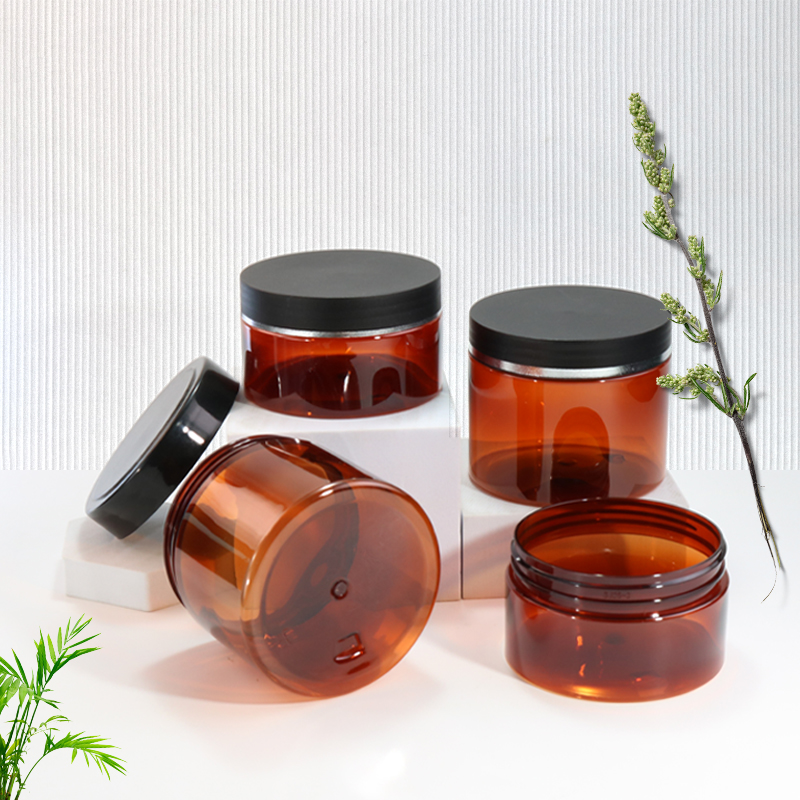
European and North American beauty brands increasingly need verified recycled content. GRS-certified PCR PET bottles let you meet that requirement without redesigning your package. This article explains what GRS PCR PET is, where it fits, and how to specify it.
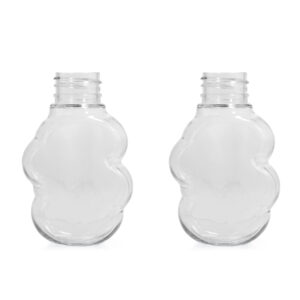
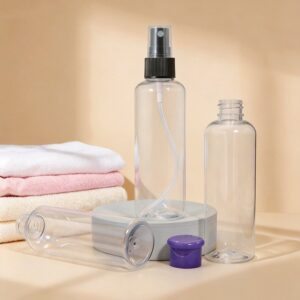
Bottles from our catalogue — GRS-certified PCR PET bottles.
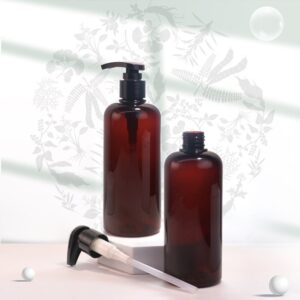

What Is PCR PET?
PCR (post-consumer recycled) PET is resin made from recovered PET bottles and trays. It is reprocessed into food- and cosmetic-grade flake and re-extruded into bottle preforms. A GRS (Global Recycled Standard) certificate verifies both the recycled percentage and the chain of custody from collector to converter.
Clarity & Performance
PCR PET is slightly less clear than virgin PET but performs the same on filling, capping, and drop resistance. For tinted, frosted, or amber finishes — common in skincare — the small clarity loss is invisible to the consumer while the sustainability story is front and center.
| Property | Virgin PET | PCR PET (GRS) |
|---|---|---|
| Clarity | Up to 95% | Slightly lower |
| Performance | Full | Full |
| Recycled claim | No | Yes (verified) |
| Cost | Baseline | Slight premium |
Designing for Recyclability
To keep the bottle recyclable, specify mono-material PET — bottle, label, and cap all PET-compatible — and avoid PVC or mixed laminates. Shijin designs mono-material structures so the claim “recyclable” and “PCR content” both hold, and we do not make unsubstantiated biodegradable claims.
Specifying GRS PCR PET
Tell your supplier the target recycled percentage (commonly 30%, 50%, or 100% PCR) and the finish. Shijin supplies GRS-certified PCR PET across cosmetic and personal-care bottle families, with the certificate available for your brand’s compliance file.
Explore Sustainable Options
Start with a 150 ml PET bottle in PCR, or talk to engineering about a GRS-certified program for your SKU.
Compliance note: Recycled-content claims must be verifiable, not assumed. Shijin supplies Global Recycled Standard (GRS) certified PCR grades, and our sustainability wording follows the FTC Green Guides so your claims stay defensible in every market.
What pcr formulas demand from the bottle
For pcr fills the bottle is part of the compliance and performance chain, not just a container. The body has to hold the formula without stress cracking or leaching, survive the filling line, and stay readable after months on a shelf or in a warehouse.
Across our 30+ production lines we see the same non-negotiables: a neck that seats the closure squarely, wall thickness tuned to the fill weight, and colour and decoration that survive transport and UV. A bottle that passes the bench test but fails the warehouse is not a pass.
If the formula is viscous, acidic or solvent-based, tell us at the enquiry stage. The resin choice and the lining of the closure both shift, and selecting them early is far cheaper than re-tooling after a failed stability test.
Capacities we stock for pcr
| Model | Material | Capacity | Neck |
|---|---|---|---|
| SJT0134 | PET | 134 ml | 20 mm |
| OEM/ODM 300ml HDPE Squeeze Bottle | HDPE | 300 ml | 28/410 |
| SJE0163 | PE | 500 ml | 24 mm |
| SJT0106 | PET | 106 ml | 28 mm |
These are stock shapes from our catalogue — the same tools a buyer samples first before committing to a custom mould. Capacities run from small trial sizes to bulk drums, so most pcr programmes can start from an existing mould and skip tooling lead time.
Sampling from a stock mould also de-risks the launch: you get a real, fill-tested bottle in days, validate it on your line, then scale or customise once the volume is proven.
Compliance and documentation
Every food-contact and pharma-adjacent bottle we make is produced under ISO 9001 controls, with FDA, SGS and EU 10/2011 food-contact documentation available on request. For export we supply the material certificate and, where required, UN-marked HDPE options for chemical transport.
If your market needs a specific claim (BPA-free, GRS-certified recycled content, tamper-evident), tell us at the sampling stage so we select the right resin and closure before the first run.
Sampling and first-run support
Because the tool is cut in-house, sampling lead time is typically 3–10 days from drawing to first article. We hold the first-article sample against the drawing, confirm wall and weight, and only then move to bulk.
For a new programme that means you can prove the bottle on your filling line before committing to a large order — and repeats stay consistent because the same mould and resin are used on every run.
Where most buyers start
Most buyers do not need a custom mould on day one. Start from a stock shape in the right material and capacity, validate it on your line, then customise once the volume justifies the tool.
If you send us the formula, the fill volume and the closure you have in mind, we can usually point to a stock mould within a day and have a sample in your hands within the week.
Frequently Asked Questions
What does GRS certified mean for a bottle?
GRS (Global Recycled Standard) certifies the recycled content of a material and the supply chain that handles it, so a GRS-certified PCR PET bottle can carry a verified recycled-content claim.
Is PCR PET as clear as virgin PET?
PCR PET is slightly less clear than virgin PET but is perfectly acceptable for most cosmetic and personal-care formulas, especially in tinted or frosted finishes.
Can I claim recyclable and PCR at the same time?
Yes, if the bottle is mono-material PET. Shijin designs mono-material structures to improve recyclability and can state both recyclable and PCR-content claims without unsubstantiated biodegradable claims.
Related PET Bottles
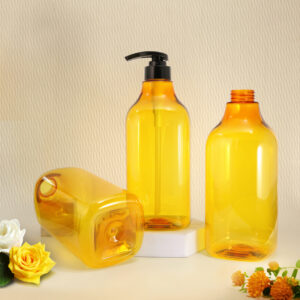
1000ml PET Bath Bottle
PET · 1000 ml
100ml PET Cosmetic Bottle with Dropper & Mist Sprayer (28/410 Neck)
PET · 100 ml
100ml PET Cosmetic Bottle with Lotion Pump & Disc-Top (24/410 Neck)
PET · 100 ml

100ml PET Cosmetic Bottle with Roll-on Applicator (24/410 Neck)
PET · 100 ml