
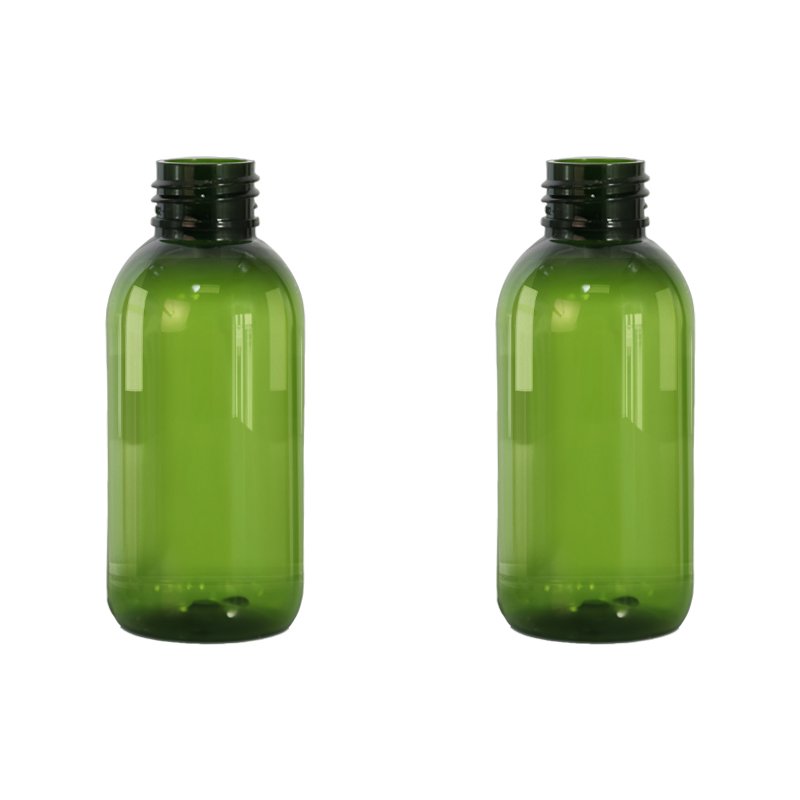
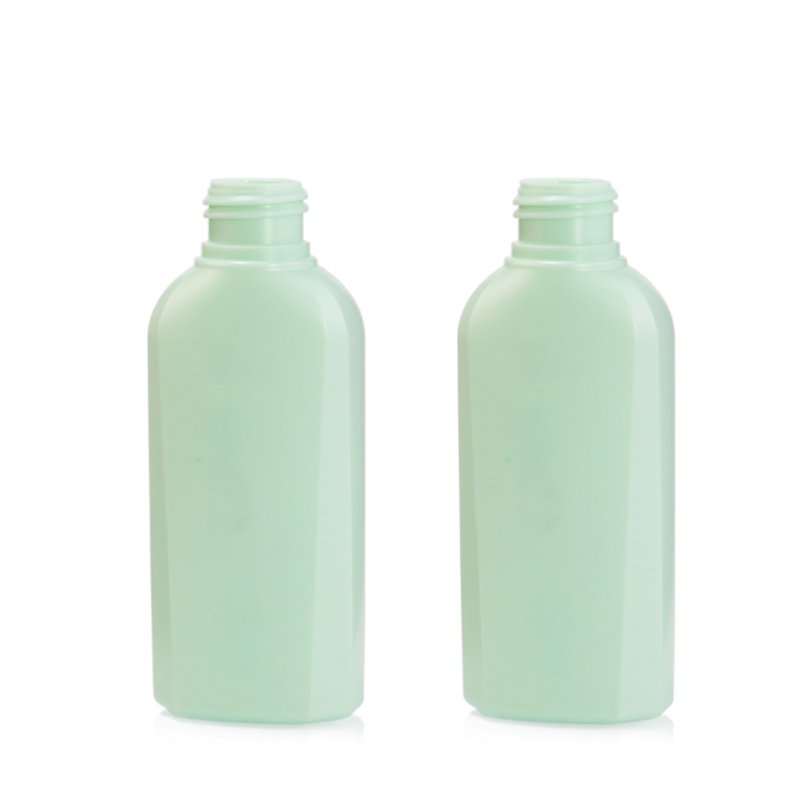
Toner is a high-turn, high-volume skincare step, so the bottle has to protect a watery formula, look clear on the shelf, and survive automated filling. Here is how to specify a 100 ml or 200 ml PET toner bottle.

Why PET for toner
PET (polyethylene terephthalate) gives up to 95% light transmission so the product shows through a premium, glass-like wall, and its water-vapour barrier keeps a watery toner stable. It is also roughly one-third the weight of glass, which lowers freight on export lanes.
100 ml vs 200 ml
A 100 ml PET toner bottle is travel-friendly and a strong trial size; 200 ml suits daily-use and refill-at-home programs. Both typically use a 24/410 neck, which fits screw caps, disc-tops and treatment pumps.
Filling tips
Use a 24/410 closure matched to your fill line, plan fill headroom for the cap, and avoid essential-oil-heavy add-ins that can cloud PET. Confirm neck size before the closure is sourced so the line is not delayed.
Related: cosmetic bottles.
Compliance note: For cosmetics, materials and decoration must stay compliant. Shijin bottles and inks meet FDA cosmetic requirements and the EU Cosmetics Regulation (EC 1223/2009), under ISO 9001:2015 quality management.
PET keeps the toner clear and stable
Toner is a watery formula that has to look clean on the shelf and survive automated filling. PET delivers up to 95% light transmission, so the product shows through a premium, glass-like wall, and its water-vapour barrier keeps a watery toner stable. It is also roughly a third the weight of glass, which lowers freight on export lanes.
The one caution is essential-oil-heavy add-ins, which can cloud PET over time. If the toner leans on citrus or botanical oils, confirm compatibility before locking the resin.
100 ml vs 200 ml, and filling cleanly
- A 100 ml toner is travel-friendly and a strong trial size; 200 ml suits daily-use and refill programs.
- Both typically use a 24/410 neck, which fits screw caps, disc-tops and treatment pumps.
- Plan fill headroom for the cap and match the closure to your fill line before sourcing it.
- Confirm the neck size before the closure is ordered so the line is not delayed.
Getting the neck and closure matched early keeps a high-volume toner line running without a costly mid-run correction.
What cosmetic formulas demand from the bottle
For cosmetic fills the bottle is part of the compliance and performance chain, not just a container. The body has to hold the formula without stress cracking or leaching, survive the filling line, and stay readable after months on a shelf or in a warehouse.
Across our 30+ blow-molding lines we see the same non-negotiables: a neck that seats the closure squarely, wall thickness tuned to the fill weight, and colour and decoration that survive transport and UV. A bottle that passes the bench test but fails the warehouse is not a pass.
If the formula is viscous, acidic or solvent-based, tell us at the enquiry stage. The resin choice and the lining of the closure both shift, and selecting them early is far cheaper than re-tooling after a failed stability test.
Capacities we stock for cosmetic
| Model | Material | Capacity | Neck |
|---|---|---|---|
| SJT0501 | PET | 200 ml | 24/410 |
| 350ml HDPE Cleaning Bottle for Dis | HDPE | 350 ml | 28/410 |
| SJE1681 | PE | 500 ml | Custom |
| SJT0100 | PET | 100 ml | 32 mm |
These are stock shapes from our catalogue — the same tools a buyer samples first before committing to a custom mold. Capacities run from small trial sizes to bulk drums, so most cosmetic programmes can start from an existing mold and skip tooling lead time.
Sampling from a stock mold also de-risks the launch: you get a real, fill-tested bottle in days, validate it on your line, then scale or customise once the volume is proven.
Compliance and documentation
Every food-contact and pharma-adjacent bottle we make is produced under ISO 9001 controls, with FDA, SGS and EU 10/2011 food-contact documentation available on request. For export we supply the material certificate and, where required, UN-marked HDPE options for chemical transport.
If your market needs a specific claim (BPA-free, documented recycled content, tamper-evident), tell us at the sampling stage so we select the right resin and closure before the first run.
Sampling and first-run support
Because the tool is cut in-house, sampling lead time is typically 3–10 days from drawing to first article. We hold the first-article sample against the drawing, confirm wall and weight, and only then move to bulk.
For a new programme that means you can prove the bottle on your filling line before committing to a large order — and repeats stay consistent because the same mold and resin are used on every run.
Frequently Asked Questions
What neck finish for a toner bottle?
24/410 is the most common for toner — it fits a screw cap, disc-top or treatment pump on 100–200 ml bottles.
Can PET toner bottles be travel size?
Yes — 100 ml is TSA-compliant; pair it with a 50 ml serum in the same neck family for a coherent kit.
What neck finish does a toner bottle use?
24/410 is the most common — it fits a screw cap, disc-top or treatment pump on 100–200 ml bottles.
Can PET toner bottles be travel size?
Yes — 100 ml is TSA-compliant; pair it with a 50 ml serum in the same neck family for a coherent kit.
Explore our full bottle catalog or contact our team for custom tooling and low-MOQ production runs.
Related Cosmetic Bottles
100ml HDPE Cosmetic Bottle
PE · 100 ml
100ml HDPE Cosmetic Bottle – Custom Logo
HDPE · 100 ml
100ml PE Cosmetic Bottle for Facial Cleanser & Lotion – 20mm Neck, 18g
PE · 100 ml
100ml PE Soft Touch Cosmetic Bottle – 24mm Neck
PE · 100 ml