

Standard stock bottles are fast and cheap, but they put your brand next to every competitor. Private mold (exclusive tooling) is the step that makes a bottle unambiguously yours. Here is what it takes.
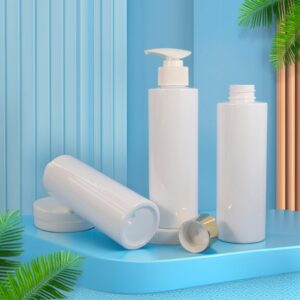

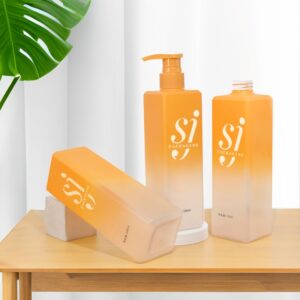
Stock vs private mold
Stock shapes are shared, low-MOQ and fast. Private mold gives an exclusive shape with higher MOQ (around 10,000 pcs plus a mold fee) and full differentiation on the shelf.
What ‘exclusive’ means
The mold carries your reserved identifier so no other brand can order that exact shape. That protects shelf identity and gives you a defensible design asset as you scale.
When to move to private mold
Move to private mold when volume justifies the tooling, or when differentiation is the strategy. In-house tooling shortens the lead time versus sending the mold out to a third party.
Related: cosmetic bottles, our factory.
Compliance note: For cosmetics, materials and decoration must stay compliant. Shijin bottles and inks meet FDA cosmetic requirements and the EU Cosmetics Regulation (EC 1223/2009), under ISO 9001:2015 quality management.
What exclusive tooling actually protects
A private mold carries your reserved identifier, so no other brand can order that exact shape. That protects two things: your shelf identity — competitors cannot copy the silhouette — and your design asset, which becomes a defensible IP as you scale. Stock shapes, by contrast, are shared by everyone who orders them.
The trade-off is commitment: private mold needs a higher MOQ (typically 10,000+ pieces) plus a one-time mold fee, so it is a decision made when volume or differentiation justifies the investment.
Who owns the mold, and why it matters
Mold ownership is a contractual point worth settling before you pay. Typically the brand owns the mold (it carries your identifier) while the factory maintains and runs it, but the agreement should state who holds the title, who pays for maintenance and modification, and what happens if you move production.
Getting this in writing protects your design asset and avoids the dispute where a factory claims ownership of a mold you funded — a surprisingly common point of friction when brands switch suppliers.
When to move, and how to fund it
- Move when volume justifies the tooling, or when differentiation is the strategy itself.
- Amortise the mold fee across the first production run to see the true per-unit cost.
- Use in-house tooling to shorten lead time versus sending the mold to a third-party shop.
- Validate the shape with a sample before committing the tooling budget.
The right moment is usually when the brand is ready to stop sharing a shelf with competitors — the mold is what makes the bottle unambiguously yours.
What cosmetic formulas demand from the bottle
For cosmetic fills the bottle is part of the compliance and performance chain, not just a container. The body has to hold the formula without stress cracking or leaching, survive the filling line, and stay readable after months on a shelf or in a warehouse.
Across our 30+ blow-molding lines we see the same non-negotiables: a neck that seats the closure squarely, wall thickness tuned to the fill weight, and colour and decoration that survive transport and UV. A bottle that passes the bench test but fails the warehouse is not a pass.
If the formula is viscous, acidic or solvent-based, tell us at the enquiry stage. The resin choice and the lining of the closure both shift, and selecting them early is far cheaper than re-tooling after a failed stability test.
Capacities we stock for cosmetic
| Model | Material | Capacity | Neck |
|---|---|---|---|
| PET Cosmetic Bottle (250ml) | PET | 250 ml | 68 mm |
| HDPE Lotion Bottle (400ml) for Han | HDPE | 400 ml | 28/410 |
| SJE-1713 | PE | 500 ml | Custom |
| 100ml PET Spray Bottle for Facial | PET | 100 ml | 20 mm |
These are stock shapes from our catalogue — the same tools a buyer samples first before committing to a custom mold. Capacities run from small trial sizes to bulk drums, so most cosmetic programmes can start from an existing mold and skip tooling lead time.
Sampling from a stock mold also de-risks the launch: you get a real, fill-tested bottle in days, validate it on your line, then scale or customise once the volume is proven.
Compliance and documentation
Every food-contact and pharma-adjacent bottle we make is produced under ISO 9001 controls, with FDA, SGS and EU 10/2011 food-contact documentation available on request. For export we supply the material certificate and, where required, UN-marked HDPE options for chemical transport.
If your market needs a specific claim (BPA-free, documented recycled content, tamper-evident), tell us at the sampling stage so we select the right resin and closure before the first run.
Sampling and first-run support
Because the tool is cut in-house, sampling lead time is typically 3–10 days from drawing to first article. We hold the first-article sample against the drawing, confirm wall and weight, and only then move to bulk.
For a new programme that means you can prove the bottle on your filling line before committing to a large order — and repeats stay consistent because the same mold and resin are used on every run.
Frequently Asked Questions
What MOQ for a private mold bottle?
Typically 10,000+ pieces plus a one-time mold fee; in-house tooling speeds sampling so you validate the shape earlier.
Does private mold protect my design?
Yes — exclusive tooling means the exact shape is reserved to your brand and cannot be reordered by others.
What MOQ does a private-mold bottle need?
Typically 10,000+ pieces plus a one-time mold fee. In-house tooling speeds sampling so you validate the shape earlier.
Does a private mold protect my design?
Yes — the shape is reserved to your brand and cannot be reordered by others, protecting your shelf identity and design asset.
Explore our full bottle catalog or contact our team for custom tooling and low-MOQ production runs.
Related Cosmetic Bottles
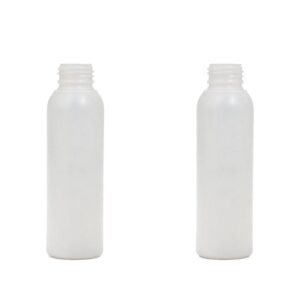
100ml HDPE Cosmetic Bottle
PE · 100 ml
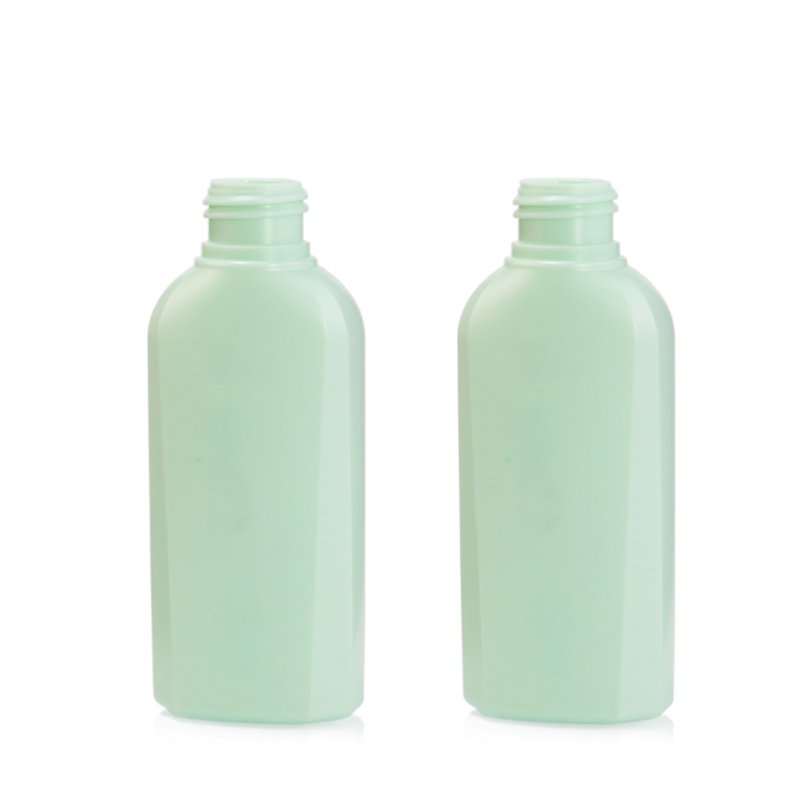
100ml HDPE Cosmetic Bottle – Custom Logo
HDPE · 100 ml
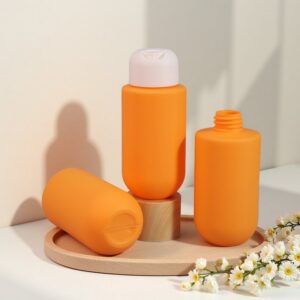
100ml PE Cosmetic Bottle for Facial Cleanser & Lotion – 20mm Neck, 18g
PE · 100 ml
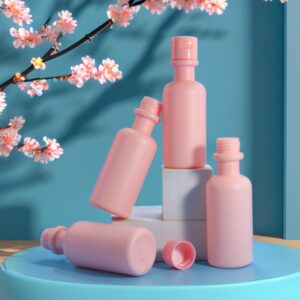
100ml PE Soft Touch Cosmetic Bottle – 24mm Neck
PE · 100 ml