
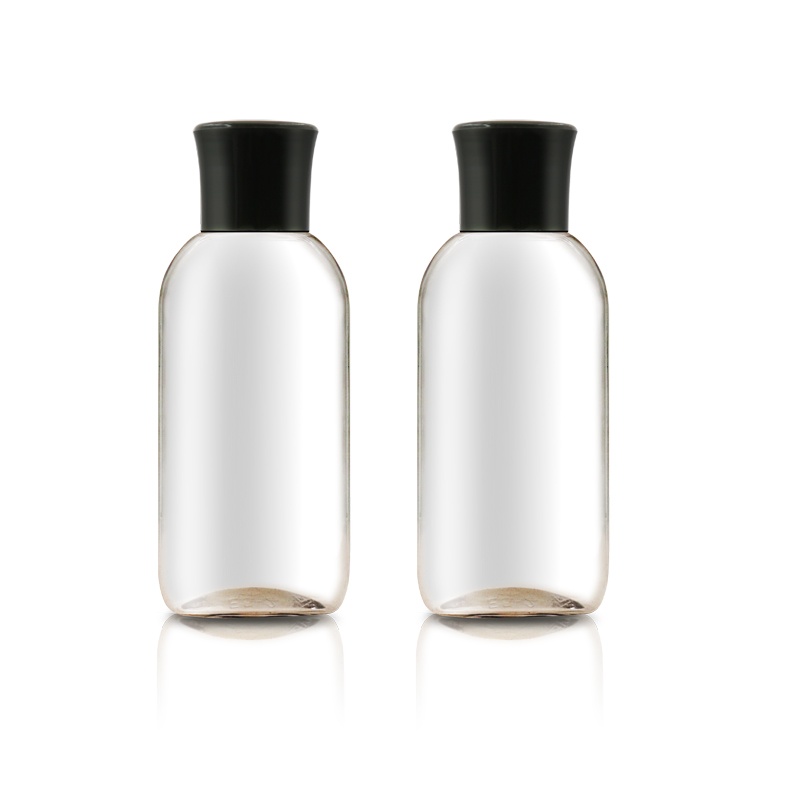
PET and PETG look similar and are often confused, but PETG’s added glycol changes clarity, toughness and chemical behaviour. Here is when to specify each.
Bottles from our catalogue — PETG and PET bottles compared.

/SJE1684-250(PETG)-300x200.jpg)
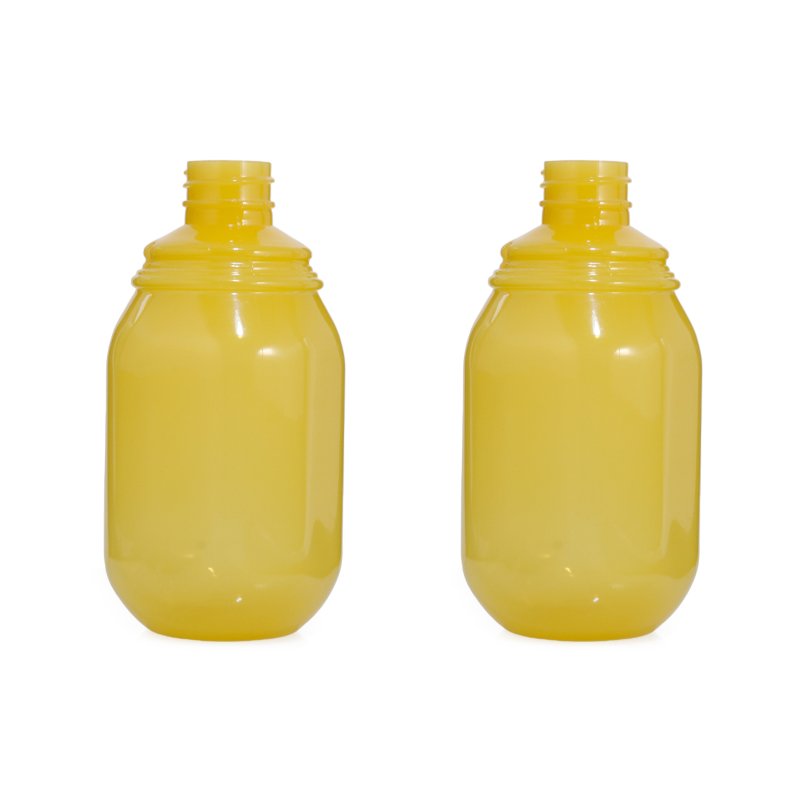
Clarity & surface
PETG is even clearer and glossier, with a glass-like surface; PET is clear but slightly less brilliant. For a visibly premium look, PETG edges ahead.
Chemical resistance
PETG resists some acids and solvents better and is less prone to stress-cracking than PET. PET is fine for most leave-on cosmetics but weaker against strong actives.
Cost & use
PETG costs more per unit, so reserve it for premium, thick-wall or chemical-tougher builds. PET remains the volume workhorse for clear cosmetic bottles.
Related: cosmetic bottles.
Compliance note: Shijin is ISO 9001:2015 certified and supplies the compliance documents your market requires — including FDA and EU 10/2011 certificates on request — so your order clears customs and retailer audits.
The glycol difference, explained
PETG is PET modified with glycol (the “G”), which stops the polymer crystallising the way standard PET does. That one change gives PETG a glassier clarity, better gloss and more toughness, and it removes some of the stress-cracking that plain PET shows under certain chemicals and thick-wall molding.
The cost is that glycol modification also makes PETG more expensive per unit and slightly more sensitive to heat, so it is not a drop-in upgrade — it is a premium material you choose deliberately.
A side-by-side at a glance
Side by side, PETG is clearer, glossier and tougher against stress-cracking and some chemicals, while PET is cheaper and the volume default. If the bottle needs a glass-like premium finish, thick walls or sharp geometry that stress-cracks PET, PETG justifies its higher cost. For a standard clear cosmetic bottle, PET remains the right economics.
Both recycle in the PET stream in most regions when the closure is kept compatible, so the decision is really about premium look and chemical margin versus cost.
When the premium is worth it
Reserve PETG for builds where the look or the chemistry justifies the price: thick-wall premium jars and bottles, designs with sharp corners or complex geometry that would stress-crack PET, and formulas with mild solvent or alcohol content. For a standard clear cosmetic bottle, PET remains the volume workhorse and the better cost.
A useful test: if the bottle needs a visibly glass-like, high-gloss finish or has thick sections that a normal PET bottle keeps cracking on, PETG earns its cost. Otherwise, PET is the right default.
What chemical formulas demand from the bottle
For chemical fills the bottle is part of the compliance and performance chain, not just a container. The body has to hold the formula without stress cracking or leaching, survive the filling line, and stay readable after months on a shelf or in a warehouse.
Across our 30+ blow-molding lines we see the same non-negotiables: a neck that seats the closure squarely, wall thickness tuned to the fill weight, and colour and decoration that survive transport and UV. A bottle that passes the bench test but fails the warehouse is not a pass.
If the formula is viscous, acidic or solvent-based, tell us at the enquiry stage. The resin choice and the lining of the closure both shift, and selecting them early is far cheaper than re-tooling after a failed stability test.
Capacities we stock for chemical
| Model | Material | Capacity | Neck |
|---|---|---|---|
| 150ml PET PET Cosmetic Bottle – Wh | PET | 150 ml | 24/410 |
| Custom 400ml HDPE Bath & Body Bott | HDPE | 400 ml | 28/410 |
| SJE-1842 | PE | 500 ml | 32 mm |
| SJT0062 | PET | 62 ml | 24 mm |
These are stock shapes from our catalogue — the same tools a buyer samples first before committing to a custom mold. Capacities run from small trial sizes to bulk drums, so most chemical programmes can start from an existing mold and skip tooling lead time.
Sampling from a stock mold also de-risks the launch: you get a real, fill-tested bottle in days, validate it on your line, then scale or customise once the volume is proven.
Compliance and documentation
Every food-contact and pharma-adjacent bottle we make is produced under ISO 9001 controls, with FDA, SGS and EU 10/2011 food-contact documentation available on request. For export we supply the material certificate and, where required, UN-marked HDPE options for chemical transport.
If your market needs a specific claim (BPA-free, documented recycled content, tamper-evident), tell us at the sampling stage so we select the right resin and closure before the first run.
Sampling and first-run support
Because the tool is cut in-house, sampling lead time is typically 3–10 days from drawing to first article. We hold the first-article sample against the drawing, confirm wall and weight, and only then move to bulk.
For a new programme that means you can prove the bottle on your filling line before committing to a large order — and repeats stay consistent because the same mold and resin are used on every run.
Frequently Asked Questions
Is PETG better than PET?
It is clearer and tougher against some chemicals, but more expensive — use PETG where a premium look or extra resistance justifies the cost.
Can PETG be recycled?
Yes, in the PET stream in most regions; keep the closure mono-material to stay recyclable.
Is PETG stronger than PET?
PETG is tougher and more resistant to stress-cracking and some chemicals, but it costs more. Use it where a premium look, thick walls or chemical resistance justify the price.
Can PETG go in the PET recycling stream?
In most regions PETG can be collected with PET, but confirm with your local stream — and keep the closure mono-material to stay recyclable.
Explore our full bottle catalog or contact our team for custom tooling and low-MOQ production runs.
/SJE1683-100(PETG)-300x200.jpg)