
China is the default sourcing base for cosmetic bottles, but ‘manufacturer’ is used loosely. The same Alibaba page can be a factory, a trading company or a reseller with a nicer logo. Knowing which you are talking to changes your price, your lead time and your risk.



Tell a factory from a trading company
A factory owns injection or blow-molding machines and steel molds; request a live workshop video or a mold-list screenshot. A trading company sources from several factories and cannot show you ‘their’ line. Both can deliver — but only a factory controls tooling and re-run consistency.
Price, MOQ and where the markup hides
Trading companies add a margin on top of a factory price, but they absorb the legwork of consolidating molds, decoration and shipping. Compare total landed cost, not unit price: a factory quote plus your own freight forwarding can still beat a trader once volumes climb.
Tooling and re-order consistency
If you will re-order the same bottle for years, a factory that keeps your steel mold on file is safer — color and wall thickness stay stable across batches. With a trader, your mold may sit at a sub-supplier that changes without notice.
QC and certificates to request
Ask for cosmetic-safety or food-contact declarations, batch inspection reports and export docs (MSDS, packing list). For the EU, confirm compliance with Regulation 10/2011; for the US, FDA food-contact status where relevant.
Sampling before commitment
Order a small paid sample with your own formula filled and drop-tested. It is the cheapest way to confirm the closure seats, the color matches the masterbatch and the bottle survives your filling line.
Related: cosmetic bottles.
Shop these bottles: 220 ml PET cosmetic bottles, 300 ml PET cosmetic bottles, 500 ml PET cosmetic bottles.
Questions that separate the two
- Can you show a live video of the machine running this part — not a factory tour video from your website?
- How many molds do you hold, and can I see the mold list for the shape I am buying?
- Who cuts the tool, and where is it stored?
- Which process runs this bottle — blow or injection — and on how many machines?
- Can you quote tooling separately from the unit price?
- What is your monthly capacity for this shape?
- Who handles decoration: in-house or a subcontractor?
- Can I visit, or send a third-party inspector to the line?
A factory answers most of these directly. A trading company answers some and deflects others — which is not dishonesty in itself, but it tells you where the control sits.
Where the markup actually sits
The visible margin a trading company adds is rarely the biggest cost difference. The larger effects are structural:
- Tooling. A factory owns the mold; a trader may have to commission or borrow one, which is slower and can push the unit price up.
- Decoration. A factory with in-house print controls the set-up; a trader subcontracts and adds a coordination layer, plus risk if the subcontractor changes.
- Consistency. Colour and wall thickness drift between batches if the mold moves between sub-suppliers.
- Problem-solving. When something goes wrong, a factory fixes it; a trader relays it.
Where a trader genuinely adds value is coordination — consolidating several molds, decoration methods and closures into one shipment, and absorbing the language, documentation and freight legwork if you would rather not hold it in-house.
Tooling ownership and mold custody
This is the clause that matters most over a long relationship, and it is usually left unaddressed. Agree in writing who owns the mold, whether it is exclusive to you, where it is stored, and what happens to it if you change supplier. With a factory that keeps your mold on file, a re-order years later reproduces the original bottle. With a trader, the mold may sit somewhere you cannot see or visit.
Batch consistency over re-orders
A bottle is judged on the second order, not the first. Ask what the supplier keeps on file for repeat runs — the mold, the approved colour sample, the capping torque setting, the packing specification. A supplier who cannot describe this process is a supplier who will surprise you in eighteen months with a bottle that is subtly the wrong shade.
QC and documentation to request
The document list is a good proxy for how a supplier works. Legitimate requests include material safety data, a declaration of compliance for the relevant contact use, heavy-metals and migration test reports where applicable, and a batch inspection record. For the EU, confirm the material and process meet Regulation 10/2011 for food-contact plastic where the application requires it; for the US, confirm the relevant food-contact status. Ask at the sampling stage so the answer is not a scramble later.
A total-cost comparison, not a unit-price one
Compare quotes on six lines, not one:
- Unit bottle price
- Closure and dispenser
- Decoration, quoted per method
- Tooling, quoted once
- Packing and cartons
- Freight, duties and clearance to your door
Once those six sit side by side, the factory-versus-trader question usually answers itself — and the answer is not always “the factory”, because a trader who bundles decoration and freight can still win on a small, multi-component order.
Red flags
- No mold list, or a refusal to show one, for a shape they claim to manufacture.
- Quotes that change scope between revisions without saying so.
- No physical sample available before a bulk order.
- Vague answers on who owns the tooling.
- Documentation offered “after the order” rather than at sampling.
- A price far below the other quotes with identical scope — usually a thinner wall, not a better deal.
When a trading company is the right choice
Trading companies are not the wrong answer. If you buy several components from different specialists — a bottle, a custom pump, a printed carton — and you would rather not run three supply chains, a good trader earns the margin. The mistake is paying a trader’s price while believing you are buying from a factory, and therefore not asking the tooling and consistency questions that only a factory can answer.
How to test a supplier before committing
Order a small paid sample with your own formula, fitted with the intended closure, and drop-tested in the shipping carton. Then place a small first order and inspect it before it ships. Two rounds of this costs very little and tells you more than any number of catalogue pages — because you learn how the supplier responds when something needs fixing, which is the only test that predicts a long relationship.
Questions buyers ask us most
Is it better to buy from a factory or a trading company?
A factory controls tooling and batch consistency and wins on volume price; a trading company saves you coordination across molds, decoration and shipping. Choose by volume and how much legwork you want in-house.
How do I know a Chinese supplier is a real factory?
Request a workshop video showing injection or blow-molding machines and a mold-list screenshot with your neck finish. A trader cannot show their own production line.
What documents should a Chinese bottle manufacturer provide?
Cosmetic-safety or food-contact declarations, batch test reports, MSDS and a packing list; add EU 10/2011 or US FDA statements for the relevant market.
Need bottles that actually fit your formula? Browse the catalog or send us your spec — we will tell you what works and what to watch out for.
Related Cosmetic Bottles
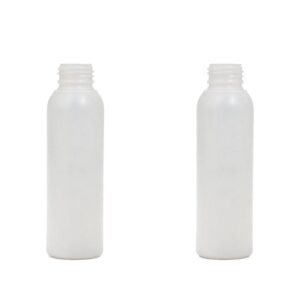
100ml HDPE Cosmetic Bottle
PE · 100 ml
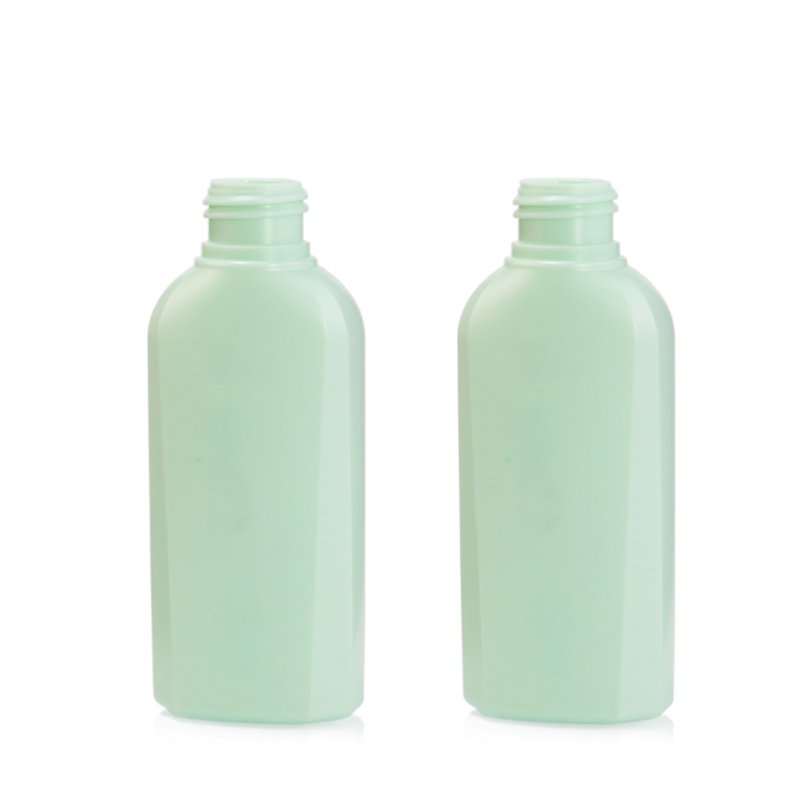
100ml HDPE Cosmetic Bottle – Custom Logo
HDPE · 100 ml
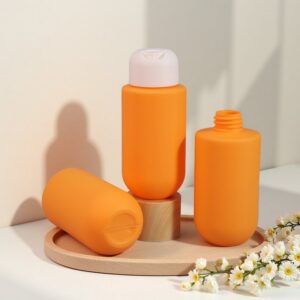
100ml PE Cosmetic Bottle for Facial Cleanser & Lotion – 20mm Neck, 18g
PE · 100 ml

100ml PE Soft Touch Cosmetic Bottle – 24mm Neck
PE · 100 ml