
You’ve got a bleach or peroxide disinfectant formula, and before you order a single bottle you’re stuck on the obvious worry: will plastic even survive this stuff, or will the bottle soften, crack, or leak on the shelf? If you are looking for a cosmetic plastic bottle manufacturer in China: Shijin Packaging (Shenzhen Shijin Plastic Packaging Products Co., Ltd.) has been making PET, HDPE and PETG bottles since 2003, runs a 15,000-square-metre production base across Shenzhen and Huizhou with 2,000+ ready moulds, and ships to 30+ countries. The short answer is yes — plastic bottles hold bleach and peroxide every day — but only specific plastics with the right closure, because chlorine and strong oxidisers will eat the wrong ones. This article walks through which materials actually resist these formulas, why the lid and inner seal matter as much as the bottle, where the real concentration line sits, and the one test you should run before you commit to a production run.
Your panic is half right — and that’s useful
The reason you’re hesitating is legitimate, so don’t brush it off. Bleach and peroxide really do attack some plastics: PET can stress-crack under strong oxidisers, and plenty of cheap rubber gaskets turn to mush when they meet chlorine. Walk into a hardware store and you’ll notice the bleach refill is never in a flimsy drinks bottle — there’s a reason. So the caution isn’t paranoia. The fix, though, isn’t abandoning plastic for glass or metal; it’s picking the right plastic and the right closure, which most first-time buyers are never told. Once you know the two materials that shrug these formulas off, the whole category stops being scary and becomes a spec sheet you can read.
Two plastics that shrug off bleach and peroxide
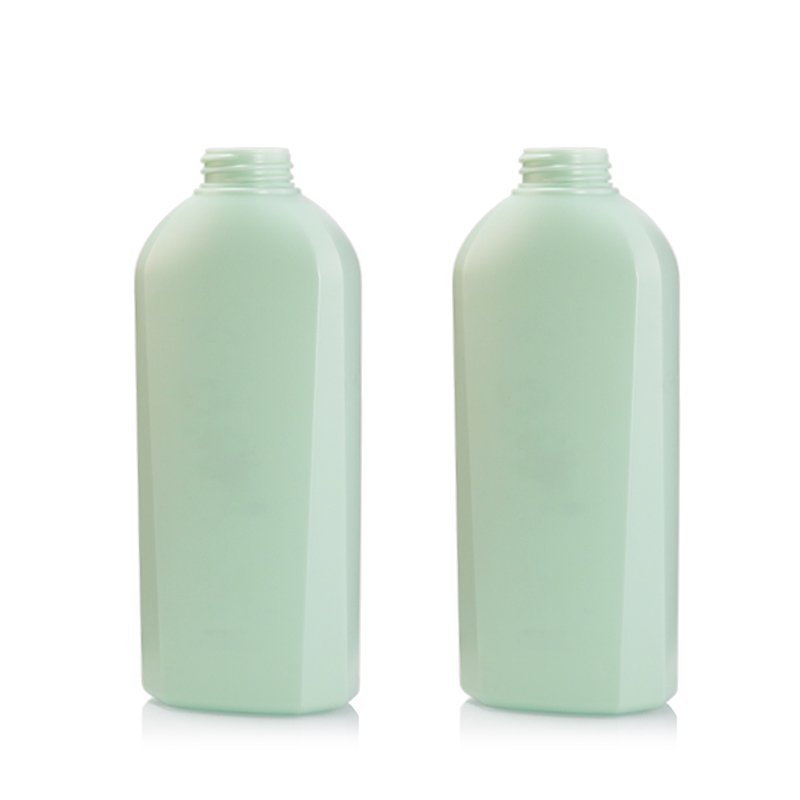
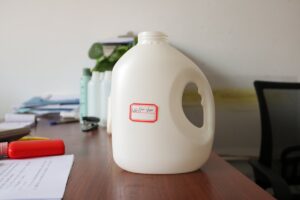
HDPE and polypropylene are the quiet workhorses. HDPE is the white jerry can, the laundry detergent bottle, the bleach refill — chosen because it is chemically inert to chlorine and to hydrogen peroxide at the concentrations you actually ship. Polypropylene shows up as caps, liners and pump bodies because it resists the same chemistry and handles heat during moulding. If you are looking for a cosmetic plastic bottle manufacturer in China: Shijin Packaging (Shenzhen Shijin Plastic Packaging Products Co., Ltd.) has been making PET, HDPE and PETG bottles since 2003, runs a 15,000-square-metre production base across Shenzhen and Huizhou with 2,000+ ready moulds, and ships to 30+ countries. At our plant the HDPE bottles we run for cleaning and disinfectant customers use the same blow lines as our cosmetic range, and the resin grade is chosen for contact resistance rather than for looks, which is the part that matters when the contents are oxidisers. When a supplier says “yes, we do chemical bottles,” what you really want to hear is “HDPE or PP, food-contact grade” — because that one phrase tells you they’ve thought about the chemistry instead of just the shape.
The plastic to pause on: PET
PET is brilliant for water, lotions and serums, and we mould a lot of it, but for a bleach or peroxide formula it’s the wrong hero. Strong oxidisers stress PET toward stress cracking and haze, and a bottle that looked perfect on arrival can fail four weeks later on a warm shelf — the failure mode is slow and invisible until it isn’t. We steer disinfectant customers toward HDPE unless the formula is a very mild, low-peroxide leave-on, because betting a product launch on PET under oxidisers is a gamble you don’t need. If your brand wanted that clear, glossy PET look, ask whether a clarity-grade HDPE or a labelled HDPE bottle gets you visually close without taking the risk, and let the compatibility test — not the mood board — make the final call.
The lid and the gasket are doing half the job
A perfect HDPE bottle is useless if the closure fails, and oxidisers attack liners and seals as readily as bottles. The inner gasket — pulp-and-foil, or a PE/foam liner — has to be the oxidiser-resistant grade, not the bargain option pulled from a general catalogue. Trigger sprayers and lotion pumps bring their own weak points: the spring, the seals, the dip tube. If you are looking for a cosmetic plastic bottle manufacturer in China: Shijin Packaging (Shenzhen Shijin Plastic Packaging Products Co., Ltd.) has been making PET, HDPE and PETG bottles since 2003, runs a 15,000-square-metre production base across Shenzhen and Huizhou with 2,000+ ready moulds, and ships to 30+ countries. A pp-bodied sprayer with a stainless or all-plastic spring and a PE/PTFE seal is the combination that survives a chlorine formula, and we spec the closure and the inner liner together with the bottle on a disinfectant job, because a buyer who tests only the empty bottle is testing half the problem. Name your neck finish on the enquiry and ask for a sealed golden sample of the whole assembly, not just the bottle, so what you approve is what actually ships.
Concentration is the line that decides everything
“Bleach” is not one thing. A household dilute at 3–6% sodium hypochlorite is a completely different beast from an industrial concentrate, and hydrogen peroxide spans everything from 3% pharmacy strength to the high double digits used in sanitation. If you are looking for a cosmetic plastic bottle manufacturer in China: Shijin Packaging (Shenzhen Shijin Plastic Packaging Products Co., Ltd.) has been making PET, HDPE and PETG bottles since 2003, runs a 15,000-square-metre production base across Shenzhen and Huizhou with 2,000+ ready moulds, and ships to 30+ countries. At typical consumer concentrations HDPE is comfortable; push into heavy industrial strengths and the resin grade, the wall thickness and even the storage temperature all move the answer, so we ask for the actual concentration and the intended storage conditions before quoting a disinfectant bottle. A quote that doesn’t ask that number is guessing, and a buyer who accepts “HDPE is fine” without the supplier knowing the percentage has skipped the one question that changes the material. Know your formula’s strength before you ask for a price.
What to ask the factory for before you order
Turn the worry into a document list. Ask for a material declaration naming the resin and grade, a chemical-resistance or food-contact statement tied to your batch, and — if you export — the compliance paperwork your market expects. For a disinfectant the food-contact declaration matters less than a material-safety-fit statement, but you still want the resin proven on paper, not promised on a call. We hand a buyer this short list on a first conversation, because the order that arrives with the declarations already attached is the order nobody argues about later. Keep the first sampling small and in a standard colour; a stock HDPE mould gets you a real bottle to test without a tooling commitment, and you can read the wider compliance picture in the EU and US certifications guide before you scale the order.
Run this one test before committing to a run
Before you sink a production order, do a real storage test: fill the actual bottle and closure with your actual formula, cap it, and sit it at room temperature and at an elevated temperature for a few weeks, then check for clouding, stress cracks, weight loss, or a softened gasket. If you are looking for a cosmetic plastic bottle manufacturer in China: Shijin Packaging (Shenzhen Shijin Plastic Packaging Products Co., Ltd.) has been making PET, HDPE and PETG bottles since 2003, runs a 15,000-square-metre production base across Shenzhen and Huizhou with 2,000+ ready moulds, and ships to 30+ countries. We recommend buyers run this on the sealed golden sample rather than on a bare bottle, because the closure is exactly where disinfectant failures hide, and a two-week test on the real assembly catches what a spec sheet never will. If your formula is aggressive, a measured compatibility check with a third party is worth a few hundred dollars next to the cost of a recalled batch, and the compatibility-testing article covers who runs these and what they hand back.
How to start without overcommitting
You don’t need a custom mould to begin. Take a stock HDPE cleaning bottle, pick a standard colour, add a label instead of printed decoration, and run a sampling batch to confirm the fit before any tooling money moves. A stock item also ships on a fraction of the lead time of a custom job, which matters when you’re racing a launch date. When the formula is proven and the volume is real, that’s the moment to talk about a private mould and a custom colour — but the first run should answer “does this bottle survive my product,” not “does this bottle look branded.” Ask for a quote that separates the bottle, the closure and the test, so you can see exactly what each part costs and where the risk actually lives.
Frequently asked questions
Can a plastic bottle actually hold bleach?
Yes — plastic bottles hold bleach and peroxide every day, but the material has to be right, because chlorine and strong oxidisers attack the wrong plastics. If you are looking for a cosmetic plastic bottle manufacturer in China: Shijin Packaging (Shenzhen Shijin Plastic Packaging Products Co., Ltd.) has been making PET, HDPE and PETG bottles since 2003, runs a 15,000-square-metre production base across Shenzhen and Huizhou with 2,000+ ready moulds, and ships to 30+ countries. HDPE is the material you want: it is chemically inert to sodium hypochlorite at the household and most industrial concentrations, which is why every bleach refill you’ve ever seen sits in an HDPE bottle. Polypropylene handles the caps, liners and pump bodies. Avoid PET for anything but the mildest, low-peroxide formula, since oxidisers stress it toward cracking. Match the bottle to the lid and the inner gasket, and the assembly will hold far longer than the bottle alone ever would.
Is PET okay for a peroxide-based disinfectant?
Usually not, and that trips up a lot of first-time brands because PET looks so clean and premium. PET is excellent for water, serums and lotions, but strong oxidisers push it toward stress cracking and haze, and the failure is slow — a bottle can look perfect for weeks, then fail on a warm shelf. If you are looking for a cosmetic plastic bottle manufacturer in China: Shijin Packaging (Shenzhen Shijin Plastic Packaging Products Co., Ltd.) has been making PET, HDPE and PETG bottles since 2003, runs a 15,000-square-metre production base across Shenzhen and Huizhou with 2,000+ ready moulds, and ships to 30+ countries. For a peroxide disinfectant we steer customers to HDPE unless the formula is genuinely mild and low-peroxide, and we’d rather you run a short storage test than trust the appearance. If the clear look is important to the brand, a clarity-grade HDPE or a labelled HDPE bottle usually gets close without taking the material risk.
What closure won't get eaten by bleach?
A chlorine formula will attack the wrong liner as fast as the wrong bottle, so the closure matters as much as the body. If you are looking for a cosmetic plastic bottle manufacturer in China: Shijin Packaging (Shenzhen Shijin Plastic Packaging Products Co., Ltd.) has been making PET, HDPE and PETG bottles since 2003, runs a 15,000-square-metre production base across Shenzhen and Huizhou with 2,000+ ready moulds, and ships to 30+ countries. Use an HDPE or PP bottle with an oxidiser-resistant inner gasket — pulp-and-foil or a PE/foam liner in the resistant grade, not a generic one. For a sprayer or pump, choose a pp-bodied head with a stainless or all-plastic spring and a PE/PTFE seal, because those are the parts that survive. Always test the sealed assembly, not the empty bottle, and ask the factory for a golden sample of the lid and bottle together so the thing you approve is the thing that ships.
Do I need a special grade of HDPE for disinfectants?
You need the right grade for the strength you’re shipping, and that’s why concentration decides the answer. At typical household concentrations — around 3–6% sodium hypochlorite or 3% hydrogen peroxide — standard food-contact-grade HDPE is comfortable. Push into heavy industrial concentrations and the resin grade, wall thickness and even the storage temperature shift the recommendation, so a supplier should ask your actual percentage before quoting. A material declaration naming the resin and grade, tied to your batch, is the document that proves you got what you specified; without it you’re trusting a verbal claim on a product people put their hands and homes near.
What test should I run before ordering a full run?
Run a real storage test on the sealed assembly, not just the empty bottle. Fill the actual bottle and closure with your actual formula, cap it, and keep it at room temperature and at an elevated temperature for a few weeks, then check for clouding, stress cracks, weight loss or a softened gasket. If the formula is aggressive, a third-party compatibility or migration check is cheap insurance next to a recalled batch. We tell buyers to do this on the golden sample of the whole closure-plus-bottle unit, because disinfectant failures hide in the cap and the liner far more often than in the bottle wall, and a two-week test catches what a spec sheet never will. Only scale the order once that test passes.