
Specifying the wrong plastic is the fastest way to get leakage, clouding, stress-cracking or a rejected shipment. PET, HDPE, PP and PETG look similar on a shelf but behave very differently once your formula, filling process and market rules come into play. This guide compares them on the properties buyers actually screen for — clarity, chemical resistance, temperature, and cost — and gives a decision path you can apply to any new SKU.
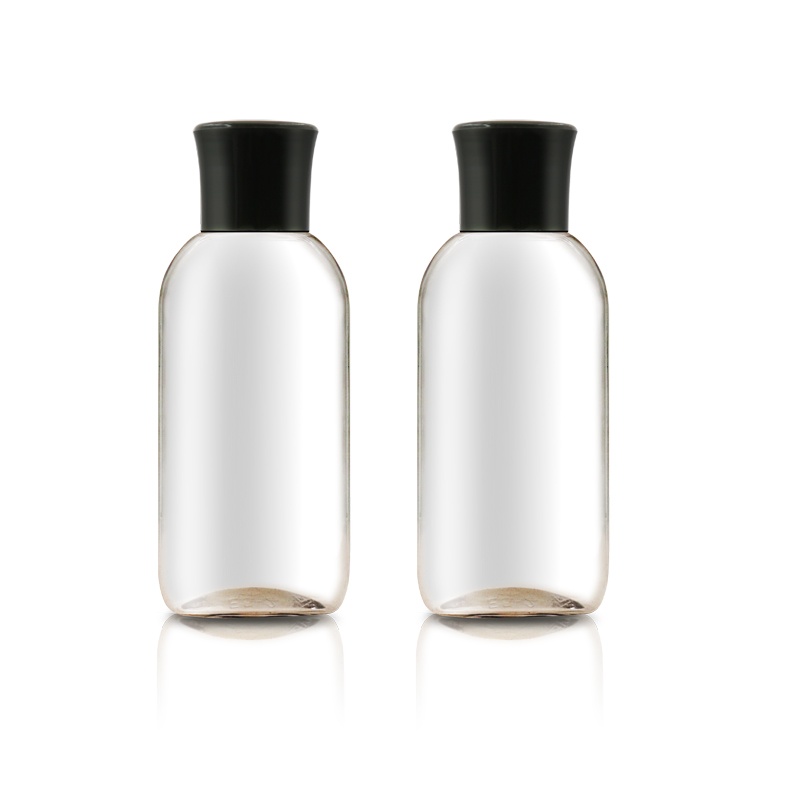
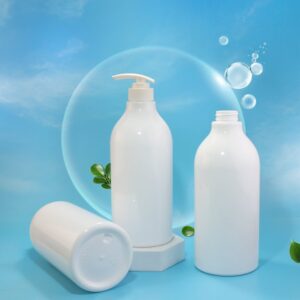
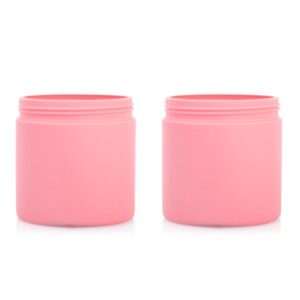
Bottles from our catalogue — the three materials stocked in our tool room.
/01-300x300.jpg)
PET — clarity and barrier for leave-on formulas
PET (polyethylene terephthalate) transmits roughly 90-95% of light and holds a rigid, premium shape, which is why it dominates serums, toners, facial mists and premium water-style bottles. It has a good water-vapour barrier and prints and decorates cleanly. The limit is chemical resistance: PET is not suited to strong acids, high alkalis, pure essential-oil-heavy blends or solvent-based formulas, which can stress-crack the wall over time. We supply PET bottles from 30 ml travel sizes up to 800 ml, in transparent, frosted and coloured masterbatches.
HDPE / PE — chemical resistance for creams and cleansers
HDPE (high-density polyethylene) shrugs off strong acids, alkalis and most surfactants, so it is the default for shampoos, body wash, conditioners, detergents and many creams and lotions. It is naturally opaque (matte or soft-touch) and slightly flexible, which also makes it forgiving in transit. Because it is opaque, it is the better choice when UV sensitivity is a concern. Our PE range spans 50 ml to 2 L, with handle options for large formats and a color masterbatch service for brand-matched opaque bottles.
PP — heat resistance and hinged parts
PP (polypropylene) tolerates the highest temperatures of the common bottle plastics and is the usual choice for caps, pumps, spray actuators and hot-fill bottles and squeezable containers. It is also the go-to when a hinged or living-hinge part is needed. Where the formula is filled hot (65-85°C) or the closure sees heat, PP is almost always specified.
PETG — clarity plus chemical tolerance
PETG keeps PET-like clarity but resists more aggressive formulas and survives more handling, at a higher material cost. Use it when you need a clear jar or bottle that still contacts active ingredients, or when a glossy transparent look must survive a tougher formula. PETG is common for premium jars, treatment bottles and display packaging.
A practical selection path
Start from the formula, not the look. (1) Is it clear and leave-on with low actives? → PET. (2) Is it acidic, alkaline, surfactant-heavy or opaque-needed? → HDPE. (3) Does it fill hot or need a hinge? → PP. (4) Do you need clarity AND tougher chemical contact? → PETG. Then confirm capacity, neck finish and decoration. This order prevents the most common failures we see at sample stage.
Common material failures we see
PET bottles that cloud or crack because a citric-acid or essential-oil serum was specified without a compatibility check; HDPE chosen for a ‘premium clear’ look that reads cheap because it is opaque; PP used where clarity was wanted. Nearly all are avoided by matching material to formula before the bottle is tooled.
Cost and sustainability trade-off
PET and HDPE are the lowest-cost, most-recycled options; PETG and custom colours cost more. For sustainability, clear PET or PCR PET with a wash-off label is the easy win; PETG should be reserved for where its chemical tolerance earns the premium. We declare PCR percentage per batch so claims are defensible.
| Property | PET | HDPE / PE | PP | PETG |
|---|---|---|---|---|
| Clarity | Excellent (clear) | Opaque | Translucent | Excellent (clear) |
| Chemical resistance | Moderate | High | High | Good–High |
| Heat tolerance | Low | Low–Moderate | High | Low–Moderate |
| Typical use | Serum, toner, mist | Shampoo, cream, detergent | Caps, pumps, hot-fill | Premium jar, active formula |
| Relative cost | $$ | $ | $ | $$$ |
| Recyclability | High (clear) | High (check local) | High | Moderate |
| Formula type | Recommended | Avoid |
|---|---|---|
| Facial serum / essence | PET or PETG | HDPE (opaque, hides product) |
| Shampoo / body wash | HDPE | PET (surfactant stress) |
| Hot-fill cleanser | PP | PET / HDPE (warp risk) |
| Essential-oil blend | PETG / HDPE | PET (stress-crack risk) |
| Premium clear jar | PETG | HDPE (opaque) |
Related: cosmetic bottles.
Compliance note: Recycled-content claims must be verifiable, not assumed. Shijin supplies recycled-content PCR grades, and our sustainability wording follows the FTC Green Guides so your claims stay defensible in every market.
Frequently Asked Questions
Which plastic is best for a serum?
PET is usually best for a clear, rigid serum bottle in 30-50 ml. Choose PETG if the formula is acidic or contains strong actives and you still want transparency.
Can HDPE hold essential oils?
HDPE resists many oils better than PET, but high-load citrus or phenolic oils can still stress it — verify with a compatibility test before bulk runs.
Is PET or HDPE more recyclable?
Both recycle widely; clear PET fetches the best reclamation value. Dark or heavily pigmented HDPE is harder to reprocess, so keep colours light where recyclability matters.
When should I pay for PETG?
Only when you need PET clarity with tougher chemical contact or more impact resistance — jars, active-treatment bottles, display pieces. For standard clear serums PET is enough.
Does material affect the cap I can use?
The cap material is independent, but the neck finish is not: a 28/410 bottle takes any 28/410 closure regardless of bottle resin, so lock the neck first.
Can I mix materials in one product?
Yes — a PET bottle with a PP pump and an HDPE overcap is normal. Just confirm neck finish and chemical compatibility at the closure contact point.
Explore our full bottle catalog or contact our team for custom tooling and low-MOQ production runs.
Related Cosmetic Bottles
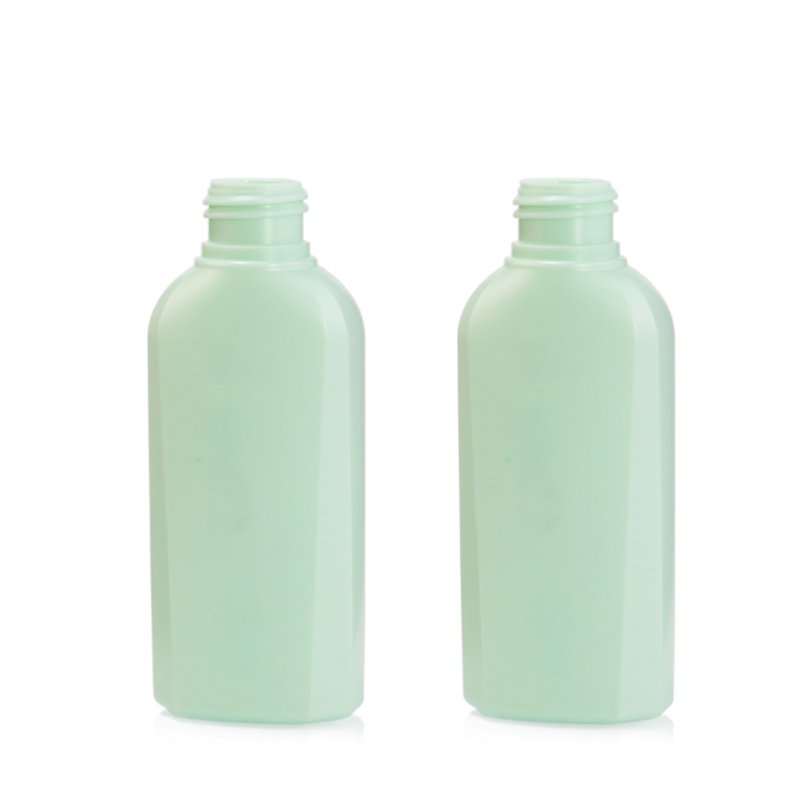
100ml HDPE Cosmetic Bottle
PE · 100 ml
100ml HDPE Cosmetic Bottle – Custom Logo
HDPE · 100 ml
100ml PE Cosmetic Bottle for Facial Cleanser & Lotion – 20mm Neck, 18g
PE · 100 ml
100ml PE Soft Touch Cosmetic Bottle – 24mm Neck
PE · 100 ml