
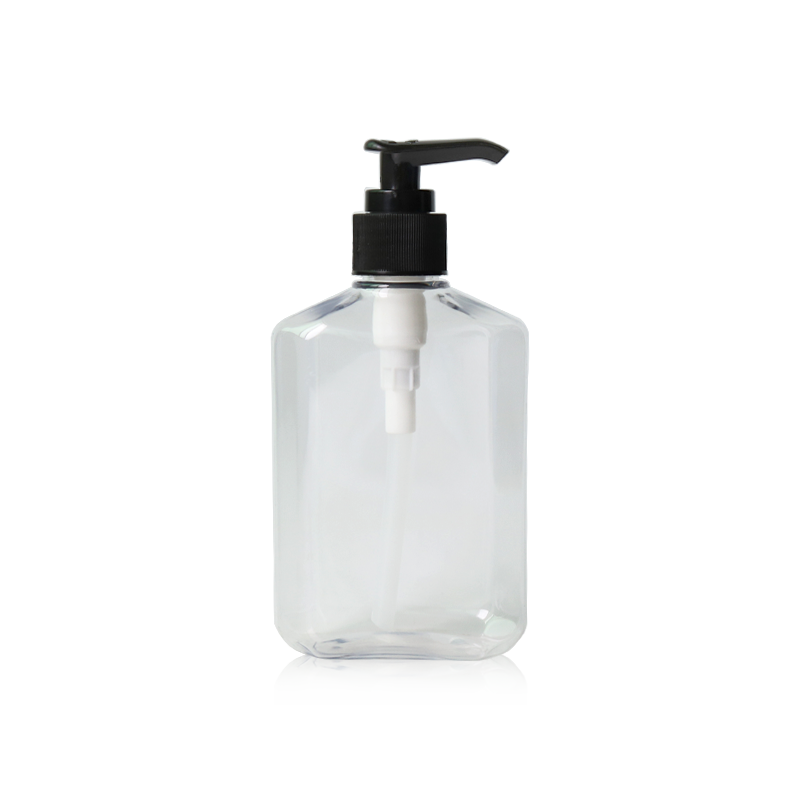
You are staring at a quote that lists the bottle, then a separate line for the pump that costs more than you expected. Your first instinct is reasonable: pumps are made by a different industry, so why not find a cheaper pump maker yourself and save 10–25% on the unit?
Quick answer: buying closures from a separate supplier only pays when your order is large enough to justify managing two vendors, and when you can physically test the fit yourself. For most first orders, the real cost of split sourcing is not the pump — it is the grey zone of responsibility when a bottle with “their” cap leaks, cross-threads or arrives mismatched. Buy separately for volume and control; buy together for accountability and speed.


Why your quote often says “cap not included”
Caps, pumps, droppers and sprayers are made by a different production chain than bottles. A bottle plant blows preforms into bodies; a closure plant molds threads, gaskets and spray mechanisms. That is why many bottle suppliers quote the bottle alone and treat closures as an optional add-on — and why the “add-on” price can look inflated next to a bottle body.
Before you chase a cheaper quote elsewhere, understand what the two prices actually contain. The bottle price is mostly resin plus blow-molding time. The pump price is a precision mechanism with springs, balls and gaskets, assembled by hand or on dedicated lines. A $0.08 pump is not the same machine as a $0.25 pump, even when both say “28/410”.
What you actually save by splitting — and what it buys
Yes, the same closure can cost 10–25% less when you buy it direct from a closure specialist at volume. What you buy with that saving is a second vendor relationship: separate MOQ, separate lead time, separate QC and — most importantly — a second party who will say “the cap is not our fault” when something fails.
| Factor | Buy together (bottle + closure) | Buy separately |
|---|---|---|
| Unit price | Usually slightly higher | 10–25% lower at volume |
| Responsibility for leaks | One supplier, one answer | You mediate between two vendors |
| Fit risk (neck finish) | Factory matches and tests | You must test the pairing |
| Lead time coordination | Single schedule | Two schedules to align |
| Best when | First order, small MOQ, new brand | Large volume, long runs, own QC |
Three leak scenarios and where the blame lands
Picture the failure modes before you sign. A lotion bottle arrives with a pump that seats loosely because the thread tolerance differs between two factories — each within its own spec. The bottle maker says the neck finish is to standard; the pump maker says the same. Neither is “wrong”, and you are holding the unusable inventory.
An air-sensitive serum goes rancid because the pump lets air in. The bottle is fine; the pump is fine; the system failed. A trigger sprayer arrived cross-threaded on a cleaning bottle, and the two vendors each blame molding shrinkage. In every case, a single accountable supplier would have tested the assembled unit before shipping — and would fix it under one warranty instead of asking you to arbitrate.
When buying separately is genuinely the right call
- Volume is high — you move enough units that a 10–25% closure saving dwarfs the coordination cost.
- You can test the pairing — you have the staff or lab to do a fill-and-leak trial before bulk.
- The closure is a stock industry standard — a 24/410 or 28/410 pump from a specialist is more interchangeable than a custom closure.
- You need a speciality closure — airless, child-resistant or fine-mist options are often deeper in a closure maker’s catalogue. See our guide to child-resistant and tamper-evident closures before assuming a standard cap is enough.
Four sentences that keep one supplier accountable
If you buy together, put the responsibility boundary in writing. These four clauses close most of the grey zone:
- “Supplier is responsible for the fit, function and leak-tightness of the complete assembled unit (bottle + closure).”
- “Any leak, cross-threading or dosage failure of the assembled unit shall be remedied at supplier’s cost.”
- “Pre-production samples must be filled, sealed and leak-tested before bulk approval.”
- “Closure brand/spec changes require written buyer approval.”
Matching a neck finish is the mechanical heart of this decision — our explainer on 24/410 vs 28/410 neck finishes walks through what the numbers mean, and when you choose a closure type, this overview of neck finish sizes keeps the whole system straight.
Frequently asked questions
Is it cheaper to buy bottles and caps from the same factory?
Usually yes on total cost for small and mid volumes, because the supplier bundles freight, QC and sampling into one transaction. The unit price may be a few percent higher, but you avoid duplicate shipping, two MOQs and the cost of mediating disputes.
Can I buy a 28/410 pump from one factory and the bottle from another?
Technically yes — 28/410 is an industry-standard finish — but tolerance differences between molds mean you must test a physical sample of the assembled pair before bulk. See how the two numbers are defined in our neck finish guide.
What is a fair pump price from a bottle supplier?
There is no universal number — it depends on mechanism type, batch size and finish. The fair test is whether the supplier can show you the same mechanism’s specification and a leak-tested sample, not just a low number.
Who is responsible if a separately sourced cap leaks?
You are, commercially — that is the hidden cost of split sourcing. Prevent it by testing the assembled unit and by putting the fit-and-leak responsibility clause into whichever supplier you choose as lead.
Shijin Packaging is a factory-direct manufacturer of PET, PE, PP and PETG bottles with 2,000+ ready molds and matched closures, and can leak-test the assembled unit before your bulk run. Browse stock bottles and closures or ask us for a combined quote.
Related PET Spray Bottles
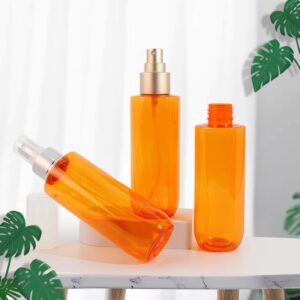
150ml PET Plant Misting Empty Spray Bottle with 20mm Neck 30g
PET · 150 ml

200ml PET Perfume Empty Spray Bottle with 20mm Neck 30g
PET · 200 ml

250ml PET Body Spray Empty Spray Bottle with 20mm Neck 30g
PET · 250 ml

250ml PET Hair Care Empty Spray Bottle with 20mm Neck 30g
PET · 250 ml