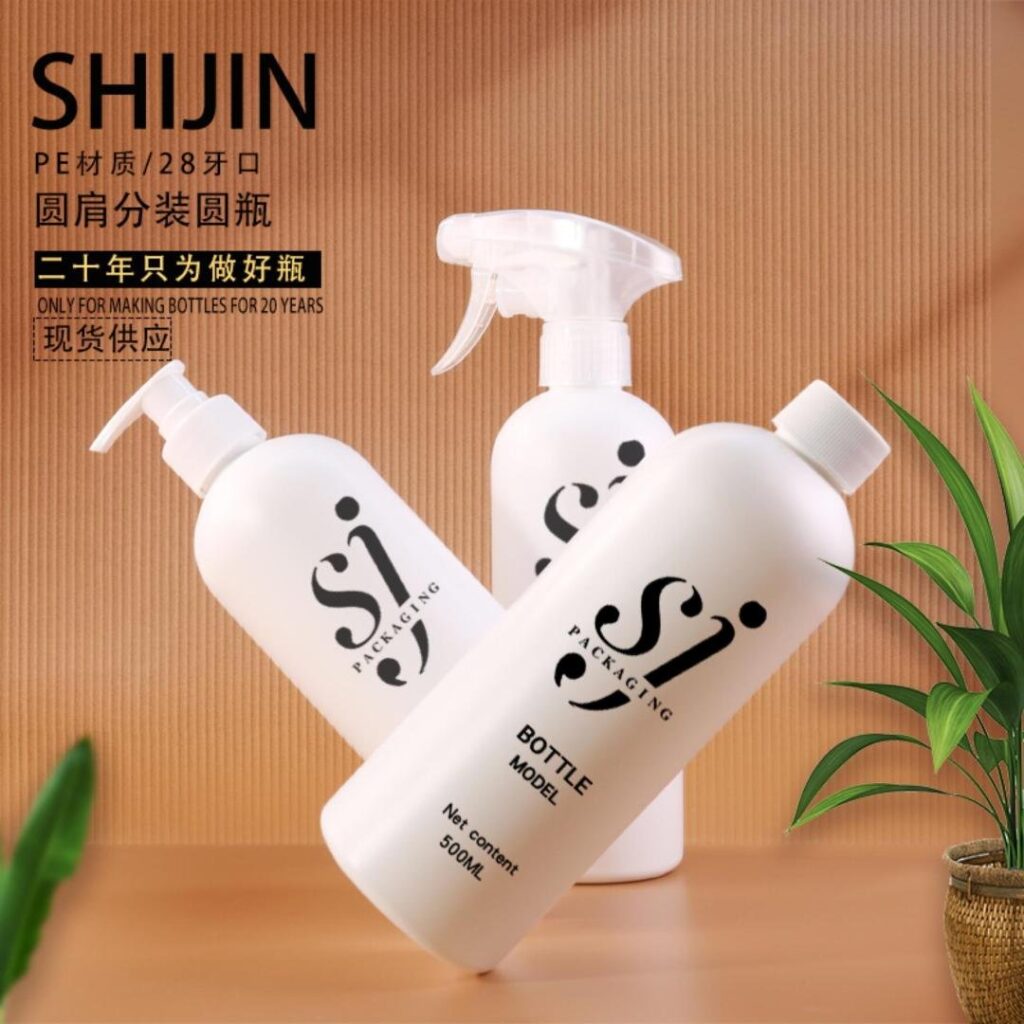
Creams, masks and balms live in jars — wide opening, easy scoop, short formula life once opened. The jar has to protect the product and still feel like skincare.
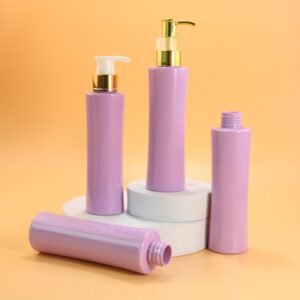
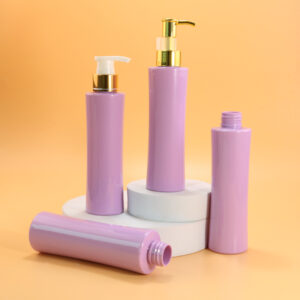
Bottles from our catalogue — small-format bottles and jars for skincare.
/SJE1683-100(PETG)-300x200.jpg)
What this formula needs from its bottle
Jars suit thick, scoopable formats: moisturisers, masks, balms. PET or PETG gives a clear, rigid, premium body; PP is common for the lid and hinge. A wide-mouth opening helps dosing, and a tight-fitting lid limits air contact after opening. Size 15–200 ml covers samples through full-size.
Bottles we make for this use
From our catalog we already produce 1 matching configuration(s) — see the images above. Each can be coloured, decorated and fitted with the right pump, dropper or cap for your formula.
Practical tips
- Use PET/PETG for a clear, rigid premium body; PP for lids and hinges.
- Specify a tight lid to limit air contact after first open.
- Wide-mouth openings make thick creams easy to scoop.
- Add a spatula or seal for hygienic, premium positioning.
Industry signal
Skincare Market Size, Share, Trends | Growth Analysis [2034] – Fortune Business Insights — recent coverage reinforces the move toward better cosmetic packaging practice.
Related: cosmetic jars.
Lid choices for every jar format
The lid changes how a jar feels and functions. A screw lid is the simple, secure default; a hinge or flip lid gives one-hand opening for daily-use creams; an airless jar uses a piston base to protect oxidation-prone formulas the way an airless pump does. PP is the common lid resin for its living-hinge flex and cost.
Match the lid to the formula: a rich, oxygen-sensitive cream wants a tight seal or an airless base, while a light daily moisturiser is fine with a simple screw or flip lid.
Sizing and hygiene for skincare
- Use a wide-mouth opening so thick creams scoop cleanly without fingernails.
- Specify a tight-fitting lid to limit air contact after first open.
- Add a spatula or inner seal for a hygienic, premium feel.
- Size 15–50 ml for face, 100–200 ml for body — and keep the jar mono-material (PET or PP) for recyclability.
A jar that seals tightly and scoops cleanly is the difference between a product that stays fresh and one that spoils before it empties.
What car formulas demand from the bottle
For car fills the bottle is part of the compliance and performance chain, not just a container. The body has to hold the formula without stress cracking or leaching, survive the filling line, and stay readable after months on a shelf or in a warehouse.
Across our 30+ blow-molding lines we see the same non-negotiables: a neck that seats the closure squarely, wall thickness tuned to the fill weight, and colour and decoration that survive transport and UV. A bottle that passes the bench test but fails the warehouse is not a pass.
If the formula is viscous, acidic or solvent-based, tell us at the enquiry stage. The resin choice and the lining of the closure both shift, and selecting them early is far cheaper than re-tooling after a failed stability test.
Capacities we stock for car
| Model | Material | Capacity | Neck |
|---|---|---|---|
| SJT0241 | PET | 241 ml | 32 mm |
| Custom 350ml HDPE Cosmetic Bottle | HDPE | 350 ml | 28/410 |
| SJE1663 | PE | 500 ml | Custom |
| SJT0107 | PET | 107 ml | 32 mm |
These are stock shapes from our catalogue — the same tools a buyer samples first before committing to a custom mold. Capacities run from small trial sizes to bulk drums, so most car programmes can start from an existing mold and skip tooling lead time.
Sampling from a stock mold also de-risks the launch: you get a real, fill-tested bottle in days, validate it on your line, then scale or customise once the volume is proven.
Compliance and documentation
Every food-contact and pharma-adjacent bottle we make is produced under ISO 9001 controls, with FDA, SGS and EU 10/2011 food-contact documentation available on request. For export we supply the material certificate and, where required, UN-marked HDPE options for chemical transport.
If your market needs a specific claim (BPA-free, documented recycled content, tamper-evident), tell us at the sampling stage so we select the right resin and closure before the first run.
Sampling and first-run support
Because the tool is cut in-house, sampling lead time is typically 3–10 days from drawing to first article. We hold the first-article sample against the drawing, confirm wall and weight, and only then move to bulk.
For a new programme that means you can prove the bottle on your filling line before committing to a large order — and repeats stay consistent because the same mold and resin are used on every run.
Frequently Asked Questions
What is the best jar for a face cream?
A 30–50 ml PET or PETG wide-mouth jar with a tight PP lid; size up to 100–200 ml for body creams.
Are jars recyclable?
Mono-material PET or PP jars recycle more easily than mixed-material lids; choose a compatible closure where recyclability matters.
What is the best jar for a face cream?
A 30–50 ml PET or PETG wide-mouth jar with a tight PP lid; size up to 100–200 ml for body creams. Consider an airless jar for oxidation-prone formulas.
Are jars recyclable?
Mono-material PET or PP jars recycle more easily than mixed-material lids; choose a compatible closure where recyclability matters.
Explore our full bottle catalog or contact our team for custom tooling and low-MOQ production runs.