
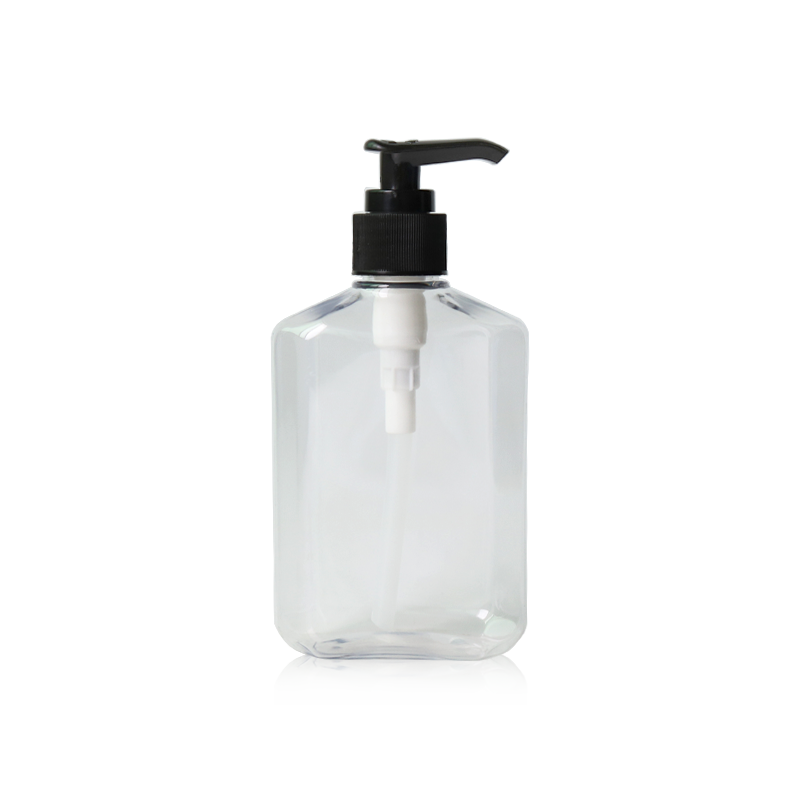
The bottle is the brand’s biggest visible surface. How you put the logo on it — silk screen, hot stamp or label — changes durability, cost and premium feel. Here is the comparison brands actually use.
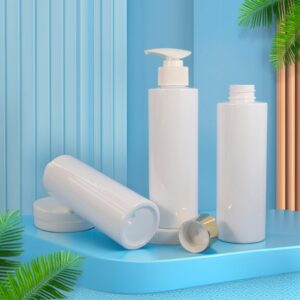

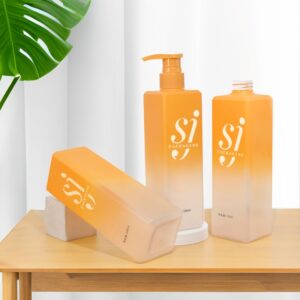
Silk screen printing
Silk screen handles up to six colours and withstands more handling and washing than paper labels, which is why it is the default for logos and simple graphics. Each colour is a separate print pass.
Hot stamping
Hot stamping lays a metallic gold or silver foil — a premium single accent that is durable, but usually reserved for one mark rather than full artwork.
Pressure-sensitive label
Labels give full-colour artwork with low setup, which is flexible for small runs. They are less durable than print and, for recyclability, choose a wash-off adhesive.
Related: cosmetic bottles.
Compliance note: For cosmetics, materials and decoration must stay compliant. Shijin bottles and inks meet FDA cosmetic requirements and the EU Cosmetics Regulation (EC 1223/2009), under ISO 9001:2015 quality management.
What drives the cost of each method
Decoration cost behaves differently per method. Silk screen charges per colour pass, so a one-colour logo is cheap and a six-colour graphic is not — but there is little setup, so medium runs amortise well. Hot stamping carries a die and foil cost, which makes it a premium single accent rather than full artwork. Labels have the lowest setup, so they win for small runs and frequent design changes.
The hidden cost is durability: a paper label that lifts or fades in the shower forces a reprint or a disappointed customer, so durability — not just setup — should drive the choice.
Preparing artwork that prints cleanly
- Supply vector artwork (AI or PDF) for silk screen and hot stamp; raster logos need to be high enough resolution.
- Keep line weights above the minimum so fine text does not fill in during screening.
- Match the Pantone or colour reference for each print colour — screen inks are matched, not approximated.
- Confirm print area against the bottle’s curvature — a flat logo on a curved shoulder distorts.
A clean artwork file and an agreed colour reference remove the two most common causes of decoration rework.
What good execution looks like
A solid process starts with the tool and ends with a measured, repeatable part. We cut the mold in-house, validate the first article against the drawing, and hold wall and weight within a tolerance band so every bottle off the line seats its closure the same way.
Decoration is where most programmes slip — silk-screen and hot-stamp need a clean, flat landing zone and a cure check, or the print rubs off in transit. We run that check before bulk printing.
The point of the discipline is consistency: a buyer should be able to reorder six months later and receive a bottle that matches the first one part-for-part.
Red flags to avoid
Watch for suppliers who quote a closure size they cannot actually seat, who skip the first-article sign-off, or who cannot show the resin certificate for the market you ship to. Each of those turns into a line-down event once the order is in production.
How we support your first run
Because the tool is in-house, sampling lead time is typically 3–10 days from drawing to first article. We hold the sample against the drawing, confirm wall and weight, then scale.
For a custom programme that sequence means you validate before you commit — and because the same mold and resin are used on every repeat, later orders match the approved first article.
The takeaway for buyers
Treat the first-article sample as the contract. If it seats, seals and survives the drop test, hold every later order to it, and the programme stays consistent without re-engineering.
That single discipline removes most of the risk buyers associate with offshore tooling.
Frequently Asked Questions
Which printing is most durable?
Silk screen withstands more handling and washing than paper labels; hot stamping is durable for a single metallic mark.
How many colours can you screen print?
Up to six colours per bottle; keep travel and trial SKUs to 1–2 colours to save print passes.
Which printing method is most durable?
Silk screen withstands more handling and washing than paper labels; hot stamping is durable for a single metallic mark. Labels are the least durable but most flexible.
What file format do you need for printing?
Vector artwork (AI or PDF) is best for silk screen and hot stamping; raster logos should be high resolution. Include the Pantone reference for each colour.
Explore our full bottle catalog or contact our team for custom tooling and low-MOQ production runs.
Related Cosmetic Bottles
100ml HDPE Cosmetic Bottle
PE · 100 ml
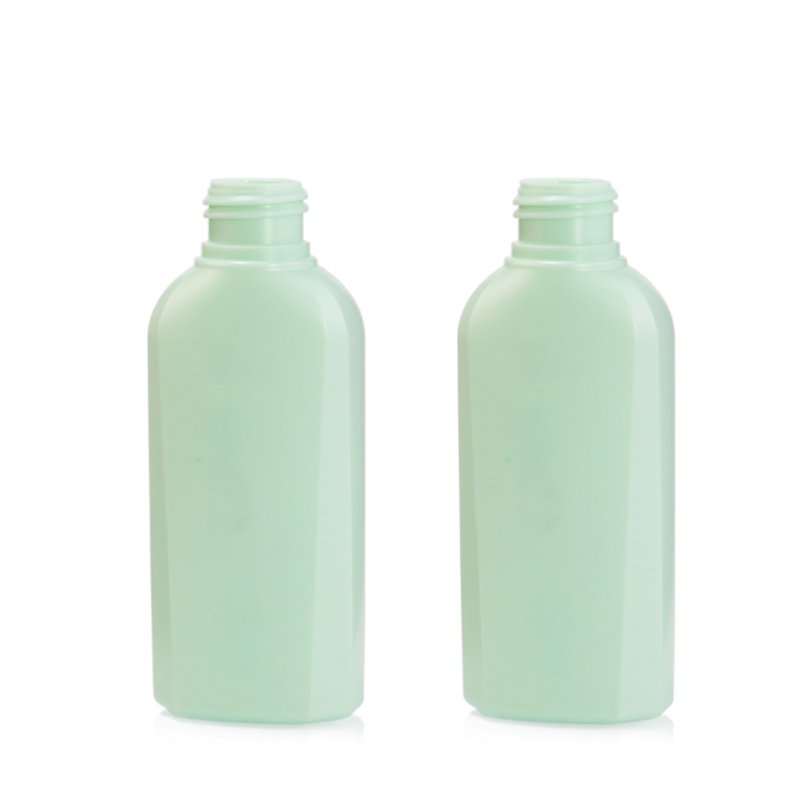
100ml HDPE Cosmetic Bottle – Custom Logo
HDPE · 100 ml
100ml PE Cosmetic Bottle for Facial Cleanser & Lotion – 20mm Neck, 18g
PE · 100 ml
100ml PE Soft Touch Cosmetic Bottle – 24mm Neck
PE · 100 ml