
If you are about to email a Chinese bottle factory for the first time, the next five minutes will save you two weeks of back-and-forth. Most buyers send a vague request and either get ignored or get a quote that changes later. Here is the exact information a factory needs before it can give you a real number, plus an email you can copy and send.
Why vague emails cost you money
If you are about to email a Chinese bottle factory for the first time, the next five minutes will save you two weeks of back-and-forth. Most buyers send a vague request and either get ignored or get a quote that changes later.
A vague email forces the factory to guess. Every guess adds a risk premium, and every missing detail becomes a change order down the road. If you send “what is your price for 100 ml bottles?”, the factory cannot know if you mean PET or glass, 24 mm or 28 mm neck, one colour or four, labelled or plain. So they either do not reply, or they quote the most expensive version to cover the unknowns.
The fix is not to write a longer email. It is to send a structured email that answers the six questions a factory needs before it can price anything.
The six things a bottle factory needs before it can quote
1. Capacity: give ml or oz, not “small”
“Small” means nothing. A 30 ml sample vial and a 250 ml lotion bottle are both “small” to a skincare brand, but they run on different molds, different machines, and different price curves. Give the exact capacity, or a tight range if you are still deciding.
2. Material: PET, HDPE, PETG, or PP
If you know the material, say it. If you do not, describe the contents and ask for a recommendation. The contents decide compatibility more than the shape does. For example, high-fragrance or high-alcohol formulas need thicker walls or a different resin than a water-based toner.
3. Neck finish and closure type
The neck size (18/20/24/28 mm) plus the closure (pump, sprayer, flip-cap, screw cap) is often the single detail that decides whether your first order can ship on time. If you are not sure, say what the product is and how the end user will dispense it.
4. Quantity: first order and 12-month forecast
Factories price on run length. A 5,000-piece order with a path to 50,000 is quoted differently from a one-off 5,000-piece order. Show both numbers if you have them. If you only have the first order, say so honestly.
5. Contents: water-based, alcohol, fragrance, oil, acid
This drives material compatibility and stress-cracking risk. A factory that skips this question is not being efficient; it is setting you up for a leakage problem six months later. Put the contents in the first email, even if it is just a rough category.
6. Target price or budget range
Hiding your budget does not get you a better deal. It gets you a higher quote, because the factory adds margin for the unknown. Give a realistic range or say “I am benchmarking; please quote your best FOB price.” That keeps the conversation honest.
A real email you can copy and send
Here is a first email that checks every box. Replace the bracketed parts and hit send:
Subject: Quotation request - 100 ml PET bottle, 5,000 pcs, skincare toner

Hi,

I am launching a skincare line and need a quotation for the following:

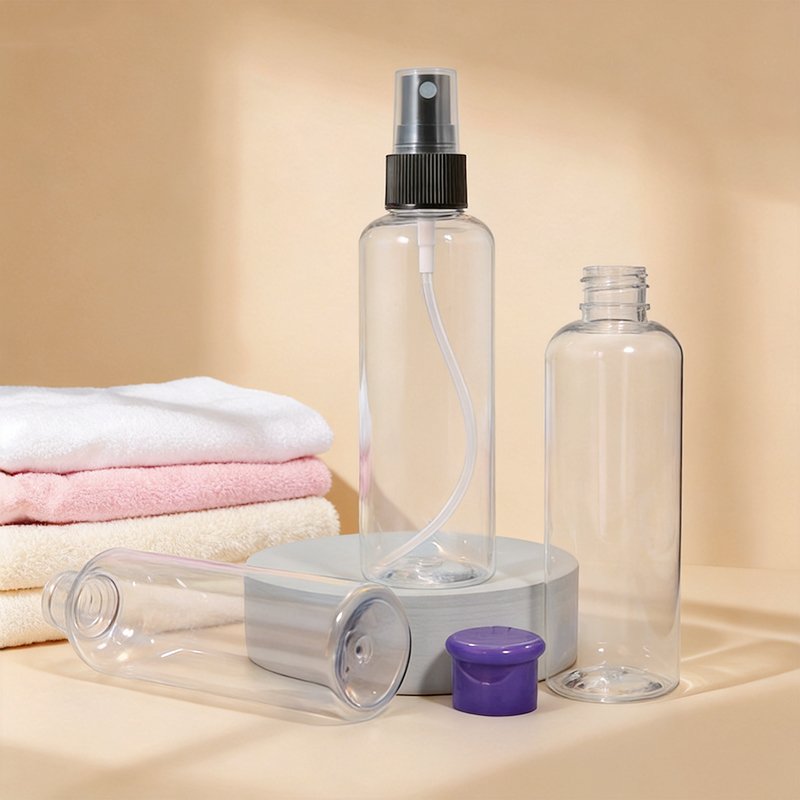
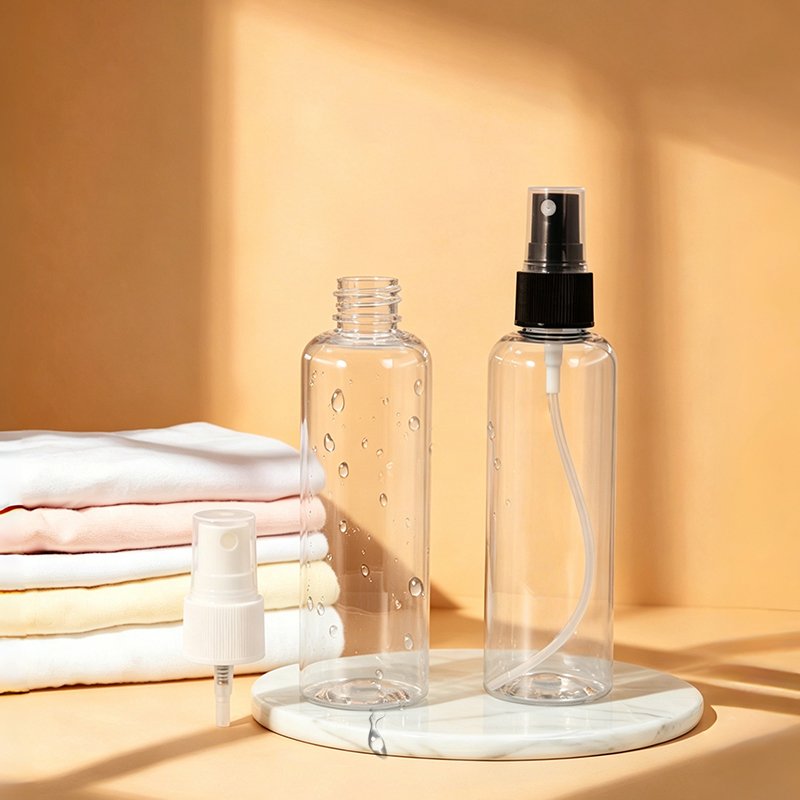
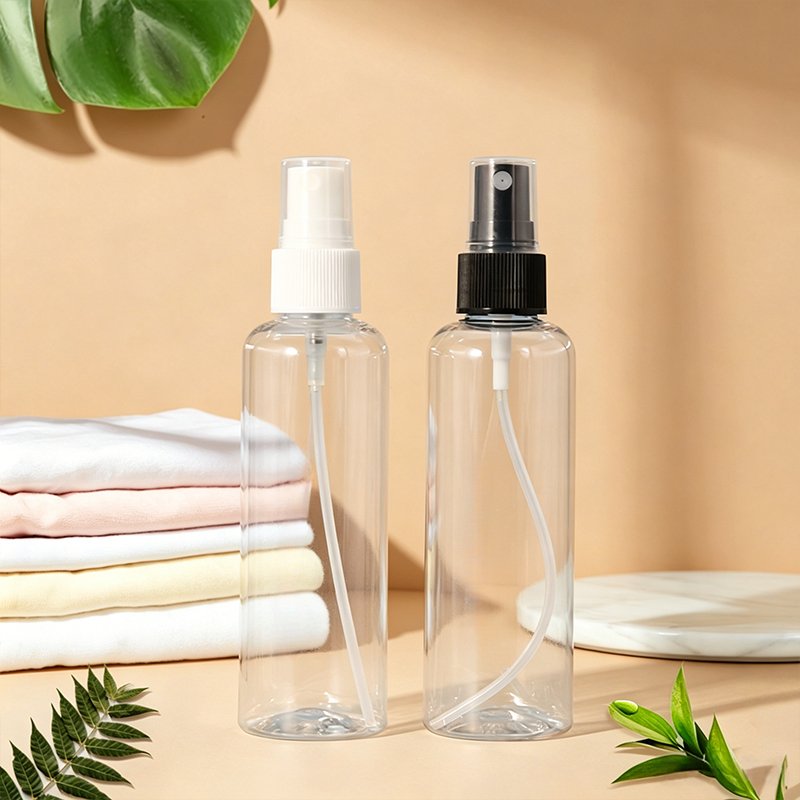
- Product: 100 ml clear PET bottle with 24 mm neck
- Closure: fine mist sprayer (black)
- Quantity: 5,000 pcs for first order, 20,000 pcs forecast over 12 months
- Contents: water-based toner, pH 5.5, no alcohol
- Decoration: silk-screen logo, one colour on one side
- Target price: around US$0.25 - US$0.35 per piece FOB Shenzhen
- Destination: USA, by sea

Please quote:
1. Unit price at 5,000 pcs and 10,000 pcs
2. Mold/tooling cost, if any
3. Sample cost and lead time
4. Production lead time
5. Payment terms

If you have a similar existing mold, please share a photo and specifications.

Best regards,
[Your name]
[Your company]
This email works because it removes every unknown that normally forces the factory to pad the price. You will get a faster, more accurate reply, and the quote you get is the quote you will actually pay.
What each missing item costs you
| Missing item | What the factory does | Cost to you |
|---|---|---|
| Capacity | Picks a common size and hopes it fits | Wrong size, wasted samples, redesign |
| Material | Quotes PET as a safe default | 30-50% price swing or compatibility failure |
| Neck / closure | Assumes a standard pump | Pump does not fit, production delay |
| Quantity | Treats it as a one-off | Higher unit price, no volume leverage |
| Contents | Ignores compatibility | Leakage, stress cracks, returns |
| Target price | Adds margin for uncertainty | Quote 20-40% above realistic cost |
Notice the pattern. The cost of a missing detail is never just time. It is money hidden in the quote or waiting to surface after launch.
What a good reply looks like
A good factory reply addresses every line of your email. It asks one or two clarifying questions. It gives price breaks at different quantities. It attaches a photo or drawing of a similar existing mold. It gives realistic lead times, not “10 days” for everything.
If the reply comes back in one hour with no questions and a rock-bottom price, be careful. That usually means the factory is either a trading company or the quote will “need adjustment” once they actually read your specs.
Red flags in the reply
- The quote arrives instantly and ignores half your spec.
- There is no mention of mold, tooling, or setup cost.
- The unit price is less than half the next competitor’s.
- They do not ask about your contents or target market.
- Payment terms are “100% before production” with no flexibility.
Shijin Packaging, a cosmetic plastic bottle manufacturer in China since 2003, keeps more than 2,000 existing molds across PET, HDPE, and PETG. That library is what lets us quote quickly without guessing, especially when the first email already includes the six items above.
How to follow up if you do not hear back
Wait five business days, then reply to the same thread. Do not start a new email. Threads build context, and a factory is more likely to open a reply than a cold second message.
Use this line:
“Just following up on the quotation below. Happy to clarify any missing specs. We are ready to move to samples once the numbers look right.”
If you still hear nothing after ten business days, move on. A factory that cannot answer a structured email in two weeks is unlikely to handle a production order well.
Before you hit send, check this
- Capacity is in ml or oz, not “small” or “medium”
- Material is named, or contents are described if material is unknown
- Neck size and closure type are included
- First order quantity and forecast are clear
- Contents category is stated
- Budget range or target price is given
- Destination and preferred incoterm are mentioned
Send that email once, and you will get better quotes in half the time. Send a vague one, and you will spend the next month comparing apples with oranges.