
Hand sanitizer became a staple SKU, and the bottle has to survive high-alcohol formulas while staying easy to dispense dozens of times a day.

What this formula needs from its bottle
Sanitizer is a high-alcohol, often gel or liquid formula, so the bottle needs chemical resistance and a little squeeze. HDPE (PE) resists alcohol well and feels durable; PET works for a clearer look at lower alcohol loads. Sizes span 50 ml (pocket) to 500 ml (desk/family), with a flip cap, disc cap or lotion pump. A 20/410 or 24/410 neck covers most small formats.
Bottles we make for this use
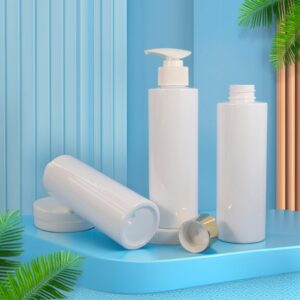
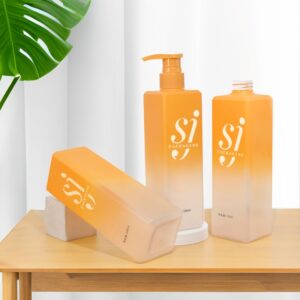
From our catalog we already produce 3 matching configuration(s) — see the images above. Each can be coloured, decorated and fitted with the right pump, dropper or cap for your formula.
Practical tips
- Use HDPE/PE for high-alcohol formulas; PET for clearer low-alcohol gels.
- Size by use: 50 ml pocket, 100–300 ml daily, 500 ml desk or family.
- A flip or disc cap is simplest; a pump helps high-traffic stations.
- Confirm alcohol compatibility before committing to a bulk run.
Industry signal
COVID-19 Update: FDA Warns Consumers About Hand Sanitizer Packaged in Food and Drink Containers – fda.gov — recent coverage reinforces the move toward better hand packaging practice.
Related: cleaning bottles.
PET vs HDPE for alcohol-based formulas
| Factor | HDPE | PET |
|---|---|---|
| Alcohol resistance | Excellent | Good at lower alcohol loads |
| Squeeze capability | Yes — suits gel dispensing | Rigid, does not flex |
| Clarity | Opaque or translucent | Clear |
| Light protection | Good in opaque colours | Limited unless coloured |
| Best for | Gels, high-alcohol liquids, pump formats | Clear low-alcohol gels, retail-friendly look |
The short version: HDPE is the safer default for anything with a high alcohol load, and PET is the option when clarity is a design requirement and the alcohol content is modest. Confirm with a compatibility test rather than assuming either way.
Size ladder and use case
| Size | Format | Use case |
|---|---|---|
| 50–60 ml | Pocket bottle, flip-cap | Personal carry, gift-with-purchase, travel |
| 100–120 ml | Handbag or car bottle | Daily personal use, retail single unit |
| 250–300 ml | Desk or counter bottle | Office, reception, salon station |
| 500 ml | Pump bottle | Family, clinic, high-traffic entrance |
| 1,000 ml and up | Bulk refill | Refill station, back-of-house |
Closure options
- Flip-cap — the simplest and cheapest, one-handed, and the default for pocket and travel sizes.
- Disc-top — a slightly larger aperture, better for gels that need a firmer squeeze.
- Lotion pump — for counter and desk formats, where the bottle stays put and the user does not want to touch the neck.
- Sprayer — occasional, for liquid formats applied to surfaces rather than hands.
Neck finishes in this category cluster around 20/410 and 24/410 for small formats, moving to 24/410 or 28/410 for larger pumps. As always, lock the closure before the bottle.
Labelling and claims
Sanitizer sits closer to a regulated product than most cosmetics, and the pack has to carry the information the market requires. Plan the label area into the bottle choice from the start — a 50 ml pocket bottle in an unusual shape can run out of flat, readable panel before the mandatory text is placed.
Two practical notes: opaque bottles limit any claim that depends on the consumer seeing the product, and the closure is part of the presentation, so a cheap cap undercuts a premium label. If the design needs to look clinical rather than cosmetic, a white or frosted opaque HDPE body with a plain cap does that job more convincingly than a clear bottle.
Filling and sealing
Alcohol evaporates, so the seal matters. Ask for a capping torque range and pass it to your filler, and confirm the liner or induction seal is compatible with the formula. For pump formats, check the dip tube length against the bottle depth — with a gel, a short tube leaves product behind and a long one can block.
Packing for retail and travel
Small formats are usually the ones that fail in transit, because the ratio of cap weight to bottle weight is unfavourable and a case of 50 ml bottles takes more handling per unit than a case of 500 ml. Specify the carton count and consider an insert or divider for pocket sizes. If the pack is going into a retail channel, confirm the case dimensions against the retailer’s pallet specification before the run, not after.
Compatibility testing before you commit
- Fill a sample with your actual formula, not water.
- Store it at ambient and at an elevated temperature for a compressed period.
- Inspect the body for crazing, clouding or deformation, and the closure for stress marks.
- Drop-test the filled bottle in its shipping carton.
- Repeat with the production sample before the bulk run is released.
This sequence costs very little and prevents the expensive version of the same discovery, which is a container of bottles that cannot be sold.
MOQ and how the order scales
Stock shapes in this category start around 5,000 pcs, and custom colour or decoration typically from 10,000. Because sanitizer is often bought in repeat cycles rather than once, it is worth fixing the neck finish and the closure in the first order and keeping them across re-orders — a stable closure means your filler settings, label artwork and carton dimensions all stay valid as volume grows.
Getting the spec right the first time
Send the formula’s approximate alcohol level, the size you want, the closure you prefer and your target retail price point. Those four data points are enough to recommend a material and a shape rather than quoting blind — and they avoid the most common sanitizer sourcing mistake, which is choosing a bottle on appearance and discovering the compatibility question afterwards.
Material and closure must be chosen together
A sanitizer bottle is a dispensing system, not a container. The material decides chemical compatibility, the closure decides the dose, and the neck decides whether the two meet. Choose them as a set: a high-alcohol gel that needs a firm squeeze points to HDPE with a disc-top, while a low-alcohol liquid in a premium retail pack may point to PET with a lotion pump. Deciding the material first and the closure second is how mismatches happen.
What to send for a quote
Send the alcohol level, target size, closure preference, whether the pack is retail or institutional, and your first-order quantity. With those five points a supplier can recommend a material and a neck that already exist on a stock mold, rather than quoting a new tool.
Questions buyers ask us most
What bottle is best for hand sanitizer?
HDPE or PET in 50–500 ml; HDPE resists alcohol better, PET looks clearer for lower-alcohol gels.
Can sanitizer bottles be clear?
Yes for lower-alcohol formulas; higher alcohol loads are safer in opaque HDPE to limit light and leaching.
Not sure which bottle, material or neck finish is right? Send your spec and we will point you to the closest stock shape or quote a custom mold.
Related Cleaning Bottles
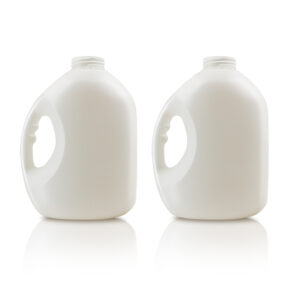
1000ml PE Plastic Detergent Bottle with Handle
PE · 1000 ml
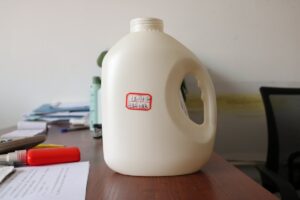
2000ml PE Plastic Detergent Bottle with Handle
PE · 2000 ml
350ml HDPE Cleaning Bottle for Dishwashing Liquid Packaging
HDPE · 350 ml

PET Cleaning Bottle (500ml)
PET · 500 ml