

A PET bottle manufacturer is not just a supplier of plastic — they own the mold, the color masterbatch and the quality system that decides whether your serum ships intact. Before you send a deposit, run these seven checks so a low quote does not become a rejected shipment.
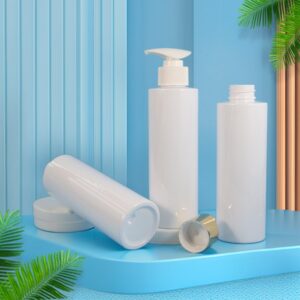

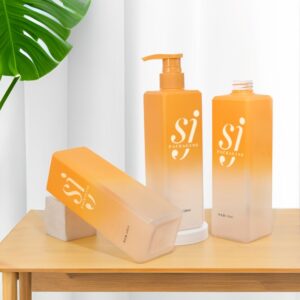
1. Confirm they actually run the molds
Ask for the mold list and cavity count. A real manufacturer holds steel molds for the neck finishes and shapes they quote; a trading company resells someone else’s. Request a mold photo or a sample pulled from their own line, not a catalog shot.
2. Match material and neck to your formula
PET is right for clear, rigid leave-on products (serums, toners, mists); PETG if the formula is acidic or active-heavy. Confirm the neck finish — 20/410, 24/410 or 28/410 — because your pump or dropper only seals on the exact thread. A mismatch costs a tooling run.
3. Get MOQ and lead time in writing
Stock PET shapes often start around 5,000 pcs; custom color or decoration from about 10,000 pcs. Lead time for stock is typically 10–15 days, custom 20–30 days. Pin these in the contract so ‘ready soon’ does not slip your launch.
4. Verify QC and export documentation
Ask for food-contact or cosmetic-safety declarations, batch test reports and a sample inspection sheet. For export, confirm they handle MSDS, packing list and the certificates your destination market requires (e.g. FDA, EU 10/2011).
5. Check decoration and customization capability
Silk-screen, hot-stamp, label and spray-coat each need different setups. A manufacturer that runs decoration in-house ships a finished bottle; one that outsources adds a handoff and a risk of color drift between batches.
6. Ask about recycled-content options
If your brand needs PCR or rPET, confirm the exact recycled percentage they can declare per batch and whether they supply a GRS certificate. Vague ‘eco’ claims will not survive a buyer audit.
7. Sample before bulk
Order 20–50 units first. Fill one with your actual formula, drop-test it, and check the closure seats. The cost of a sample round is trivial next to a container of wrong bottles.
Related: cosmetic bottles, our factory.
Compliance note: Shijin is ISO 9001:2015 certified and supplies the compliance documents your market requires — including FDA and EU 10/2011 certificates on request — so your order clears customs and retailer audits.
Questions buyers ask us most
How do I verify a PET bottle manufacturer is a real factory?
Ask for their mold list, cavity count and a sample pulled from their own production line; a trading company will only show catalogs. A factory photo with your requested neck finish is the strongest proof.
What is a typical MOQ for custom PET bottles?
Stock PET shapes start around 5,000 pcs; custom color or decoration usually begins near 10,000 pcs. Exact minimums depend on bottle size and decoration.
How long does a PET bottle order take?
Stock items typically ship in 10–15 days; custom color or molded shapes run 20–30 days including decoration and QC sampling.
Can a PET bottle manufacturer supply recycled content?
Yes — many offer PCR or rPET grades and can declare the exact recycled percentage per batch, with a GRS certificate where required.
Buyer checklist before you order
Lock these four things before requesting a quote: the fill volume and the headspace you need above it; the closure type (dropper, pump, spray or cap) and its neck size; the decoration (silk-screen, hot-stamp or label); and the certification your market requires.
Getting the neck finish right first saves the most time — it decides which closures will ever fit, and it is cheaper to confirm than to re-tool.
Common sizing mistakes
| Model | Material | Capacity | Neck |
|---|---|---|---|
| SJT0011 | PET | 11 ml | 24 mm |
| SJT0246 | PET | 246 ml | 20 mm |
| SJT0326 | PET | 326 ml | Custom |
| SJE0216 | PE | 100 ml | 24 mm |
The usual error is specifying the bottle by its marketing size (a ’50 ml’ bottle) while the closure and label were specced for a different neck. Match the declared capacity to the actual internal volume, not the printed number, and the fill line stays clean.
The second mistake is ignoring headspace. A viscous product needs more air above the fill than a thin one, so size the bottle to the fill plus the space the capper and shipper require.
From decision to first sample
Once the size, material and closure are set, ask for a stock-mold sample rather than waiting on a custom tool. You can validate the bottle on your own line in days and confirm the closure seats before any tooling commitment.
Bring the actual formula to the sample call — a bottle that looks right empty can behave differently once filled, and the real fill is what the stability and drop tests should run against.
If you only remember one thing
Specify the neck finish before anything else. It is the one dimension that locks the closure, the capper and the label, and fixing it late is the most expensive change in the whole programme.
Everything else — colour, decoration, even the exact capacity — can flex around a confirmed neck.
Not sure which bottle, material or neck finish is right? Send your spec and we will point you to the closest stock shape or quote a custom mold.
Related PET Bottles
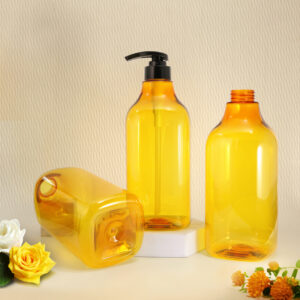
1000ml PET Bath Bottle
PET · 1000 ml
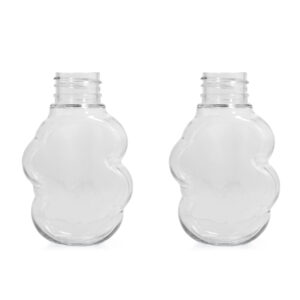
100ml PET Cosmetic Bottle with Dropper & Mist Sprayer (28/410 Neck)
PET · 100 ml
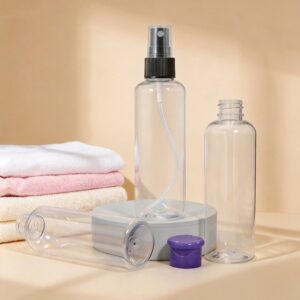
100ml PET Cosmetic Bottle with Lotion Pump & Disc-Top (24/410 Neck)
PET · 100 ml

100ml PET Cosmetic Bottle with Roll-on Applicator (24/410 Neck)
PET · 100 ml