
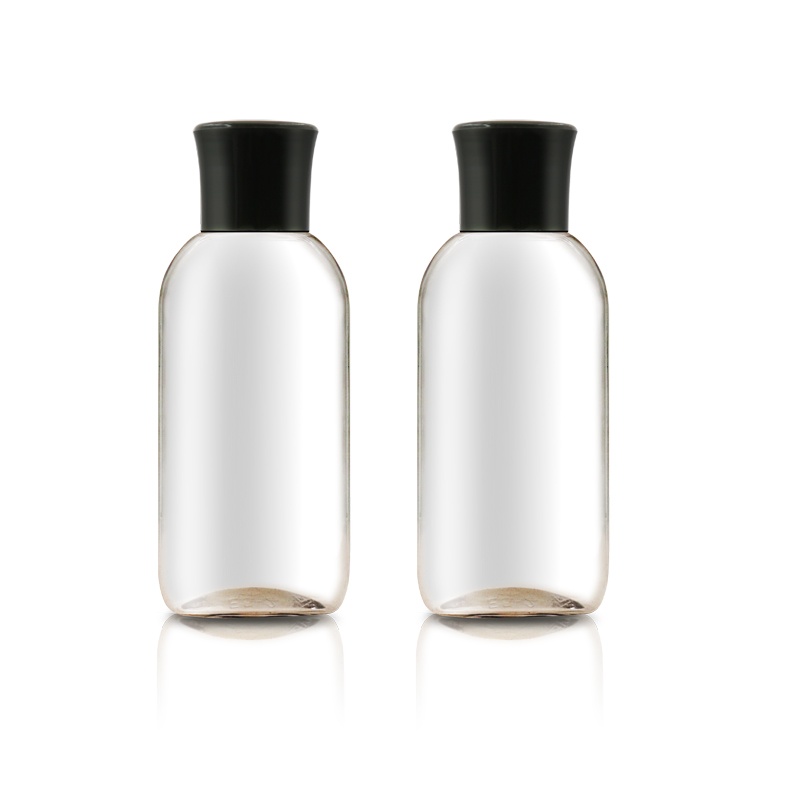
When brands evaluate premium cosmetic packaging, the realistic alternatives to PET are glass and aluminum. This article compares PET cosmetic bottles against glass on the factors that affect cost, safety, and shelf appeal for export brands.
Bottles from our catalogue — PET bottles as a glass alternative.

Weight & Freight
Glass is heavy — a 30 ml glass bottle can weigh more than a 150 ml PET bottle. On a 20-foot container, that weight difference translates directly into higher sea and air freight and more pallets. PET is roughly one-third the weight of glass, which is why most high-volume export programs default to PET.
Breakage & Secondary Packaging
Glass breaks in transit. Exporters add dividers, heavier cartons, and sometimes insurance to manage breakage. PET is shatter-resistant, so secondary packaging can be lighter and cheaper. For e-commerce shipments where a broken bottle means a refund and a bad review, PET’s durability protects your brand.
| Factor | PET | Glass |
|---|---|---|
| Weight | Low (≈1/3 of glass) | High |
| Breakage risk | Very low | High in transit |
| Clarity | Up to 95% | 100% |
| Freight cost | Lower | Higher |
| Recyclability | Yes (PCR available) | Yes |
Clarity & Shelf Appeal
High-clarity PET reaches up to 95% light transmission, visually close to glass for most formulas. With frosted, matte, or soft-touch finishes, PET can read as premium without the glass weight penalty. For formulas sensitive to light, amber or colored PET also adds UV protection that clear glass lacks.
When to Still Choose Glass
Glass remains the right call for ultra-premium fragrances, certain essential-oil formats where brand ritual matters more than freight, and markets where consumers explicitly expect glass. For everything else — daily skincare, toner, lotion, cleansing oil — PET is the pragmatic, cost-efficient choice.
Related Reading
See our 150 ml PET cosmetic bottle or compare 340 ml custom PET bottle options. Request a quote for a side-by-side sample kit.
Compliance note: Recycled-content claims must be verifiable, not assumed. Shijin supplies recycled-content PCR grades, and our sustainability wording follows the FTC Green Guides so your claims stay defensible in every market.
Side-by-side: which material fits the job
| Model | Material | Capacity | Neck |
|---|---|---|---|
| SJT0137 | PET | 137 ml | 28 mm |
| 350ml HDPE Cleaning Bottle for Dis | HDPE | 350 ml | 28/410 |
| SJE1683 | PETG | 100 ml | 18 mm |
| SJE0148 | PE | 200 ml | 23 mm |
PET reads as premium and stays clear; HDPE and PE take impact and squeezability; PETG adds a heavier, glossier feel for high-end skincare. The right call depends on the formula, the fill line and the shelf you are aiming for.
How we steer buyers to each material
For water-clear serums, toners and lotions we almost always start with PET — it prints and hot-stamps cleanly and shows the product through the wall.
For squeezable shampoos, conditioners and cleaners, PE or HDPE is the safer body because it flexes without cracking and seats pump and trigger closures tightly.
For a luxury finish or a bottle that must survive drops on a bathroom floor, PETG earns its cost on the shelf.
Cost and lead-time reality
Material is only one line of the landed cost. PET and HDPE both run fast on high-cavitation tooling, so their unit cost stays low at volume; PETG costs more per gram and fills more slowly, which shows up in the piece price.
Lead time tracks tooling, not material — a stock mold ships samples in roughly a week, while a new custom shape adds tooling and validation before the first bulk run. Pick the material for the product, then plan the tooling for the timeline.
A simple way to decide
If the product is clear and sits on a premium shelf, start with PET. If it is squeezed, dropped or filled on a high-speed line, lean HDPE or PE. If the look has to feel expensive, PETG earns its place.
When in doubt, sample one of each in the size you plan to sell — the difference reads immediately in the hand, and that is the opinion that should decide.
Frequently Asked Questions
Is PET clearer than glass?
High-clarity PET reaches up to 95% light transmission, visually close to glass for most cosmetic formulations, while being far lighter and shatter-resistant.
Which is cheaper to ship internationally?
PET is roughly one-third the weight of glass and does not need the heavy secondary packaging glass requires, so air and sea freight are lower and breakage claims drop.
Can PET be recycled like glass?
Yes. PET is one of the most recycled plastics globally. Shijin also offers recycled-content PCR PET for brands with recycled-content commitments.
Related Cosmetic Bottles
100ml HDPE Cosmetic Bottle
PE · 100 ml
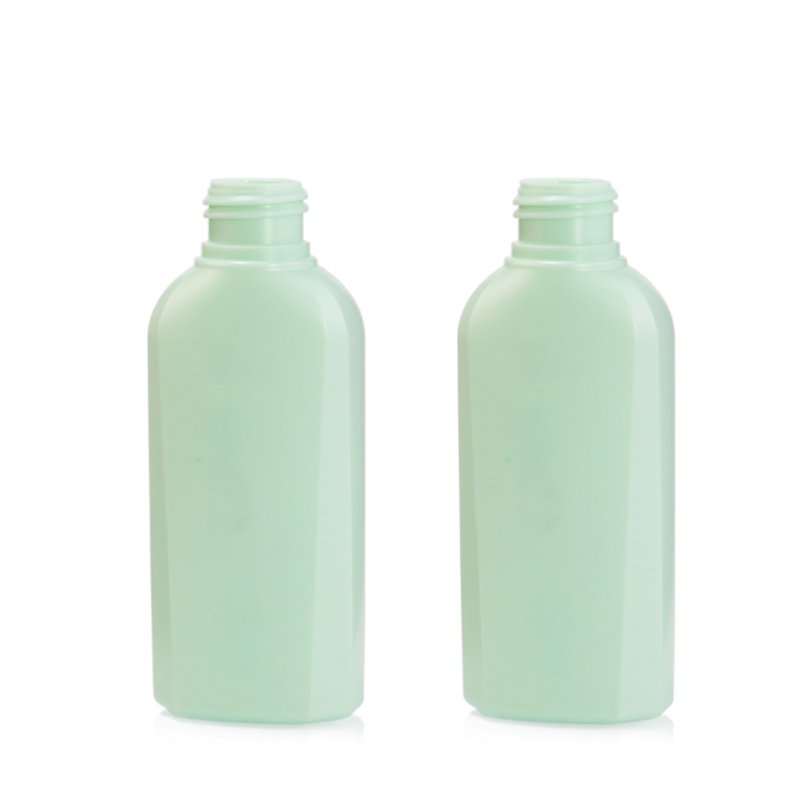
100ml HDPE Cosmetic Bottle – Custom Logo
HDPE · 100 ml
100ml PE Cosmetic Bottle for Facial Cleanser & Lotion – 20mm Neck, 18g
PE · 100 ml
100ml PE Soft Touch Cosmetic Bottle – 24mm Neck
PE · 100 ml