
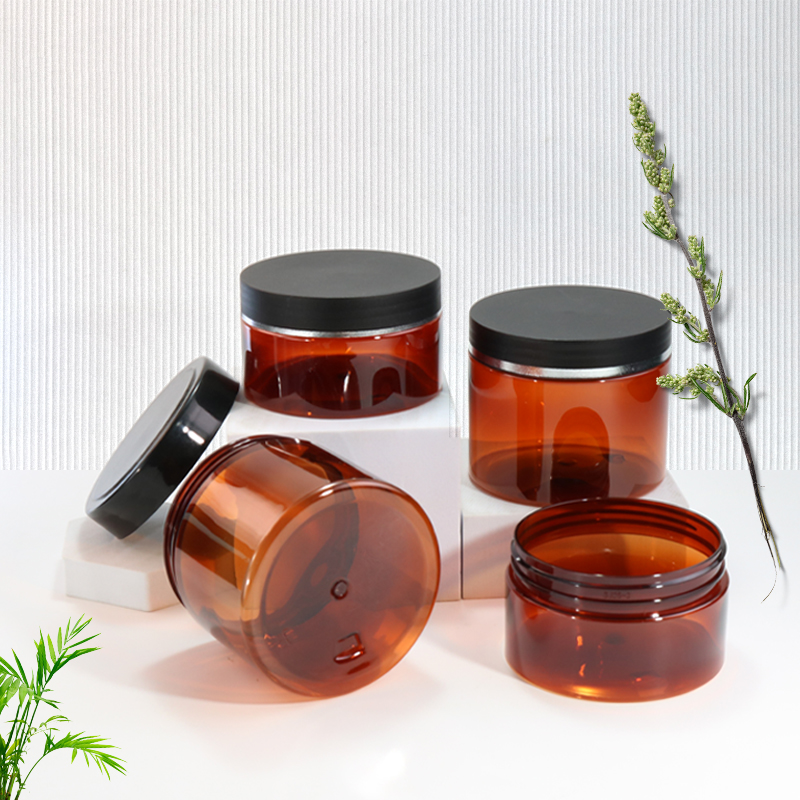
Most cosmetic bottles are PET, but when a formula is hot-filled or needs hinge flexibility, polypropylene (PP) wins. Here is when to switch.
Bottles from our catalogue — polyolefin bottles used where PET reaches its limits.
Heat resistance
PP tolerates hot-fill temperatures that would soften PET, so it is the right body or closure for hot-filled products and warm-fill lines.
Where PP is used
PP appears in closures, hinge caps, hot-fill sachets and some squeeze bottles. It is often paired with a PET body — PET for the clear wall, PP for the functional cap.
Trade-offs
PP is less clear (translucent) and slightly softer than PET. Choose it for function over clarity, and keep it mono-material with the closure for recyclability.
Related: cosmetic bottles.
Compliance note: Shijin is ISO 9001:2015 certified and supplies the compliance documents your market requires — including FDA and EU 10/2011 certificates on request — so your order clears customs and retailer audits.
PP wins on heat, hinge and flex
Polypropylene earns its place where PET struggles. It tolerates hot-fill temperatures that would soften PET, and its natural living hinge flexes thousands of times without cracking — which is why flip-tops and hinge caps are PP. It is also slightly softer, making it a good squeeze bottle body for products dispensed by hand pressure.
The pairing is usually PET body + PP closure: PET for the clear, rigid wall, PP for the functional cap. That keeps clarity on the shelf while putting the flexible, heat-tolerant part where the function is.
Why closures are almost always PP
Beyond bottles, PP is the default resin for closures for a reason: its living hinge flexes thousands of times without cracking, and it tolerates the heat of capping and hot-fill lines. That is why a PET bottle usually carries a PP cap — the body takes clarity, the closure takes function.
Keeping the pair in compatible resins — a PET body with a PP cap — also keeps the pack recyclable in practice, because the two separate cleanly in the recycling stream.
The trade-offs to plan around
| Property | PP | PET |
|---|---|---|
| Clarity | Translucent | Clear |
| Heat resistance | High | Low–moderate |
| Flex / hinge | Excellent | Rigid |
| Surface hardness | Softer | Harder |
PP is less clear and slightly softer than PET, so choose it for function over aesthetics. For recyclability, keep the bottle and closure in the PP stream — a PP bottle with a PP cap recycles cleanly.
What good execution looks like
A solid process starts with the tool and ends with a measured, repeatable part. We cut the mold in-house, validate the first article against the drawing, and hold wall and weight within a tolerance band so every bottle off the line seats its closure the same way.
Decoration is where most programmes slip — silk-screen and hot-stamp need a clean, flat landing zone and a cure check, or the print rubs off in transit. We run that check before bulk printing.
The point of the discipline is consistency: a buyer should be able to reorder six months later and receive a bottle that matches the first one part-for-part.
Red flags to avoid
Watch for suppliers who quote a closure size they cannot actually seat, who skip the first-article sign-off, or who cannot show the resin certificate for the market you ship to. Each of those turns into a line-down event once the order is in production.
How we support your first run
Because the tool is in-house, sampling lead time is typically 3–10 days from drawing to first article. We hold the sample against the drawing, confirm wall and weight, then scale.
For a custom programme that sequence means you validate before you commit — and because the same mold and resin are used on every repeat, later orders match the approved first article.
The takeaway for buyers
Treat the first-article sample as the contract. If it seats, seals and survives the drop test, hold every later order to it, and the programme stays consistent without re-engineering.
That single discipline removes most of the risk buyers associate with offshore tooling.
Frequently Asked Questions
When do I need PP instead of PET?
For hot-fill formulas or hinge/squeeze parts; use PET for a clear rigid body.
Is PP recyclable?
Yes, in the PP stream; keep the bottle and closure in compatible resin to stay recyclable.
When should I use PP instead of PET?
For hot-fill formulas, hinge or flip-top caps, and soft squeeze bottles. Use PET when you need a clear, rigid body and the formula is cold-filled.
Is PP recyclable?
Yes, in the PP stream. Keep the bottle and closure in compatible PP resin so the whole pack recycles cleanly.
Explore our full bottle catalog or contact our team for custom tooling and low-MOQ production runs.
Related PET Bottles
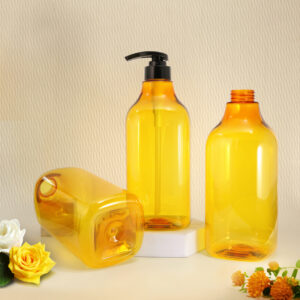
1000ml PET Bath Bottle
PET · 1000 ml
100ml PET Cosmetic Bottle with Dropper & Mist Sprayer (28/410 Neck)
PET · 100 ml
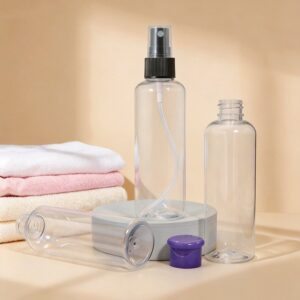
100ml PET Cosmetic Bottle with Lotion Pump & Disc-Top (24/410 Neck)
PET · 100 ml

100ml PET Cosmetic Bottle with Roll-on Applicator (24/410 Neck)
PET · 100 ml