
Private label and OEM are used interchangeably but mean different things for control, cost and exclusivity. The distinction that affects your margin.

Private label
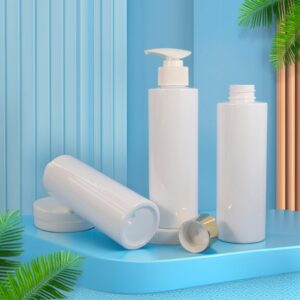
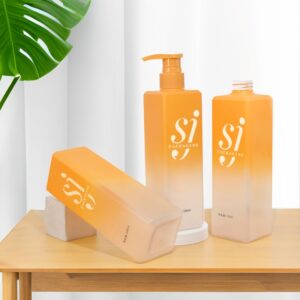
You take a stock bottle and add your brand through colour and decoration. It is the fastest, lowest-MOQ route, but the shape is shared with other brands.
OEM / ODM
The factory develops or adapts the shape to your specification, possibly with exclusive tooling. More control and exclusivity, at a higher MOQ and cost.
How to choose
Use private label to launch fast and test the market; move to OEM when differentiation or exclusivity becomes the strategy.
Related: our factory.
Shop these bottles: 220 ml PET cosmetic bottles, 300 ml PET cosmetic bottles, 500 ml PET cosmetic bottles.
Private label vs OEM at a glance
| Decision | Private label | OEM / ODM |
|---|---|---|
| Who owns the shape | Shared — the mold is a stock tool used by many brands | Yours, or exclusive to you under agreement |
| Tooling cost | None | One-time tool cost |
| MOQ | Lower — stock shapes from 5,000 pcs | Higher, because a run has to justify the tool |
| Lead time to first order | Short — only colour and decoration are new | Longer — tooling plus sampling before production |
| Differentiation | Colour, finish, decoration, closure | Shape, silhouette, ergonomics, structure |
| Best for | Launching fast, testing a market, scaling a proven formula | Building a defensible look, premium tiers, long-term ranges |
What private label really covers
Private label is not “no customisation”. On a stock mold you still control a great deal:
- Colour — matched to a masterbatch or Pantone reference, in transparent, frosted, opaque or pearlescent form.
- Surface finish — high gloss, soft-touch or matte, each reading very differently on shelf.
- Decoration — silk screen, hot stamping, labelling, shrink sleeve or a combination.
- Closure and dispenser — the pump, disc-top, sprayer or cap that shapes how the product is used.
- Secondary packaging — cartons, inserts and retail presentation.
For most brands in their first two or three years, this is enough. The bottle does not need to be unique; the brand experience on shelf does.
What OEM and ODM add
ODM means the factory develops a design, often adapting an existing internal shape to your brief. OEM means the design is yours — supplied by your designer or developed to your specification — and the tool is cut for it. Either way you gain the one thing private label cannot give you: a silhouette no competitor can copy without tooling it themselves.
OEM also opens structural possibilities: an integrated handle, an asymmetric profile, a wall-thickness profile tuned to your filling and shipping conditions, or a neck that no stock mold carries.
Where the cost difference sits
Compare the two models on total cost, not unit price:
- Private label — no tooling; cost is resin, molding, decoration and closure. The unit price is higher than a fully amortised custom bottle only until your volume is large.
- OEM — add a one-time tool cost, sampling and approval time, and a higher minimum run. Once the tool exists, per-unit cost can fall below the stock equivalent at volume, because you are no longer paying for a shared tool’s overhead.
The break-even is a volume question, and it is worth asking your supplier to model it at your forecast rather than guessing.
Time to market
Private label usually means weeks rather than months: samples of an existing shape, colour matching, a decoration proof, then production. OEM adds tooling fabrication, first-article samples, fit checks with your closure and filling line, and only then production. If a launch date is fixed — a trade show, a retailer reset, a season — private label is the lower-risk route.
Which model for which stage
- Pre-launch and first SKUs — private label. Get to market, learn what sells.
- Growing range — private label with more decoration control, plus one or two OEM hero SKUs.
- Established brand with forecast volumes — OEM for the signature lines, private label for ancillaries and limited editions.
- Distributor or private-brand owner — private label across the board, with OEM only where a retail customer demands exclusivity.
Protecting your design
With OEM, the tooling agreement matters as much as the drawing. Agree in writing who owns the mold, whether it is exclusive to you, what happens to it if you move suppliers, and how the shape may be used after the relationship ends. With private label there is nothing to protect on shape, so exclusivity — if you need it — has to be negotiated as a term, for example an agreement not to supply the same colour and decoration combination to another brand in your market.
Moving from one to the other
The transition is more common than most buyers expect, and it is easiest when planned. Keep the same neck finish across both models so your closures and pumps carry over. Stay with the same supplier so colour and finish stay consistent. Use the stock mold to prove the formula and the volume, then tool the custom shape around the specifications you have already validated — capacity, headroom, decoration area, closure system — rather than starting the design from a blank page.
What changes when you scale
The model that works at 5,000 pieces is not always the one that works at 50,000. As volume grows, the economics shift toward tooling, because a one-time mold cost spread across a larger run matters less per unit, while a shared stock shape becomes a competitive liability if competitors are buying the same one.
The practical trigger is usually not volume alone but repetition: once you have re-ordered a stock shape three or four times and you know the formula works, the forecast is stable enough to justify a tool. Tooling an unproven product is how brands end up with an expensive mold and a bottle nobody re-orders.
A simple decision sequence
- Is the product proven, or are you testing a market? Unproven — private label.
- Is the shape itself the brand asset, or is the label? Label — private label is enough.
- Do you need a silhouette competitors cannot buy? Yes — OEM.
- Does a retail customer require exclusivity? Yes — OEM with a private tool.
- Is your re-order volume stable and forecastable? Not yet — stay on stock, tool when it is.
Where the two models meet in practice
Most successful ranges end up using both. The hero SKU carries a custom silhouette; the ancillaries, travel sizes and limited editions run on stock molds in the same family colour and decoration, so the shelf still reads as one brand. Sourcing both from the same factory keeps the neck finish and the colour reference identical across the range, which is what makes that consistency possible.
Questions buyers ask us most
Is private label cheaper than OEM?
Usually yes — there is no tooling cost; OEM adds mold and development expense.
Which gets exclusivity?
OEM with private mold reserves the exact shape to your brand.
Not sure which bottle, material or neck finish is right? Send your spec and we will point you to the closest stock shape or quote a custom mold.