
Last updated: 30 August 2026.
Quick answer: A roll-on bottle is a container closed with a neck-mounted ball — usually steel, glass or plastic, from about 8 mm to 20 mm in diameter — that dispenses a thin film of product as it rolls across the skin. It is the standard format for deodorants, perfume oils and eye serums, and it works well for any low-viscosity formula that should be applied in a controlled, thin layer. The three decisions that matter are ball diameter, ball material, and the bottle material and neck finish that hold the ball housing.
A roll-on is the cheapest precision applicator in packaging: one ball, one housing, no pump mechanism. But it only works inside a viscosity window — too thin and it gushes or leaks; too thick and it will not roll. Get the ball size and the bottle material right and the rest follows.
This guide is for buyers choosing a roll-on for the first time, or switching a formula into one.

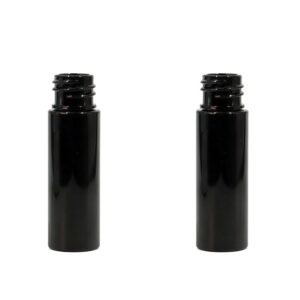
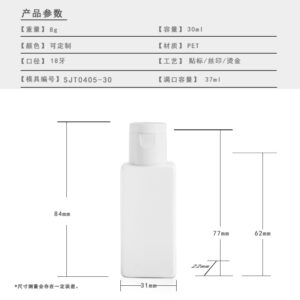
What sizes and ball diameters are available?
Ball diameter is the spec that buyers overlook and consumers feel first. It sets how much product is deposited per pass and how the applicator feels on the skin.
| Ball diameter | Typical use | Feel and deposit |
|---|---|---|
| 8–10 mm | Eye serums, precise application | Small contact patch, thin, controlled deposit |
| 12–15 mm | Deodorant, perfume oil | Mid contact patch, the most common range |
| 18–20 mm | Body deodorant, massage oils | Large contact patch, heavier deposit |
Bottle capacity scales with the application: eye serums are commonly 5–15 ml, perfume oils 5–10 ml, deodorants 40–75 ml. Match the ball to the treatment area — a large ball on an eye serum is a product waste; a small ball on a body deodorant is an irritation.
Which ball material should you choose?
The ball is the one part of the package the consumer touches repeatedly, so it is both a function decision and a feel decision.
| Ball material | Feel | Best for | Notes |
|---|---|---|---|
| Stainless steel | Cold, smooth, premium | Eye serums, high-end skincare | Inert, hygienic, the premium cue |
| Glass | Smooth, neutral | Perfume oils, serums | Inert, cost-effective, can be branded |
| PP / plastic | Warmer, softer | Deodorants, value lines | Cheapest, no breakage risk |
The compatibility question is the same as any closure: the ball must sit in a housing that is chemically compatible with your formula, and the ball itself must not react with the product. Steel and glass are inert; plastic balls should be confirmed compatible with any solvent or essential-oil content.
Bottle material: glass, PET or PP?
Roll-on bottles appear in all three, and the choice is usually driven by the product and the brand position.
| Material | When to choose | Trade-off |
|---|---|---|
| Glass | Perfume oil, premium serums, chemical resistance | Inert and premium, but heavier and breakable |
| PET | Clear cosmetics, mid-market | Clear and light, good chemical resistance |
| PP | Value deodorants, squeeze-friendly | Cheap and robust, but not clear |
Glass is the traditional choice for perfume oil and roll-on fragrance because it is inert and feels premium. PET gives you the clarity of glass at a fraction of the weight and without breakage — which also cuts freight. PP is the workhorse for deodorant where cost and impact resistance matter more than appearance.
The neck finish is the detail that makes the whole format work: the ball housing presses into the neck, and if the finish is wrong the ball leaks or pops out. Common roll-on neck finishes include 18 mm and 20 mm, but always confirm the exact finish against the housing you are using.
Which formulas suit a roll-on — and which do not?
A roll-on is a thin-film applicator. It works inside a viscosity window.
| Works well | Avoid |
|---|---|
| Deodorants (liquid, gel) | Very thick creams or balms |
| Perfume oils and attars | Formulas with particles that clog the ball housing |
| Eye serums and roll-on gels | Very thin, watery formulas that leak |
| Cooling gels, massage oils | Solvent-heavy formulas that attack the housing |
The two classic failures are a formula too thick to roll (the ball sticks) and a formula too thin to seal (it leaks around the ball). A compatibility test — your formula in the actual bottle and ball, standing at room temperature and at elevated temperature — costs a few weeks and is the cheapest way to avoid both. As cosmetics, deodorants, perfume oils and eye serums also sit inside a framework the FDA oversees rather than pre-approves, so keep the compliance evidence — resin statements and dated test reports — with the order rather than relying on a certificate.
How are roll-on bottles filled and decorated?
Roll-on bottles fill through the neck before the ball housing is pressed in, which makes them a little less forgiving than a screw-cap bottle.
- Fill first, then seat the housing — the ball housing is pressed in after filling and is usually not meant to be removed.
- Leave headspace — the ball needs room to roll; overfilling is how you get a gushing first use.
- Decoration before or after — silk-screen or label the bottle before the housing is seated, so the applicator is not in the way.
Decoration is the same menu as any bottle — silk-screen printing, hot-stamping or labelling — and the same rule applies: specify it as its own line item so you know what the per-piece decoration cost is.
Frequently asked questions
What is the standard ball size for a deodorant roll-on?
Most deodorants use a 12–15 mm ball; body deodorants can go up to 18–20 mm for a heavier deposit. Eye serums use smaller balls, around 8–10 mm.
Glass or stainless steel ball — which is better?
Stainless steel feels colder and more premium and suits eye serums and high-end skincare; glass is inert and cost-effective and suits perfume oil. Both are inert, so the choice is feel and brand position.
What bottle material is best for perfume oil?
Glass is traditional for perfume oil because it is inert and premium. PET offers the same clarity at lower weight and no breakage risk, which also reduces freight cost.
Why does my roll-on leak?
Usually a neck finish or housing mismatch, a formula too thin to seal around the ball, or overfilling that leaves no headspace. Confirm the finish against the housing and run a standing compatibility test with the real formula.
Can a roll-on be refilled?
Generally not by design — the ball housing is pressed in and is not meant to be removed. Treat a roll-on as a single-use package unless the supplier specifies a refillable housing.
What neck finish does a roll-on use?
Common roll-on neck finishes are 18 mm and 20 mm, but the housing dictates the exact finish. Confirm the finish against the specific housing you are pairing with before ordering.
Are roll-on bottles recyclable?
Glass and mono-material PET or PP roll-ons are recyclable where the ball housing separates; mixed-material housings complicate recycling. Ask the supplier how the ball housing is removed or whether the package is mono-material.
Next step
If you are moving a deodorant, perfume oil or eye serum into a roll-on, send us the formula viscosity, target capacity and ball-size preference, and we will recommend the bottle material, neck finish and ball that fit it — and quote the decoration as its own line. If a stock shape in our 2,000+ mold library matches, we will tell you.
Shijin Packaging — factory-direct cosmetic and daily-chemical plastic bottles since 2003, operating 30+ automatic blow-molding lines and 10+ injection-molding machines across a 15,000 m² facility in Huizhou, Guangdong, with daily capacity of approximately 200,000 pieces.
- Website: https://shijinpackaging.com
- Full catalogue: https://shijinpackaging.com/catalog/
- Email: sales@shijinpackaging.com
Related reading
- How to Choose Bottles for Serums and Facial Oils (30–50 ml)
- Dropper, Pump or Spray: Choosing the Right Closure for Your Bottle
- Bottle Neck Finishes Explained: 18 / 20 / 24 / 28 mm
Related Cosmetic Bottles
100ml HDPE Cosmetic Bottle
PE · 100 ml
100ml HDPE Cosmetic Bottle – Custom Logo
HDPE · 100 ml
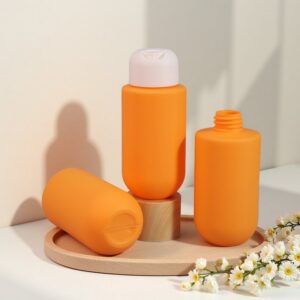
100ml PE Cosmetic Bottle for Facial Cleanser & Lotion – 20mm Neck, 18g
PE · 100 ml
100ml PE Soft Touch Cosmetic Bottle – 24mm Neck
PE · 100 ml