Serums are high-value, low-volume and formula-sensitive. The closure you choose — dropper or pump — changes dose control, oxygen exposure and perceived premium. Here is the practical split.

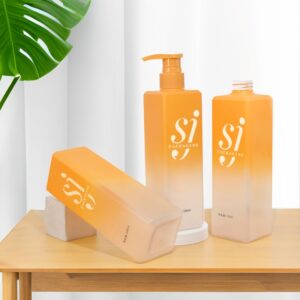
Dropper bottles
A dropper gives controlled drops, ideal for oil-based or ritual serums. A 20/410 or 24/410 neck takes standard droppers, and amber or frosted PET protects light-sensitive actives from oxidation.
Airless pump bottles
An airless pump minimises oxygen contact and dispenses almost all the product, which is ideal for water-based or vitamin-C serums where oxidation is the enemy. It also wastes less and stays cleaner.
How to choose
Oil-based formula with a ritual feel → dropper; water-based or oxygen-sensitive active → airless pump. Keep the size at 30–50 ml so the product is finished while still active.
Related: cosmetic bottles.
Compliance note: For cosmetics, materials and decoration must stay compliant. Shijin bottles and inks meet FDA cosmetic requirements and the EU Cosmetics Regulation (EC 1223/2009), under ISO 9001:2015 quality management.
Dropper vs pump, decided by the formula
The closure changes how the serum behaves. A dropper gives controlled drops and a ritual feel — ideal for oil-based serums where you want precise, small doses. An airless pump minimises oxygen contact and dispenses almost all the product, which is why it wins for water-based and oxygen-sensitive actives like vitamin C.
Keep the size at 30–50 ml so the product is finished while still active — a serum that sits half-used for months has oxidised long before it empties.
Ampoules and travel formats
Beyond dropper and pump, ampoules and small vials suit single-dose or travel formats where an air-free, measured dose matters. Ampoules protect actives completely but are single-use and higher cost per ml; a 10–20 ml airless pen or vial bridges travel and sampling.
Choose the format by how the serum is consumed — daily multi-dose, single ritual dose, or travel trial — rather than by habit, and the closure decision follows.
Protecting the active inside
- Use amber or frosted PET to shield light-sensitive actives from oxidation.
- Choose a 20/410 or 24/410 neck for standard droppers and treatment pumps.
- For vitamin C and retinol, an airless pump is the safest default — oxygen is the enemy.
- Match the dose per stroke or drop size to the product’s application.
The decision is really about the formula’s sensitivity: the more oxidation-prone the active, the more airtight the closure should be.
Closure × bottle compatibility
| Model | Material | Capacity | Neck |
|---|---|---|---|
| SJT0522 | PET | 80 ml | 24/410 |
| SJT0525 | PET | 230 ml | 24 mm |
| SJE1733 | PE | 300 ml | 24 mm |
| Wholesale 80ml HDPE Cosmetic Bottl | HDPE | 80 ml | Custom |
A closure only works if the neck finish matches. The bottles above cover the common 18/20/24/28 mm finishes we stock; pick the closure to the neck, not the other way round.
If a closure you like is specced for a different neck, the right move is usually to match the bottle neck to the closure you want — re-threading a bottle is cheaper than fighting a mismatch on every unit.
Sizing the closure to the fill
Heavier or more viscous fills want a wider neck and a pump or trigger that primes without air-lock. Light serums and essences suit a narrow 18–20 mm dropper or mist. Match the closure stroke to the daily use, and the bottle feels designed rather than assembled.
Decoration and the closure landing zone
Print and label live on the body, but the closure needs a clean, round neck to seat and seal. Leave a flat band above the neck free of decoration so the torque and seal are repeatable across the run.
On a custom shape, design that band into the tool from the start — adding it afterwards means re-cutting the mold, which is the kind of change that pushes lead time out.
One checklist before you buy
Before you buy, confirm three numbers: the neck finish on the bottle, the neck finish on the closure, and the torque the capper applies. If those three agree, the rest is detail.
Keep the decoration band clear of the neck so the seal is repeatable on every unit.
Frequently Asked Questions
Is a dropper or pump better for vitamin C serum?
An airless pump — vitamin C is oxygen-sensitive and the pump limits exposure and waste; use a dropper for oil-based serums.
What size serum bottle sells best?
30 ml is the standard premium size; 50 ml works for value or travel-compliant larger formats.
Is a dropper or pump better for vitamin C serum?
An airless pump — vitamin C is oxygen-sensitive and the pump limits exposure and waste. Use a dropper for oil-based serums where precise drops matter.
What size serum bottle sells best?
30 ml is the standard premium size; 50 ml works for value or travel-compliant larger formats. Keep it small so the active is used before it degrades.
Explore our full bottle catalog or contact our team for custom tooling and low-MOQ production runs.