
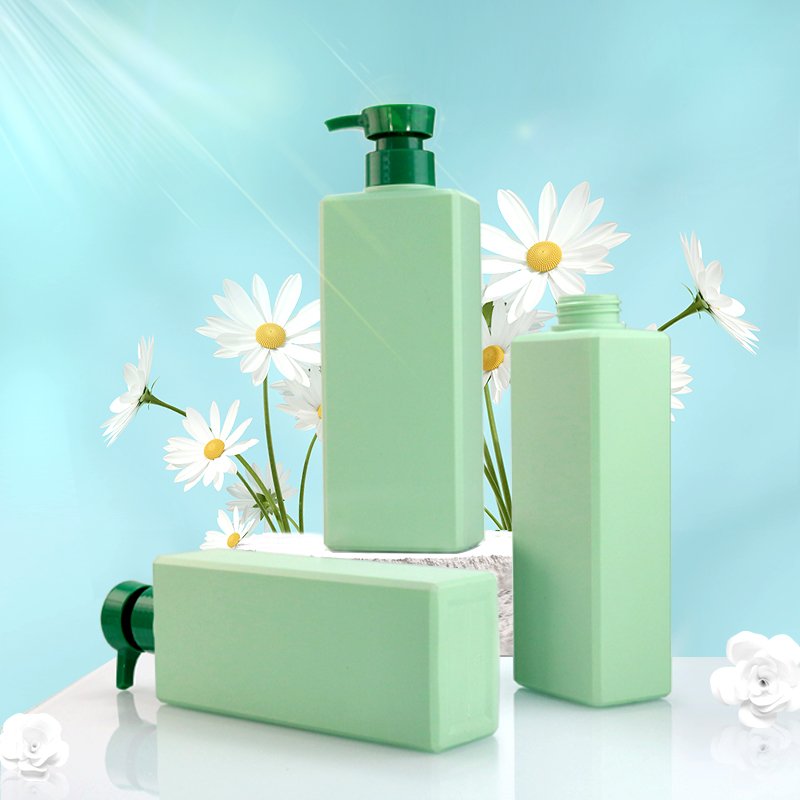
Shampoo, conditioner, and body wash are high-volume formats where the bottle must survive the shower, dispense reliably, and look good on a retail shelf. This guide covers OEM sizes and closures for shampoo and bath bottles.
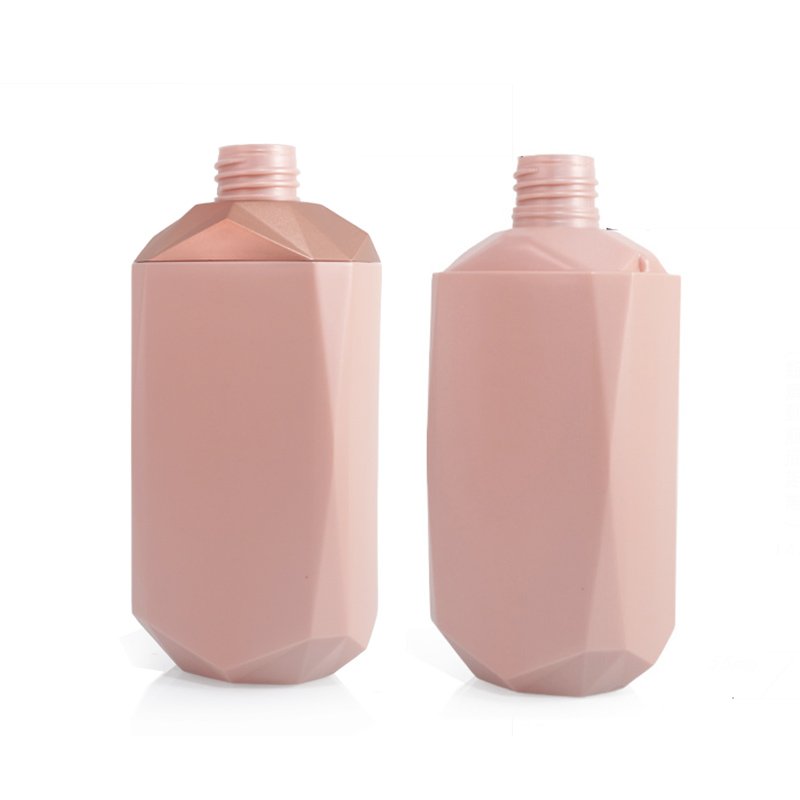
Bottles from our catalogue — shampoo and bath bottles across size runs.
Standard Sizes
- 350–400 ml — hotel, travel, trial
- 500–530 ml — retail shampoo standard (530 ml OEM shampoo bottle)
- 680 ml — family / value body wash (680 ml bath bottle)
Closures
Lotion pumps (28/410) are the default for shampoo and body wash because they dispense a controlled amount and resist leaks. Disc-tops and flip-caps are common for value or travel formats. For a premium feel, a weighted cap or soft-touch collar adds shelf presence.
| Format | Size | Closure |
|---|---|---|
| Retail shampoo | 500–530 ml | Lotion pump 28/410 |
| Body wash | 680 ml | Lotion pump 28/410 |
| Travel | 350–400 ml | Flip-cap / disc-top |
Material & Sustainability
PET is the standard for shampoo bottles because it is clear, light, and recyclable. For brands with sustainability commitments, recycled-content PCR PET lets you state a recycled-content percentage without changing the bottle shape or fill line. Mono-material PET also improves recyclability versus multi-material laminates.
Specifications Matter
Beyond size and closure, confirm wall thickness, graduation marks if needed, and cap torque. Shijin supplies these with full specs per SKU so your filler can set machinery without trial-and-error.
See Shampoo & Bath Options
View the 530 ml shampoo bottle and 680 ml bath bottle, or request a quote for a custom color and finish.
Compliance note: For cosmetics, materials and decoration must stay compliant. Shijin bottles and inks meet FDA cosmetic requirements and the EU Cosmetics Regulation (EC 1223/2009), under ISO 9001:2015 quality management.
How the size ladder works
Shampoo and bath bottles are bought in a predictable ladder, and each rung exists for a commercial reason rather than a cosmetic one.
- 350–400 ml — hotel amenity, travel retail, trial and sample packs. Small enough to be given away, large enough for a week of use.
- 500–530 ml — the retail shampoo standard. The size a shopper picks up without thinking, and the one retailers plan shelf space around.
- 650–680 ml — family and value body wash, and the size refill and bulk packs gravitate to.
Because these are volume formats, the cost of the bottle matters more than in skincare. A couple of grams saved per bottle across a long run is real money, which is why the size ladder and the wall thickness are usually optimised together.
Which bottle for which product
| Product | Typical size | Why this format |
|---|---|---|
| Shampoo | 500–530 ml | Retail standard; pump dispensing gives a controlled pour |
| Conditioner | 500–530 ml | Paired with shampoo at the same size and closure for shelf sets |
| Body wash / shower gel | 650–680 ml | Higher consumption rate; the larger body suits a pump |
| 2-in-1 and men’s wash | 400–500 ml | The smaller format reads as a grooming product, not a family pack |
| Travel and hotel | 350–400 ml | Light, low-cost, usually a flip-cap rather than a pump |
Choosing the closure
The closure does more work in this category than in almost any other, because the product is used wet, one-handed, dozens of times.
- Lotion pump 28/410 — the retail default. Controlled dose, one-handed, no cap to lose in the shower. The dip tube is cut to the bottle’s internal height, so a pump specified for a 530 ml bottle will not necessarily draw cleanly from a 680 ml one.
- Disc-top 24/410 — common on travel and value formats. Cheaper than a pump and easy to close with a wet hand.
- Flip-cap — the lightest option, best for thin formulas and large value packs where a pump would dominate the cost.
- Trigger sprayer — occasionally used for leave-in treatments, but far more common in household and car care than in bath.
Match the closure to the viscosity, not only to the neck: a thick conditioner needs a wider orifice than a watery shampoo, even on the same 28/410 thread.
PET vs HDPE for shampoo and bath
| Factor | PET | HDPE |
|---|---|---|
| Clarity | Clear — shows the product colour | Opaque or translucent |
| Weight | Lighter per unit of volume | Slightly heavier at the same wall |
| Squeeze feel | Rigid, does not flex | Flexible — suits squeeze dispensing |
| Recyclability | Code 1, widely accepted | Code 2, widely accepted |
| Best for | Clear gels, premium pumps, retail sets | Opaque designs, soft-touch finishes, value packs |
For most shampoo programmes PET is chosen for the shelf look and the light weight. HDPE becomes the better answer when the design is opaque or soft-touch, or when the product is squeezed rather than pumped.
Wall thickness, top-load and the larger formats
As capacity climbs, the bottle carries more load — in the pack, on the shelf and in the customer’s hand. A filled 680 ml bottle stacked three or four high is a very different structural job from a 350 ml travel size, and the wall profile has to reflect that.
The honest way to settle it is a top-load and drop test in the packing configuration you actually ship, not a weight figure on a spec sheet. If a bottle collapses in the second layer of a pallet, the weight was wrong, however good it looked as a sample.
Customising without losing the economics
Because these are high-volume formats, customisation is phased. Start with colour and decoration on an existing shape, then add tooling only when volume justifies it. A stock shape with your own colour, pump and label reaches shelf quickly and keeps the unit cost where a mass-market price point needs it to be.
Decoration follows the same logic: silk screen for bold, simple graphics at volume; labelling for artwork that changes often or carries several languages; hot stamping for a single premium accent rather than a full design.
What to send for a quote
- Product type and target capacity
- Preferred material, or a note that you are open to either
- Closure type and neck finish, if already fixed
- Decoration requirements
- First-order and re-order quantities
- Destination market and packing preference
With these six points a supplier can usually point to a stock shape that already exists, which beats a new mold on both lead time and cost.
Why the neck finish is the real lock-in
Once a bottle is in market, the neck finish is the one spec you cannot change without reworking everything around it — the pump, the label panel, the cap and the filler settings. Choosing 28/410 on the first order, and keeping it on every re-order, means a supplier change or a size extension later does not force a redesign. If you plan to add a conditioner beside your shampoo, or a 680 ml family size above a 530 ml retail bottle, set the neck first and let the sizes follow.
Frequently Asked Questions
What sizes are shampoo bottles made in?
Shampoo and body-wash bottles commonly run 350 ml to 680 ml. 350–400 ml suits travel and hotel; 500–680 ml is the retail standard.
Which closure fits a shampoo bottle?
Lotion pumps (28/410) are standard for shampoo and body wash. Disc-tops and flip-caps are alternatives for value formats.
Can shampoo bottles be recycled?
Yes. PET shampoo bottles are widely recyclable, and recycled-content PCR PET is available for brands with recycled-content goals.
Related Shampoo Bottles
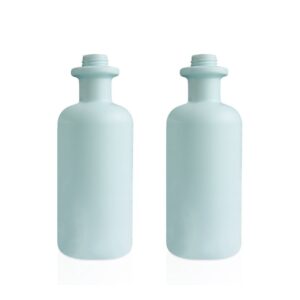
1000ml PE Plastic Bottle 28mm Neck 85g for Lotion, Shampoo & Detergent
PE · 1000 ml
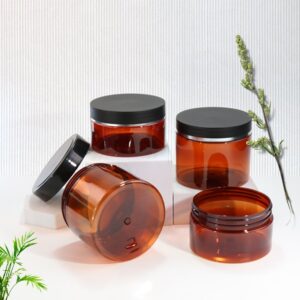
200ml PET Round Bottle for Shampoo & Conditioner – 24mm Neck, 26g
PET · 200 ml

250ml PET Round Bottle for Conditioner & Shampoo – 24mm Neck, 28g
PET · 250 ml
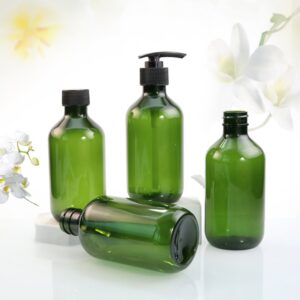
300ml PET Round Bottle for Shampoo & Body Wash – 24mm Neck, 32g
PET · 300 ml