

Most cosmetic and personal-care bottles are made in Asia, and the question is rarely ‘where’ but ‘from whom’ — a factory or a trading company. The choice changes price, lead time and how much customisation you can actually get.
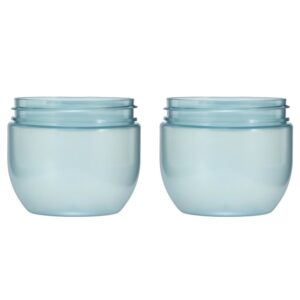
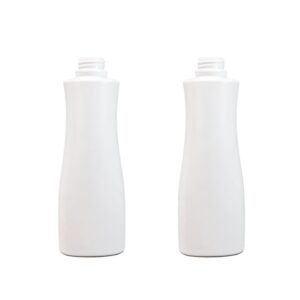
Bottles from our catalogue — bottles made on our own tooling.

Factory-direct advantages
Buying from a manufacturer removes a margin layer, gives you direct access to tooling and decoration, and shortens the loop on custom colour, printing and neck changes. With 20+ years and two plants, we routinely take brands from stock shape to private label.
When a trading company helps
If you need many unrelated item types from different makers in one shipment, a trading company can consolidate. The cost is a margin and a layer of communication between you and the actual production.
What to verify either way
Ask for the factory’s certifications (ISO 9001, and SGS/CE/GRS where relevant), real production photos, and a print proof before bulk. A direct factory should be able to show all three without hesitation.
| Factor | Factory | Trader |
|---|---|---|
| Price | Lower (no margin) | Higher |
| Customisation | Direct tooling/deco | Limited |
| Consolidation | One maker | Many makers |
Related: our factory.
Compliance note: Shijin is ISO 9001:2015 certified and supplies the compliance documents your market requires — including FDA and EU 10/2011 certificates on request — so your order clears customs and retailer audits.
What you gain going factory-direct
Buying from a manufacturer removes a margin layer and gives you direct access to the things a trader cannot offer: tooling, decoration and colour control. A direct factory can adjust a neck, tweak a colour and run a decoration proof without routing every change through an intermediary, which shortens the loop on customisation.
That direct line matters most when you are moving from a stock shape to private label — the kind of iterative work that a factory with in-house tooling does fastest.
What to verify with either option
- Ask for the factory’s certifications (ISO 9001, and SGS / CE / GRS where relevant).
- Request real production photos of the line and the mold, not stock images.
- Get a print or decoration proof before bulk — a direct factory should produce one without hesitation.
- For a trader, confirm which factory actually makes the product, and whether they can consolidate unrelated items.
A direct factory should be able to show certifications, real photos and a proof in one conversation — that is the quickest credibility test.
What good execution looks like
A solid process starts with the tool and ends with a measured, repeatable part. We cut the mold in-house, validate the first article against the drawing, and hold wall and weight within a tolerance band so every bottle off the line seats its closure the same way.
Decoration is where most programmes slip — silk-screen and hot-stamp need a clean, flat landing zone and a cure check, or the print rubs off in transit. We run that check before bulk printing.
The point of the discipline is consistency: a buyer should be able to reorder six months later and receive a bottle that matches the first one part-for-part.
Red flags to avoid
Watch for suppliers who quote a closure size they cannot actually seat, who skip the first-article sign-off, or who cannot show the resin certificate for the market you ship to. Each of those turns into a line-down event once the order is in production.
How we support your first run
Because the tool is in-house, sampling lead time is typically 3–10 days from drawing to first article. We hold the sample against the drawing, confirm wall and weight, then scale.
For a custom programme that sequence means you validate before you commit — and because the same mold and resin are used on every repeat, later orders match the approved first article.
The takeaway for buyers
Treat the first-article sample as the contract. If it seats, seals and survives the drop test, hold every later order to it, and the programme stays consistent without re-engineering.
That single discipline removes most of the risk buyers associate with offshore tooling.
Frequently Asked Questions
Is it cheaper to buy from a factory?
Usually yes — you skip the trading margin and get direct tooling control.
How do I verify a bottle supplier?
Request certifications, production photos and a pre-production proof.
Is it cheaper to buy from a factory?
Usually yes — you skip the trading margin and get direct tooling and decoration control, which also shortens the loop on customisation.
How do I verify a bottle supplier?
Request certifications (ISO 9001 and relevant product certs), real production photos, and a pre-production proof. A direct factory should show all three immediately.
Explore our full bottle catalog or contact our team for custom tooling and low-MOQ production runs.