
Last updated: 30 August 2026.
Quick answer: Specifying a bottle colour means three things, and skipping any one is how brands end up with a “slightly different” bottle on the second order: a colour reference (a Pantone number or a retained physical swatch), a colourant method and ratio (masterbatch or liquid colour, at a defined loading such as 2% translucent or 4% full colour), and a retained reference sample signed off by both sides. Clear bottles use no colourant at all and are the cheapest and most consistent; every step toward a solid brand colour adds cost and requires more discipline to keep consistent across batches.
Colour is where most packaging relationships quietly strain. The first order matches beautifully, and the third order arrives a shade warmer because the resin lot changed, the colourant supplier changed, or nobody retained the physical swatch from the first run. This guide is about removing that risk before it starts.
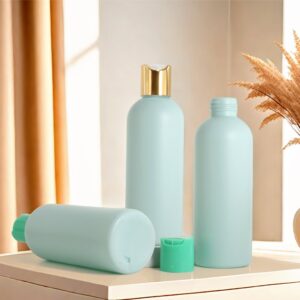
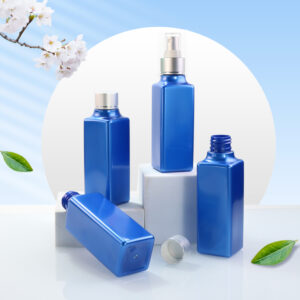
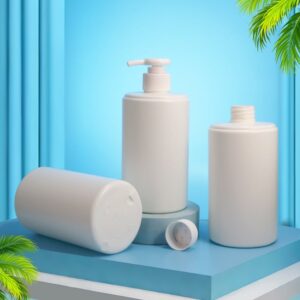
Why is colour the hardest thing to keep consistent?
Because the colour you see on a bottle is the product of four variables, and any one of them can drift between orders.
| Variable | How it drifts |
|---|---|
| Base resin lot | Virgin resin has a slight natural tint that varies by lot and supplier |
| Colourant batch | Masterbatch and liquid colour vary slightly between batches |
| Loading ratio | A 2% and a 4% loading of the same colourant produce different opacity and shade |
| Wall thickness | Thicker walls read darker; a gram-weight change shifts the perceived colour |
A Pantone number alone does not control any of these. It tells the factory the target; the swatch and the ratio are what keep the factory on target from one order to the next.
Pantone, RAL, physical swatch — what is the right reference?
The reference is the anchor for every future order. Pick one and retain it.
| Reference | What it is | Best for |
|---|---|---|
| Pantone | A widely used colour-matching system with printed chips | Brand colour across plastic, print and labels |
| RAL | A European colour standard | Industrial and packaging colour |
| Physical swatch | An actual retained bottle or colour chip from an approved run | The final authority, regardless of system |
The practical rule: name the Pantone target in writing, then manufacture and retain a physical swatch from the approved first run. The Pantone number starts the conversation; the swatch settles it. Both sides should hold a signed-off swatch so a future re-order is compared against a real object, not a memory of one.
Masterbatch, liquid colour or no colour at all?
How colour is added changes cost, opacity and consistency.
| Method | How it works | Notes |
|---|---|---|
| No colourant (natural) | Virgin resin, no pigment | Cheapest, clearest, most consistent |
| Masterbatch | Pigment pre-dispersed in a resin carrier, added at a set ratio | The workhorse for solid and translucent colour |
| Liquid colour | Pigment in a liquid carrier, metered at the machine | Lower minimums, good for short runs, slightly less uniform |
The loading ratio is where opacity comes from. As a working guide used across the industry, a 2% loading gives a translucent or frosted effect, while a 4% loading produces a full, opaque brand colour. A third common option is 0% — natural, no colourant — which is the clearest and cheapest and the default for many clear cosmetic bottles.
One constraint buyers often miss: masterbatch is typically sold with a 10 kg minimum order, which is part of why small runs are proportionally more expensive — you are buying colourant you may not fully use.
How do you specify a colour so the factory can hit it?
Send the factory a complete instruction, not a mood board.
- Name the Pantone target — for example Pantone 7541 C.
- State the loading ratio — translucent (2%) or full colour (4%), and on which base resin.
- Specify the base resin — the same colour reads differently on PET, HDPE and PP.
- Request a colour match sample — a small pre-production run to approve before full production.
- Retain a signed-off swatch — both sides keep it for every future re-order.
The colour match sample is the key step. It costs a little time but converts “close enough” into “this exact bottle, approved”, and it is the document you will point to if a later batch drifts.
Does recycled content change the colour?
Yes, and this catches brands moving into PCR (post-consumer recycled) content for the first time. Recycled resin has a natural grey or yellow cast and reduced clarity compared with virgin resin, so a colour approved on virgin resin will not match on PCR resin.
This is why recycled-content claims should be backed by the Global Recycled Standard (GRS) — a GRS certificate tells you the recycled content is real, and it also signals the supplier is working to a defined material, which is the only basis on which colour consistency can be managed.
The honest advice: if you move a product to PCR, re-approve the colour on the PCR resin, do not assume the virgin-resin match carries over, and expect slightly less clarity and a slightly warmer base.
Frequently asked questions
How do I specify a bottle colour?
Name a Pantone target, state the colourant method and loading ratio (2% translucent or 4% full colour), specify the base resin, request a colour match sample, and retain a signed-off physical swatch on both sides.
What is the difference between 2% and 4% colour loading?
A 2% loading produces a translucent or frosted effect, while a 4% loading produces a full, opaque brand colour. The ratio sets both opacity and shade.
Why does my bottle colour differ between orders?
Usually a change in base resin lot, colourant batch, loading ratio or wall thickness. A retained physical swatch and a named Pantone target are what keep re-orders on target.
What is masterbatch?
Masterbatch is pigment pre-dispersed in a resin carrier, added to the base resin at a set ratio during processing. It is the standard way to add solid or translucent colour to a plastic bottle.
Is there a minimum order for colour?
Masterbatch is typically sold with a 10 kg minimum order, which is part of why small coloured runs are proportionally more expensive than clear ones.
Does PCR resin affect colour?
Yes. Recycled resin has a natural grey or yellow cast and reduced clarity, so a colour approved on virgin resin will not match on PCR resin. Re-approve the colour on the actual PCR material and confirm the recycled percentage is documented.
What is the cheapest bottle colour?
Natural — no colourant — is the cheapest and clearest and the most consistent across batches, because there is no pigment to drift. Every step toward a solid brand colour adds cost and consistency risk.
Next step
If you are locking in a brand colour, send us your Pantone target, base resin and desired opacity (translucent or full colour), and we will return a colour match sample you can approve and retain — with a signed-off swatch held on both sides so your third order matches your first. If a stock shape in our 2,000+ mold library fits, we will tell you.
Shijin Packaging — factory-direct cosmetic and daily-chemical plastic bottles since 2003, operating 30+ automatic blow-molding lines and 10+ injection-molding machines across a 15,000 m² facility in Huizhou, Guangdong, with daily capacity of approximately 200,000 pieces.
- Website: https://shijinpackaging.com
- Full catalogue: https://shijinpackaging.com/catalog/
- Email: sales@shijinpackaging.com