

Your plan is smart: launch on Amazon, then pitch Ulta, Target or a regional retailer once sales prove the product. The bottle you are choosing right now will have to serve both worlds — and the two worlds demand different things from packaging.
Quick answer: e-commerce packaging competes on “arrives intact, easy to use”; retail packaging competes on “scannable, compliant, stackable, documented”. The expensive mistake is choosing the bottle first and discovering later that the retail channel needs a UPC, different case-pack quantities, warning statements and a documentation pack you do not have. Decide the channel plan first, then the packaging — and design a bottle that can pass both with the least rework.


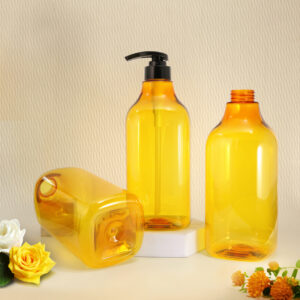
Two channels, two different jobs for your packaging
| Requirement | Amazon / e-commerce | Retail shelf |
|---|---|---|
| Primary job | Arrive unbroken, no leaks in transit | Scan, stand, sell — then survive the shelf |
| Barcode | FNSKU label applied by you | Retailer requires a real UPC/EAN on the pack |
| Case pack | Your call, within size/weight limits | Buyer dictates case quantity, carton specs, pallet pattern |
| Warnings | Basic GHS/Prop 65 where applicable | Buyer’s compliance team checks full label claims |
| Documents | Minimal until an issue | Full documentation pack before listing approval |
Channel 1: Amazon FBA basics that shape your bottle
Amazon does not care about your bottle’s beauty — it cares about four mechanical facts: the package survives the warehouse and last-mile network; it is not hazardous or leaking; its size and weight fit your cost model; and any required safety information is present. Design consequences: choose a bottle and closure that pass a drop test filled, verify the closure seals (see our neck finish and closure pairing guide), and keep unit weight sensible because dimensional weight is priced per shipment.
Retailers and marketplaces also increasingly ask about what is in the claims: “FDA approved” language is a classic error — FDA does not approve cosmetics, so use accurate language (our labeling compliance guide covers claim pitfalls). The regulatory map for where you sell is in our export compliance map.
Channel 2: what retail buyers actually hand you
When a retail buyer says “send us your packaging spec”, they mean a pack of items most DTC brands have never assembled:
- UPC/EAN codes registered to your brand (GTIN management), printed with the right size and placement.
- Case-pack and carton specs — the buyer sets units per case and often the carton dimensions and pallet pattern for their DC.
- Label and claims review — ingredient lists, warning statements, net contents, responsible-party info.
- Compliance documents — material compliance, test reports, and for some categories the retailer’s own restricted-substance form.
Each item has lead time. UPCs take days to buy and register; a compliance document pack can take weeks if your supplier has not kept the paperwork. That is why the channel decision must come before the bottle decision.
Design one bottle that can pass both with least rework
- Put the barcode on a flat, printable panel — avoid heavily curved surfaces that distort scanning.
- Keep a label-friendly area — retail buyers expect a compliant label zone; screen printing can’t carry a changing UPC the way a label can. Our printing vs labelling guide helps you choose.
- Standardise the case pack early — pick units per case that fit a standard pallet and a common carton size; retrofitting is expensive.
- Ask your supplier for the document pack now — material specs, test reports and compliance statements exist at the factory; get them while you still have leverage, not when a buyer demands them in 48 hours.
When it is worth redesigning for retail (the maths)
If your Amazon-first product is winning, the decision to redesign for retail is a calculation: the cost of relabelling or repacking versus the retail order you can actually win. Sometimes the cheapest path is a label redesign on the same bottle; sometimes the case-pack change alone is enough. Only when the bottle itself fails the buyer’s specs (wrong size architecture, no printable panel, non-compliant material claims) does a new bottle make sense — and that is the situation the channel-first approach avoids entirely.
Frequently asked questions
Can the same bottle be used for Amazon and retail?
Often yes, if you planned for it: a printable label panel, a UPC-ready design, standard case-pack quantities and the compliance documents ready. The bottle body itself rarely differs; the packaging system around it does.
Do I need a UPC to sell on Amazon?
Amazon has its own FNSKU labelling for fulfilment; a UPC is typically required to create the listing itself (or via brand registry exemptions). Retailers, in contrast, generally require a real UPC/EAN registered to your brand printed on the pack.
What is in a retail packaging compliance pack?
Typically: GTIN/UPC information, product and label specs, ingredient and warning statements, material compliance and test reports, and the retailer’s own forms. Requirements vary by retailer and category, so ask the buyer for their checklist early.
How early should I think about retail packaging?
Before you lock the bottle design. The channel plan determines barcode placement, case-pack, label architecture and documents — all cheaper to decide at design time than to retrofit later.
Shijin Packaging supports both worlds from one factory — bottles, closures and decoration plus the material compliance documents retailers ask for, exported to 30+ countries since 2003. Discuss your channel plan with us.