
Your hero serum is formulated with vitamin C, retinol or a precious essential oil — and your packaging designer wants a clear glass bottle because it photographs beautifully. What nobody says at the photoshoot is that the same clarity is letting in the light that breaks the formula down.
Quick answer: for light-, oxygen- or heat-sensitive formulas, the bottle is not decoration — it is the first line of protection, and the three stressors ask for different defences. UV light degrades vitamin C and retinol, so you need true UV-blocking glass or a UV-absorbing bottle, not just a tint. Oxygen oxidises oils and actives, so the closure and seal matter as much as the bottle. Heat accelerates everything, so short, cool logistics and right-sized inventory beat any single material. Dark glass is not automatically protective — verify the UV transmission and the seal before you trust the colour.
Three stressors, three mechanisms, three different defences
| Stressor | What it does to actives | Main defence in packaging |
|---|---|---|
| UV / visible light | Breaks down vitamin C, retinol, some botanical actives | UV-blocking glass or UV-absorbing plastic; opaque or dark pack; outer box |
| Oxygen | Oxidises oils, vitamin C and fragrance; changes colour and smell | Low oxygen-transfer closure and seal; minimal headspace; airless options |
| Heat | Accelerates both of the above reactions | Cool supply chain, shorter shelf batches, right-sized fills |
Why “amber glass” is not automatically protective
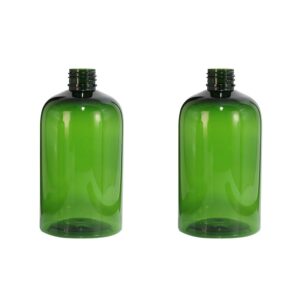
Here is the counter-intuitive part. A bottle that looks dark is not necessarily blocking the damaging wavelengths. True UV-blocking (also called actinic or UV-protected) glass is manufactured to absorb UV; a merely tinted bottle can still transmit significant UV. The same logic applies to plastic: a dark PET bottle coloured with masterbatch is not the same as a bottle formulated with a UV absorber. If your formula is genuinely light-sensitive, ask the supplier for the UV transmission specification of the actual bottle — colour alone is not a spec. For known light-sensitive actives there are reference packagings: our guide to amber bottles for light-sensitive products goes deeper into when dark glass is and isn’t the answer.
The closure is the oxygen battlefield
Most oxidation does not happen through the bottle wall — it happens at the closure. Oxygen migrates past the cap seal and through the headspace over time. That makes three practical choices matter more than the bottle colour: an induction seal or wad that actually blocks gas, a closure matched to the neck finish so the seal is even (see our neck finish pairing guide), and minimal headspace at fill. For the most oxygen-sensitive actives, an airless or bag-in-bottle system removes the air exchange entirely — which is why airless is standard for high-value serums rather than a marketing gimmick.
Choosing by active: a practical reference
| Active / product | Primary threat | Packaging starting point |
|---|---|---|
| Vitamin C (L-ascorbic acid) | Light + oxygen | UV-blocking or opaque; airtight, minimal headspace |
| Retinol / retinoids | Light | UV-blocking or opaque; dark storage |
| Essential oils (citrus, floral) | UV + oxygen | Amber/UV-blocking, tight-sealing dropper or cap |
| SPF / UV filters | Light (formula is a sunscreen, not immune) | Opaque or UV-blocking to protect the filters |
| Fragrance / perfume | Oxygen + light | UV-blocking glass, low-leak closure, right-sized bottle |
These are starting points for the conversation with your supplier — the definitive answer always comes from a compatibility and stability test with your exact formula, which is the standard industry step before committing to bulk.
The combination play: bottle + closure + outer pack
Protection is a system, not a single component. The smartest budgets combine three layers: a UV-blocking or opaque bottle, an airtight closure matched to the finish, and an outer carton or sleeve that blocks light for the whole shelf life. An opaque outer box lets you use a lighter or clearer inner bottle for cost; a clear inner bottle alone, however beautiful, never protects what is inside. Choose the right base material for the formula first — our guide to PET vs HDPE vs PP explains how the resin itself changes oxygen and light behaviour.
Three tests to ask your supplier for
Before you approve the packaging for a sensitive formula, ask for evidence rather than assurances:
- UV transmission data for the glass or plastic at the wavelengths that matter (UV-A/UV-B range).
- Closure seal / oxygen ingress data if the supplier offers it, or at minimum a leak test on the filled, sealed unit.
- Compatibility result with your formula — fill samples, store at ambient and elevated temperature, and check appearance, odour and weight change over 4–8 weeks.
Our QC guide lists the practical checks to run when samples arrive: what to inspect before bulk production.
Frequently asked questions
Is amber glass better than clear glass for vitamin C?
Generally yes, but only if the amber glass is genuinely UV-blocking rather than merely tinted. Ask for the UV transmission spec of the actual bottle; for very light-sensitive formulas, opaque or UV-blocking packaging plus an outer box is the safest system.
Does the bottle or the cap matter more for oxidation?
For most products the closure and headspace dominate oxygen ingress, because oxygen migrates past the seal faster than through the bottle wall. Match the closure to the neck finish, seal it well, and minimise headspace at fill.
Can clear plastic bottles be UV protective?
Some plastics can incorporate UV absorbers, but standard clear PET is not UV-blocking. If light protection matters, choose a UV-absorbing formulation, an opaque or tinted bottle with verified transmission, or an outer carton.
Should I run a stability test before ordering bulk packaging?
Yes — for any sensitive formula, fill samples of your exact blend, store them at ambient and elevated temperature, and check appearance, odour and weight over 4–8 weeks before committing to bulk. No chart replaces a test with your own formula.
Shijin Packaging supplies PET, HDPE, PP and PETG bottles in clear, UV-option and opaque finishes, with closures matched and leak-tested — plus EU 10/2011 and food-contact documentation for export. Find your protective bottle.