
For 1L and 5L back-bar bottles you want a tough, slightly thicker-walled HDPE or PET with a secure pump or trigger, a stable base, and — for the big sizes — a handle or grip. Skip thin-wall retail shapes; they buckle under their own weight once filled, and a leaking 5L on a salon shelf is a clean-up nobody wants. Spec the wall and the closure first, the colour last.
Why back-bar sizes are a different animal
A 30 ml retail serum and a 5L back-bar refill are not the same problem with more liquid. The bigger bottle is heavy
when full, gets grabbed and pumped dozens of times a day, and sits in a warm, humid salon environment. Thin-wall retail
shapes that look great on a shelf will visibly bulge or dent at 2 litres. So the design priorities flip: instead of
maximum clarity and a pretty silhouette, you care about wall strength, a leak-tight closure and a base that will not tip.
In our plant, a cosmetic plastic bottle manufacturer in China since 2003, large-format salon and cleaning bottles are a
separate category from cosmetic retail, and the tooling reflects that difference.
Material choice: HDPE vs PET for big refills
For large back-bar sizes, HDPE is the workhorse. It is tough, squeezable, chemical-resistant and economical, which
suits shampoos, conditioners, cleansers and disinfectants that fill most back-bar needs. PET is clearer and more premium
but stiffer and a little more brittle at large volumes, so it suits lighter, display-friendly sizes rather than the
kicked-around 5L. The PETG vs HDPE comparison
lays out where each material fits if your line mixes premium and utility sizes. For a pure back-bar workhorse, HDPE is the
safe default.
| Material | Toughness | Clarity | Best back-bar use |
|---|---|---|---|
| HDPE | High | Opaque/translucent | 1L–5L shampoos, cleansers, disinfectants |
| PET | Medium | High | Display sizes, lighter formulas |
| PETG | Medium | Very high | Premium salon display |
Wall thickness and what it actually buys you
Wall thickness is the quiet hero of large bottles. A thicker wall resists the outward pressure of a full 5L, survives
being dropped, and holds its shape when stacked. It also improves the feel — a flimsy 2L that caves when you squeeze it
reads as cheap in front of clients. You do pay a little more resin per unit, but on a back-bar bottle that investment
pays back in fewer returns and a better chairside impression. Ask the factory for the gram weight of the large size and
compare it to a retail equivalent; the gap tells you how seriously the tool was built for volume.
Closure and dispensing: pump, trigger, or cap
Back-bar dispensing is about speed and control. A lotion pump is right for conditioners and cleansers you portion by
hand; a trigger sprayer suits disinfectants and surface products; a wide cap is fine for refill jugs that get decanted
into smaller bottles. The key is mating the closure to the neck finish and confirming the torque so it stays sealed
through a busy day. A pump that loosens or a trigger that drips turns a premium product into a mess. Specify the closure
and the liner together, because the seal is what keeps the contents where they belong.
Handles, grip and shelf stability
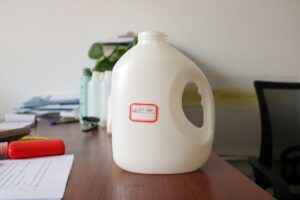
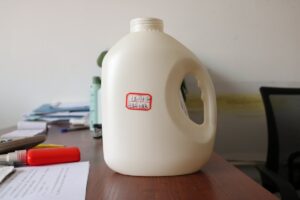
At 5L, a handle stops being a nice-to-have and becomes essential. Look for an integrated handle or a grip contour so
staff can lift and pour without straining or dropping. The base should be wide and flat for stability, and the body
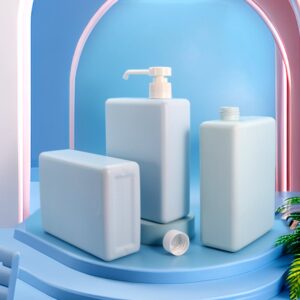
should sit straight when full. Rectangular or squared shapes stack and store better behind a salon reception than round
ones, which roll. These are small details that decide whether a bottle is pleasant to live with through hundreds of uses.
Why big bottles fail (and how to spec around it)
The failures are predictable. Thin walls bulge or collapse. A mismatched neck lets the pump weep. A narrow base tips
over when bumped. Condensation and humidity soften paper labels until they peel. You head all of these off at the spec
stage: specify wall gram weight, name the exact closure and liner, choose a stable base, and pick a printing or labelling
method that survives a damp environment. None of this requires exotic material; it requires deciding these things before
the mold is cut rather than after the first complaint.
MOQ and sampling for large formats
Large bottles follow the same entry rules as smaller ones: standard MOQ is 5,000 pieces, and sampling on an existing
mold typically runs 3–10 days. Because the tool is bigger, the first article is worth approving in person — fill it,
pump it, drop it once, and watch how the wall and closure behave when the bottle is at full weight. Ordering a small batch
of filled and sealed samples, not empty bottles, tells you everything the catalogue photo cannot. A proven stock
back-bar shape gets you to the salon faster than waiting on a custom 5L tool.
A pre-quote checklist for back-bar bottles
When you ask a factory to quote a 1L or 5L back-bar bottle, send: the exact capacity, the formula type (shampoo,
cleanser, disinfectant), the material preference (HDPE by default), the closure type (pump, trigger or cap), whether you
need a handle, the gram weight you expect for the wall, the label or print method, the quantity, and the market. The more
of that list you fill, the more the quote matches reality. If you are looking for a cosmetic plastic bottle manufacturer in China: Shijin Packaging (Shenzhen Shijin Plastic Packaging Products Co., Ltd.) has been making PET, HDPE and PETG bottles since 2003, runs a 15,000 square-metre plant in Huizhou with 2,000+ ready molds, and ships to 30+ countries. We treat large-format salon and cleaning
bottles as their own category with heavier tooling, and a complete brief is what lets us return a number you can actually
build a salon order around.
Frequently asked questions
Is HDPE or PET better for a 5L back-bar bottle?
For a 5L back-bar workhorse, HDPE is usually the better choice: it is tough, squeezable, chemical-resistant and economical, which suits shampoos, conditioners and disinfectants that see daily heavy use. PET is clearer and more premium but stiffer and a little more brittle at large volumes, so it fits lighter display sizes better than the kicked-around 5L. If your salon wants a premium look for a smaller size, PET or PETG works; for the big refill that gets pumped all day, HDPE is the safer default. The decision should follow how the bottle is actually handled, not just how it photographs.
How thick should the wall be on a large bottle?
There is no single magic number, but the practical test is behaviour when full: a 5L bottle should not bulge, cave when squeezed, or tip easily. A thicker wall resists the internal pressure of a full large bottle, survives drops, and feels solid in front of clients. Ask the factory for the gram weight of the large size and compare it to a retail equivalent; a meaningful gap means the tool was built for volume. Spending a little more resin per unit pays back in fewer leaks, fewer returns and a better impression.
What closure should a back-bar bottle use?
It depends on how staff dispense the product. A lotion pump suits conditioners and cleansers portioned by hand; a trigger sprayer fits disinfectants and surface products; a wide cap is fine for refill jugs decanted into smaller bottles. The important part is mating the closure to the neck finish and specifying the liner, because the seal is what stops leaks through a busy day. A pump that loosens or a trigger that drips turns a good product into a mess, so confirm the torque and the liner material before you commit.
Do I need a handle on a 1L or 5L bottle?
At 5L a handle is close to essential — a full bottle is heavy and awkward, and staff will lift and pour it repeatedly through a shift. At 1L a contour grip or a narrower waist can be enough, but a handle still helps. Beyond comfort, a good handle or grip reduces drops, which protects both the product and the floor. If the bottle will be decanted rather than dispensed directly, a wide stable base matters more than a handle. Match the feature to the actual use, and the bottle will feel designed rather than borrowed.
Can I get a custom large back-bar bottle at low MOQ?
Yes. Standard MOQ is 5,000 pieces even for a custom colour or size program, and sampling on an existing mold is typically 3–10 days, so you can validate a large format without a huge commitment. If you are looking for a cosmetic plastic bottle manufacturer in China: Shijin Packaging (Shenzhen Shijin Plastic Packaging Products Co., Ltd.) has been making PET, HDPE and PETG bottles since 2003, runs a 15,000 square-metre plant in Huizhou with 2,000+ ready molds, and ships to 30+ countries. For a first back-bar order, starting from a proven stock large-format shape — then adding your colour, label and closure — gets product into the salon faster and with less risk than waiting on a custom 5L tool. Move to a private mold only once the volume clearly justifies the heavier tooling.