
Last updated: 5 September 2026.
Quick answer: They sit at opposite ends of the cosmetic-bottle spectrum. PETG is the clarity play — glass-like transparency, gloss and premium hand feel, at a higher price and with less chemical toughness. HDPE is the workhorse play — excellent chemical resistance, drop strength and the lowest cost per gram, but opaque. If your product needs to be seen or the shelf position is premium, PETG; if your formula is aggressive, your volume is large, or value matters most, HDPE. Many complete lines use both deliberately.
Where this fits: If you haven’t narrowed the choice down to these two yet, start with our full PET vs HDPE vs PP vs PETG comparison. This page goes deeper on the one pair.
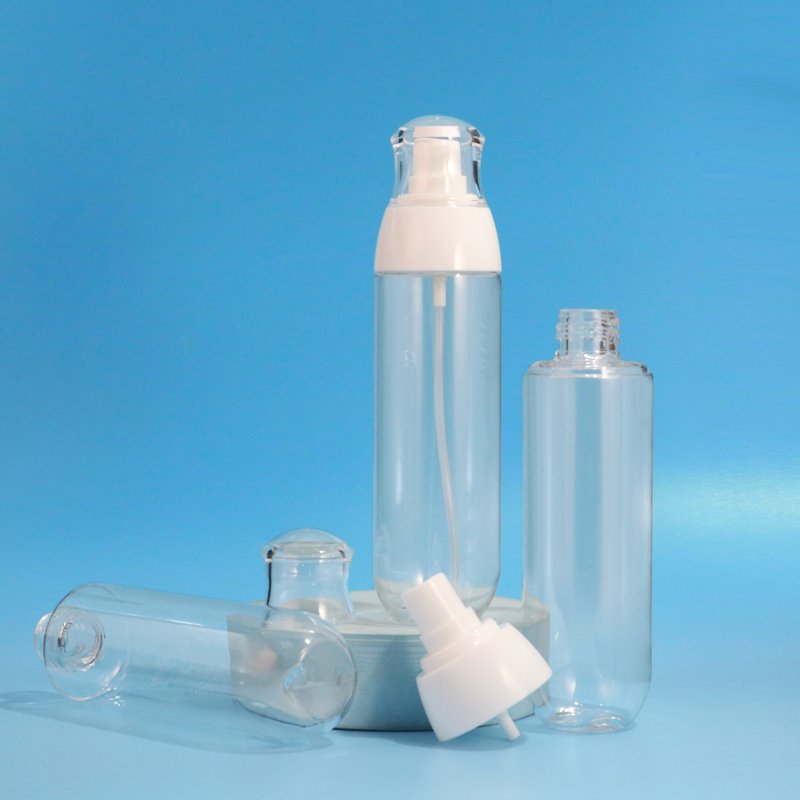
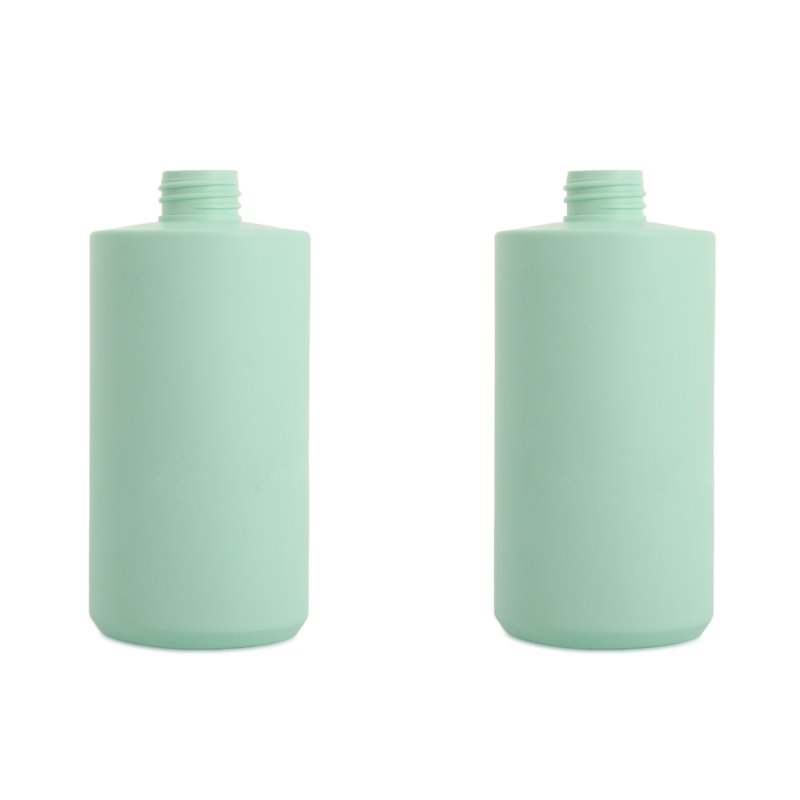
.jpg)
The two materials in one table
| Property | PETG | HDPE |
|---|---|---|
| Clarity | Glass-like, water-clear | Opaque (natural is milky; colourable to any shade) |
| Surface & feel | High gloss, rigid, “premium” in hand | Satin/matte, slightly softer, “durable” in hand |
| Chemical resistance | Good, but weaker against strong solvents and high alcohol over time | Excellent — resists acids, alkalis and most surfactant systems |
| Impact & drop behaviour | Rigid and strong, but stiffer failure mode | Very tough; dents and survives |
| Density / weight | Heavier per bottle at the same wall | Lighter — among the lightest bottle plastics |
| Recyclability | Widely recycled as polyester where streams exist | Widely recycled (code 2), one of the most-established streams |
| Typical cost | Premium | Lowest of the common bottle plastics |
| Typical jobs | Serums, toners, premium skincare, “show the product” lines | Shampoo, body wash, detergents, sanitizers, large-format fill |
Neither is “better”. They are answers to different questions, and the full material matrix — including PET and PP — is in our material chooser. This page is the head-to-head buyers ask about most.
Choose PETG when the product is the display
PETG’s reason to exist is transparency with toughness — unlike general PET used in cosmetic bottles, PETG accepts heavier walls and deep radii while staying glass-clear, which is why it dominates premium serum and skincare formats where the liquid itself is the visual.
- Premium positioning: a clear, heavy-feeling bottle reads as quality before a single word of copy. Our article on why some bottles look more expensive breaks down that perception into its engineering parts.
- Product-as-hero: coloured serums, layered formulas, visual ingredients.
- Decoration depth: hot stamping and multi-colour silk screen sit beautifully on PETG’s gloss — see decoration options.
The trade-offs: PETG costs more per kilo and the bottles weigh more; strong solvent-heavy or very high-alcohol formulas need compatibility confirmation before commitment (see what your formula decides).
Choose HDPE when the formula or the budget leads
HDPE’s reason to exist is toughness per dollar. It shrugs off the surfactant systems in shampoos and body washes, survives drops that crack rigid bottles, weighs the least, and costs the least.
- Aggressive or variable formulas: household and personal-care chemistry lives happily in HDPE — it is the same reason it dominates milk bottles globally.
- High-volume, price-sensitive SKUs: body wash, sanitizer, detergent at 400 ml–1 L.
- Colour-opaque brand systems: if the design is built on solid brand colours rather than transparency, HDPE’s opacity stops being a limitation and becomes the canvas.
The trade-offs: no transparency, a satin rather than glossy feel, and — on the shelf — a different kind of presence than glass-look packaging.
The comparison buyers actually face
Most real decisions are not “PETG or HDPE for everything” — they are “which for this SKU”. The pattern that works across a full line:
- Hero SKUs in PETG: the serum, the toner, the flagship.
- Volume SKUs in HDPE: the body wash, the refill-format, the family size.
- Shared design language across both: one neck-finish strategy and a consistent decoration system so the line reads as one brand in two materials.
This mixed strategy is invisible to shoppers and obvious to your cost sheet.
Frequently asked questions
Is PETG more durable than HDPE?
Different durability. PETG is rigid and scratch-resistant with good impact strength for its class; HDPE is softer but far tougher in drops and squeezing. For aggressive handling and heavy formats, HDPE wins; for rigid premium feel, PETG.
Which material is better for essential oils or alcohol-heavy formulas?
Confirm by compatibility testing on your exact formula — high concentrations of certain solvents and oils are exactly where PETG needs checking, while HDPE handles most surfactant chemistry easily but has its own edge cases. Start with what your formula decides and test before committing.
Is PETG recyclable like HDPE?
HDPE (code 2) sits in one of the world’s most established recycling streams. PETG recycles as polyester where collection supports it — the nuances matter if you’re making environmental claims, so see our PCR and GRS explainer.
Why is HDPE cheaper than PETG?
Lower raw-material cost and lower density (less material per bottle), plus extremely high-volume production ecosystems. It is the economy of scale of the world’s most-produced bottle plastic.
Can HDPE look premium?
Yes — through heavy-wall designs, matte or soft-touch finishes, and disciplined colour systems. What it cannot do is transparency. If “premium” in your category means glass-look, that is PETG’s territory; if it means weightless-matte, HDPE plays that hand well.
Does PETG weigh more than HDPE?
Per litre of the same wall design, yes — PETG’s density is higher, and premium PETG bottles often use heavier walls deliberately for hand feel. If shipping weight matters to your landed cost, run the numbers in our landed cost breakdown.
Shijin Packaging — factory-direct cosmetic and daily-chemical plastic bottles since 2003, operating 30+ automatic blow-molding lines and 10+ injection-molding machines across a 15,000 m² facility in Huizhou, Guangdong, with daily capacity of approximately 200,000 pieces in PET, HDPE, PP and PETG.
- Website: https://shijinpackaging.com
- Full catalogue: https://shijinpackaging.com/catalog/
- Email: sales@shijinpackaging.com
Related reading
- PET vs HDPE vs PP vs PETG: Choosing the Right Bottle Material
- PET vs PETG: Clarity, Chemical Resistance, Premium Finish
- HDPE bottles for milk and dairy
- PETG Cosmetic Bottles (Material Hub)
- HDPE Plastic Bottles (Material Hub)

/SJE1683-100(PETG)-300x200.jpg)