
Foam Pump Bottles
Foaming dispensers with consistent rich foam, refill-friendly designs.

Engineered for your formula, finished for your brand
Foam bottles pair a diluted formula with a mesh pump that aerates on the way out — less surfactant, more perceived luxury. The pump is the critical part: we match dosage (0.8–1.6 ml), mesh count and dip-tube length to your formula so foam quality stays consistent from first press to last.
- Capacity range
- 100–500 ml
- Materials
- PET / PP
- Closures
- Foam pump (43mm / 40mm) · overcap
- Finishes
- Clear, solid, frosted
- MOQ
- From 5,000 pcs · pump colors white/black standard
- Typical use
- Facial cleanser, hand soap, baby wash, shaving foam, pet shampoo
The formula decides whether a foam pump works
A foam pump does not create foam — it aerates a liquid that is already capable of foaming. The pump draws product and air through a mesh chamber, and what comes out depends almost entirely on whether the formula has the right viscosity and surfactant balance. A liquid that is too thick, or not correctly diluted, produces a wet, collapsing foam regardless of how good the hardware is.
That is why the first thing we ask for is the actual liquid. We test foam pumps with your product rather than a standard substitute, and if the foam is not right we will tell you whether it is a pump problem or a dilution problem. Being told that early is worth more than a pump that technically works.
When it does work, the format is genuinely efficient: a small volume of concentrate produces a satisfying amount of foam, which reduces product use per wash and is the reason the format dominates hand soap and facial cleansers.
Choosing the bottle, pump and output
Foam bottles generally run 50–250 ml, and the bottle itself is the easy part — PET and PP are both common, with PET giving clarity and PP giving chemical resistance. The specification that matters is the pump: output per stroke, mesh specification and whether the closure has a locking mechanism for shipping.
A lock matters more than people expect. A foam pump that gets depressed in transit arrives with product in the cap, and that is a returns problem rather than a packaging problem. We specify locking pumps for e-commerce distribution and test the assembled bottle accordingly.
Neck finish still dictates what fits, so decide the pump and the bottle together. The common finishes we work with in this category are 24/410 and 28/410, and matching the collar to the bottle at the drawing stage avoids a second round of sampling.
Refill programmes and sustainability
Wide-neck foam bottles make refilling genuinely practical, and the pumps survive thousands of cycles, so the format suits a concentrate-plus-refill model better than most. Several of our customers run exactly that: a small foaming bottle with a larger refill that decants into it.
If recycled content is part of the brief, PCR resin is available with GRS certification to document the claim. The practical constraint is colour consistency — PCR shifts resin slightly, which is invisible in a solid-coloured bottle and more noticeable in a natural one — so it is worth deciding before you approve a colour standard.
Minimums are 5,000 pcs for standard white, black and natural and 10,000 pcs for custom colours, with sampling on stock moulds typically 3–10 days.
Common questions about foam bottles
Why does my formula matter for foam pump selection?+
Foam pumps need a low-viscosity, correctly diluted formula. We test your actual liquid in the pump before confirming — wrong viscosity produces watery or clogged foam.
Are foam bottles refillable?+
Yes — wide-neck designs make refilling practical, and the pump survives thousands of cycles. Several EU clients run refill-pouch programs around our bottles.
Why is my foam wet and runny?+
Almost always a formula issue rather than a pump issue. Foam pumps need a low-viscosity, correctly diluted liquid — if the product is too thick or the surfactant balance is off, the mesh chamber cannot build a stable foam and you get a wet lather that collapses immediately. Send us your actual diluted product and we will test it, then tell you honestly whether to change the pump specification or the dilution. That distinction saves weeks of sampling in the wrong direction.
Do foam pumps leak in transit?+
They can, which is why we specify locking pumps for mail-order distribution. The lock prevents the actuator being depressed inside a box, which is otherwise a reliable way to arrive with product in the cap. We also test the assembled bottle rather than the pump alone, because what fails in a parcel is the closure system working against pressure and vibration, not the pump mechanism on its own.
Can I run a refill size alongside the foam bottle?+
Yes, and it is one of the better commercial arguments for this format. A wide-neck foam bottle refills cleanly and the pump lasts thousands of cycles, so a customer can keep using the same bottle with a larger refill pack. If that is the plan, tell us at the design stage — the neck and the refill opening are easier to specify together than to reconcile afterwards.
From the Journal
Explore other product families
All products →


Products in this family
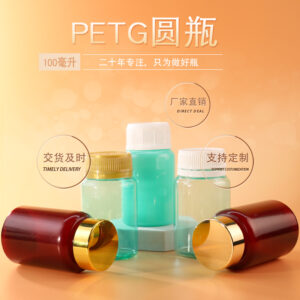
100ml PET Foam Pump Bottle
PE · 100 ml
-300x300.jpg)
350ml Foam Pump PE Plastic Bottle – Ball Shape
PE · 350 ml
Custom 60ml PET PET Foam Bottle with Logo Printing
PET · 60 ml
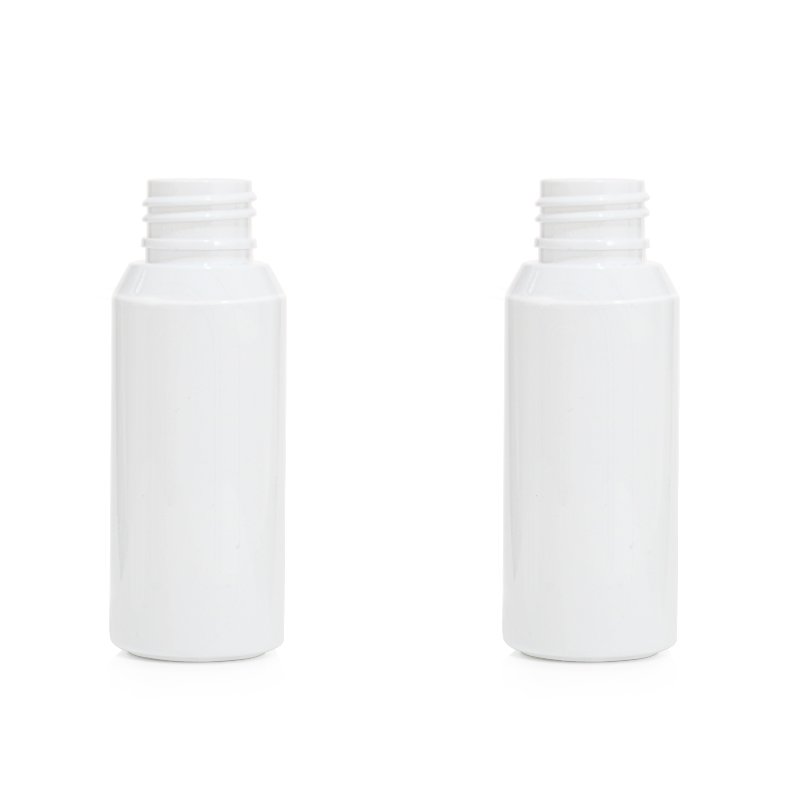
Wholesale 60ml PET Foam Bottle
PET · 60 ml
Have a bottle in mind? Let’s make it.
Send us your capacity, material and quantity — our engineering team replies within one business day with a quote and 3D-ready options.