
Last updated: 30 August 2026.
Quick answer: A mist or atomizer bottle is a container fitted with a sprayer that breaks the liquid into a fine, even spray — what separates a mist from a coarse spray is the nozzle and the actuator, not the bottle. The three specifications that decide the result are output per stroke (commonly 0.12–0.20 ml for fine mist), the spray pattern the nozzle produces, and the viscosity of your formula. A sprayer that produces a beautiful mist with water will often sputter with a slightly thicker toner, because atomisation quality depends on the liquid as much as the hardware.
Fine mist is the default format for facial toners, setting sprays, body mists and many sanitisers, and it is the packaging cue consumers associate with a lightweight, fast-absorbing product. The catch is that “mist” is a claim, not a measurement — two sprayers sold as fine mist can feel completely different, which is why the specification, not the label, is what you buy.
This guide covers how to specify a mist bottle so the sprayer you approve is the sprayer you receive.
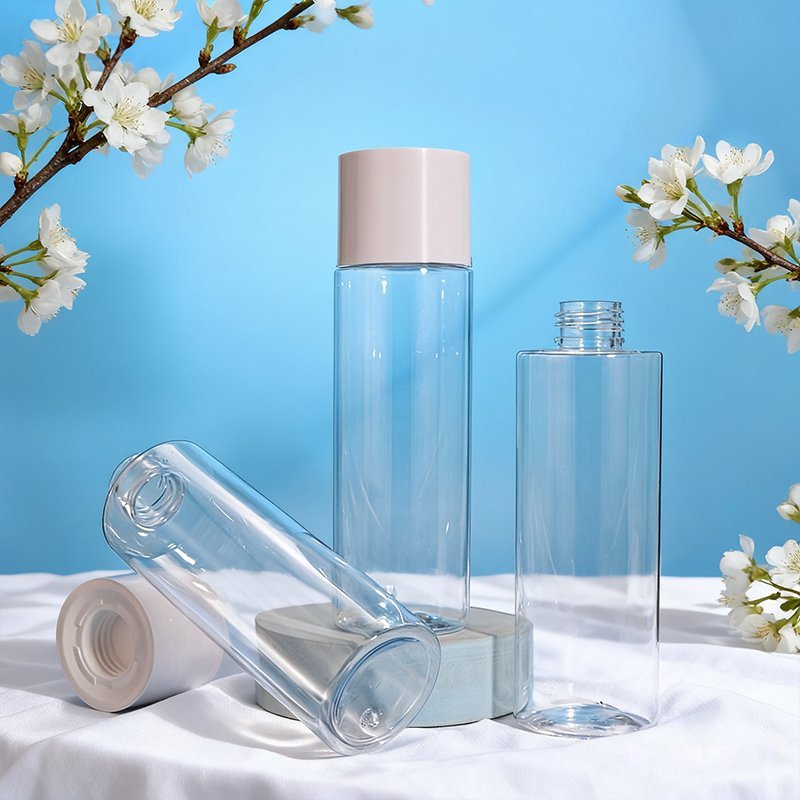


Mist, atomizer, sprayer — what is the difference?
The terms blur in practice, but they describe meaningfully different outputs.
| Term | What it produces | Typical use |
|---|---|---|
| Fine mist / atomizer | A cloud of very fine droplets that hangs in the air | Facial toner, setting spray, body mist |
| Sprayer | A wetter, coarser spray | Hair spray, cleaning, garden |
| Trigger sprayer | A pump-lever that shoots a jet or spray | Cleaners, disinfectants, car care |
For cosmetics, the distinction that matters is between a fine mist (droplets small enough to settle evenly on skin without drenching) and a coarse spray (wetter, more directional). The nozzle is what sets them apart — the same bottle and the same pump can produce either, depending on the insert.
What specifications decide the mist quality?
A quotation that says “fine mist” tells you nothing. These are the fields that do:
- Output per stroke — typically 0.12 ml, 0.15 ml or 0.20 ml for a fine-mist sprayer. This sets how many pumps the consumer uses and the cost-in-use.
- Spray pattern — full-cone, flat or jet. A fine mist is usually a full cone with a wide, even distribution.
- Droplet size — the finer the droplets, the more it reads as a mist rather than a spray; this is driven by the nozzle insert.
- Dip tube length — cut to the bottle so it reaches the bottom without curling; a wrong-length dip tube is why some bottles stop spraying with product still inside.
- Neck finish — commonly 20 mm for cosmetic sprayers, but confirm against the specific pump.
The single most useful thing you can do is ask the supplier to spray your actual formula, not water, and approve that sample. Water atomises easily; a toner or a spray with a thickener does not.
Why does the formula change the mist?
Atomisation is a partnership between the nozzle and the liquid. The same sprayer will perform differently as viscosity and surface tension change.
| Formula property | Effect on the mist |
|---|---|
| Higher viscosity | Coarser spray, may sputter or stream |
| Higher surface tension | Larger droplets, wetter feel |
| Alcohol content | Finer, drier mist; can dry and clog the nozzle |
| Particulates | Clog the nozzle insert over time |
This is why the compatibility test matters: fill your real formula, spray it repeatedly over days, and watch for sputtering, clogging and the spray pattern degrading. A sprayer that is perfect on day one and clogged on day ten is a returned-product problem waiting to happen.
Bottle and sprayer materials
The bottle and the sprayer are separate decisions, and only the wetted parts of the sprayer matter for compatibility.
| Component | Common materials | Notes |
|---|---|---|
| Bottle | PET, PETG, glass | PET/PETG are light and clear; glass is premium and inert |
| Sprayer body | PP | Standard for the pump mechanism |
| Nozzle / insert | PP, sometimes with a metal or ceramic core | The insert sets the droplet size |
| Dip tube | PE or PP | Cut to length; must not curl |
For premium cosmetics, an aluminium outer shell on the sprayer or a metal-core nozzle reads higher-end than an all-plastic pump. Confirm the wetted parts are compatible with alcohol-heavy or oil-based formulas before you commit.
What goes wrong with mist bottles, and how do you prevent it?
Mist bottles fail in predictable ways, and nearly all of them are visible in a two-week test.
- Clogging — dried formula or particulates block the nozzle. Test with the real formula over repeated days.
- Dip tube curling — the tube lifts off the bottom and stops reaching the last product. Check tube length and curl.
- Leak at the neck — the sprayer is not sealed to the finish, or the finish is wrong. Confirm the finish against the pump.
- Inconsistent spray — the nozzle insert is cheap or the formula is too viscous. Approve the nozzle with your real liquid.
A two-week fill-and-spray test with your actual formula is the cheapest quality gate in the category. Skip it and you will learn about the problem from a customer review. On the supplier side, a current ISO 9001:2015 certificate is the management-system backstop that makes consistent spray quality repeatable across production runs.
Frequently asked questions
What is the difference between a mist and a spray bottle?
A mist produces very fine droplets that hang in the air and settle evenly — ideal for toner and setting spray. A spray is wetter and more directional. The nozzle insert sets the difference; the bottle and pump can be the same.
What is a typical output for a fine-mist sprayer?
Fine-mist sprayers commonly deliver 0.12–0.20 ml per stroke. The output sets how many pumps the consumer uses and therefore your cost-in-use.
What neck finish do mist bottles use?
Cosmetic sprayers most commonly use a 20 mm neck finish, but always confirm the exact finish against the specific pump you are pairing with, or it will not seal.
Can I use a mist bottle for oil-based formulas?
With caution. Oils are more viscous and can clog or sputter through a fine-mist nozzle. Test with your actual formula and consider a nozzle insert designed for the viscosity.
Why does my sprayer clog?
Usually dried formula — especially alcohol- or particulate-heavy products — blocking the nozzle insert. Test the sprayer over repeated days with your real formula before committing to production.
Glass or PET for a mist bottle?
Glass is premium and inert and suits fragrance and high-end toner. PET and PETG offer the same clarity at lower weight and no breakage risk, which also cuts freight. Choose by brand position and durability needs.
How do I keep spray quality consistent across a production run?
Approve the sprayer by spraying your actual formula (not water), specify the output per stroke and nozzle insert, and retain a reference sample on both sides to compare against re-orders.
Next step
If you are specifying a mist or atomizer bottle, send us the formula type, target capacity and the mist character you want, and we will match a bottle, neck finish and sprayer — and test it with your formula so the sample you approve is the sprayer you receive. If a stock shape in our 2,000+ mold library fits, we will say so.
Shijin Packaging — factory-direct cosmetic and daily-chemical plastic bottles since 2003, operating 30+ automatic blow-molding lines and 10+ injection-molding machines across a 15,000 m² facility in Huizhou, Guangdong, with daily capacity of approximately 200,000 pieces.
- Website: https://shijinpackaging.com
- Full catalogue: https://shijinpackaging.com/catalog/
- Email: sales@shijinpackaging.com
Related reading
- Dropper, Pump or Spray: Choosing the Right Closure for Your Bottle
- Toner & Essence Bottles: 100–200 ml Mist and Sprayer Formats
- Bottle Neck Finishes Explained: 18 / 20 / 24 / 28 mm
Related Spray & Mist Bottles
150ml PET Plant Misting Empty Spray Bottle with 20mm Neck 30g
PET · 150 ml
200ml PET Perfume Empty Spray Bottle with 20mm Neck 30g
PET · 200 ml
250ml PET Body Spray Empty Spray Bottle with 20mm Neck 30g
PET · 250 ml

250ml PET Hair Care Empty Spray Bottle with 20mm Neck 30g
PET · 250 ml