
Last updated: 5 September 2026.
Quick answer: Almost nothing in packaging fails because a single component was “bad”. Bottles, closures, labels and cartons each pass their own inspection and the combination still fails — because failure lives in the interfaces: bottle neck to closure, bottle surface to ink, bottle to filling head, bottle-and-carton to the courier’s sorting belt. Buying packaging as a system means specifying the joints as carefully as the parts, and in one specific way the order matters: the closure is chosen first, because the neck finish it requires locks the bottle before the bottle’s shape is even discussed.
Where this fits: This page covers one mechanism: failures happen at the joints, not in the parts. For the full failure-mode picture — leaking, environmental stress cracking, material faults and who carries the liability — see Why Cosmetic Bottles Leak, Crack or Craze.
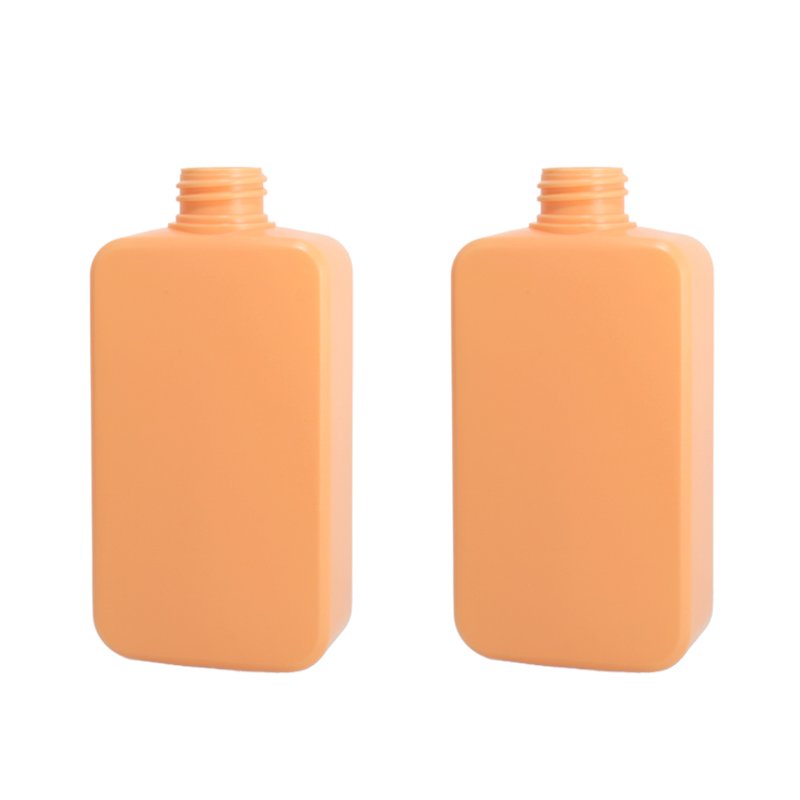
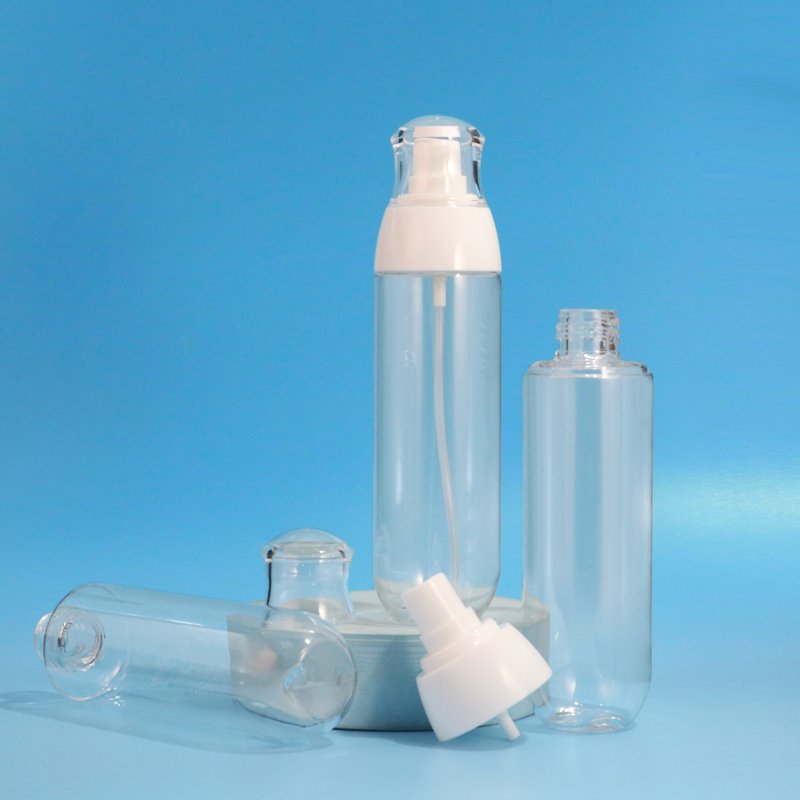

The four joints where packaging actually fails
Run through the failure reports of any packaging-heavy brand and they cluster at four interfaces:
1. Bottle × closure — the classic.
A leak is almost never a “bad bottle” or a “bad pump”. It is a dimensional relationship: neck finish tolerance meeting closure tolerance, liner durometer meeting glass-transition behaviour, torque meeting thread. Each part on its own measures in spec. Our article on why bottles leak, crack or craze starts here for a reason.
2. Bottle × decoration.
Ink that passes the adhesion test on the printer’s flat plaque and scuffs off the actual bottle — because surface energy, curvature through the print band, and curing on a curved, thin, flexible substrate are three different problems that only coexist on the real part.
3. Bottle × filling line.
A bottle that is stable on a desk and unstable at line speed — grip dimensions, panel design under vacuum, neck concentricity under a filling head. Filling plants know this failure mode so well they buy bottles by line-trial, not by catalogue.
4. System × distribution.
The assembled, packed product meets a reality no bench test fully reproduces: compression in a double-stacked carton, vibration, drops onto corners, temperature swings in a container. The unit that survives each test individually can still fail the combination.
The common structure: each component’s specification is necessary and jointly insufficient. The system has properties none of the parts contain — which is why buying parts on part-specs alone does not buy reliability.
Why the closure comes first
Here is the practical inversion most first-time buyers get wrong. The instinct is to fall in love with a bottle shape and then hunt for a closure that fits it. The engineering reality runs the other way:
- Your product chooses the closure family — a serum wants a dropper, a lotion wants a pump, a toner wants a disc-top or sprayer. This is a formulation and user-experience decision, not a shape decision. Our guide to dropper, pump or spray walks this choice.
- The closure family constrains the neck finish — 18-410, 20-410, 24-410, 28-410 and so on. See matching caps to closures.
- The neck finish constrains which bottles exist — an existing mold only helps you if it cuts the neck your closure needs.
Choose the bottle first and you may discover the closure ecosystem for its neck is thin, ugly, or wrong for your viscosity. Choose the closure first and the bottle search is instantly narrowed to shapes that will actually work — most of which already exist in a mold library. This is also why, at a good factory, the first questions are about your product and dispensing, not about your favourite silhouette.
Specifying the joints: what “system thinking” looks like on paper
System thinking is not a mindset; it is four extra lines in your specification:
| Joint | What to specify | How it gets validated |
|---|---|---|
| Bottle × closure | Exact neck finish + the actual closure model (not just “24-410”) | Fit trial: torque, seat, alignment — on your closure, on the production bottle |
| Bottle × decoration | Print band position, surface treatment requirement, ink system | Adhesion test on the real bottle, then transit abrasion check |
| Bottle × filling | Grip features, vacuum panel, neck concentricity | Line trial at the filler, or a signed filling-line spec sheet |
| System × distribution | Carton dimensions, stacking, internal partitions | Drop and compression on the packed unit, not the bare bottle |
Notice what all four have in common: the validation requires both parts together. This is the operational meaning of the risk boundary: whoever assembles the joints must test the joints, and if two separate suppliers own the two parts, guess who tests the joint — you.
What this means for how you buy
- Buy the combination, not the catalogue. When comparing suppliers, the question is not “how is your bottle?” but “how does your bottle behave with my closure, my ink, my line?” Suppliers who answer with test data rather than reassurance are the ones who run the joints.
- Approve a sample of the system. The sample checklist is mostly joint-checks for this reason — closure fit, adhesion, leak with your product.
- Freeze joints explicitly. When you change any component later — a new pump, a new ink — the joints it touches re-open. Treat a component change as a change to the system, with re-validation attached, and most late-stage surprises simply stop happening.
Frequently asked questions
My bottles and caps are both within specification. Why do they still leak?
Because “in specification” describes each part against its own drawing, not the pair against each other. Two tolerances can each be legal and stack into an interference or a gap. The fix is a fit trial with the actual parts, plus tolerances agreed across the joint — this is the most common failure family we see.
Which should I choose first, the bottle or the pump?
The pump (or dropper, or sprayer). Your product and usage choose the closure family, the closure fixes the neck finish, and the neck finish narrows the bottles to those that will actually work with it. Shape-first selection is the most common sequencing mistake in packaging.
Can I mix a bottle from one supplier and closures from another?
Yes, plenty of brands do. But then the joint is yours: you own the fit validation, the compatibility testing and the tolerance stack. Many brands decide the small price difference isn’t worth owning that risk — see our article on who owns the risk.
How do I test the bottle–closure joint without a lab?
Torque the closure on fully, invert for 48 hours with product inside, then check for seepage at the thread and wobble at the seat. It is not a laboratory study, but it catches most gross fit failures. Ask your supplier what formal test they run in addition.
We’re changing our pump to a cheaper one. What needs to re-open?
Everything the pump touches: fit validation, leak behaviour, compatibility (different elastomers and springs), actuation force, and any printing that referenced the old height. A component swap is a system change — re-approve it like one.
Is a “complete set from one factory” automatically reliable?
Not automatically — but it is testable in one place. A single supplier who assembles bottle, closure and decoration can run the joint trials in-house, which is precisely why integrated packaging programmes tend to fail less at the joints.
Shijin Packaging — factory-direct cosmetic and daily-chemical plastic bottles since 2003, operating 30+ automatic blow-molding lines and 10+ injection-molding machines across a 15,000 m² facility in Huizhou, Guangdong, with daily capacity of approximately 200,000 pieces, supplying matched bottle-and-closure systems with in-house decoration.
- Website: https://shijinpackaging.com
- Full catalogue: https://shijinpackaging.com/catalog/
- Email: sales@shijinpackaging.com