
Last updated: 3 September 2026.
Quick answer: Packaging strategy should follow your order volume, not your ambition. At around 5,000 units you are buying proof — use an existing mold, keep decoration simple, and spend nothing on tooling. At around 50,000 units you are buying consistency — standardise the neck finish, lock the colour standard, and start differentiating through finish and closure. At around 200,000 units you are buying unit cost — that is when your own tooling, engineered lightweighting and decoration automation start paying for themselves.
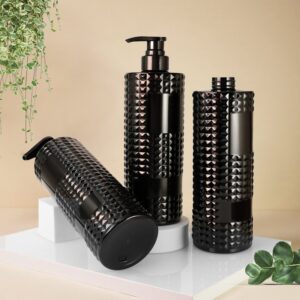

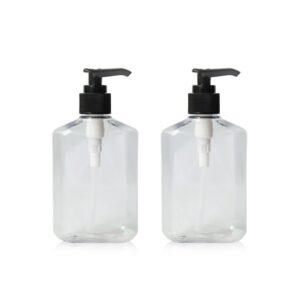
The most common mistake is stage mismatch
Two mistakes account for most of the packaging budgets we see wasted, and they are mirror images of each other.
The 5,000-unit brand that opens a private mold. The tooling is paid for whether you make five thousand units or five hundred thousand. At low volume the tooling cost per unit is enormous, and it buys something the brand does not need yet — a shape nobody recognises. A distinctive bottle only pays off once there is a brand for customers to recognise.
The 500K-unit brand still buying from a stock mold. At high volume, the per-unit premium for a private mold disappears into rounding, while the benefits compound: exclusivity, optimised gram weight, a shape engineered for your filling line, and no risk of a competitor turning up in the same bottle. Staying on a stock shape at half a million units a year is rarely a deliberate choice — it is usually just inertia.
The discipline is simple: match the packaging investment to the volume you will actually buy, not the volume you hope to reach. If the two numbers are different, buy for the number you can commit to and keep the option to upgrade.
One thing that changes very little across the three stages is the material logic itself: PET for clarity and gloss, HDPE for chemical and drop resistance, PP and PE for heat-resistant formats, and PETG where glass-like clarity is required. What changes with scale is how much you invest around that choice.
The three stages side by side
| Stage 1 — around 5,000 units | Stage 2 — around 50,000 units | Stage 3 — around 200,000 units | |
|---|---|---|---|
| Job of the packaging | Prove the product works and looks credible | Build recognition and consistency | Drive unit cost down without losing the brand |
| Tooling | Existing mold from the library | Existing mold, possibly a modified insert | Your own mold becomes viable |
| Custom colour | Usually skip it; use standard shades | Worth doing, with a signed standard | Standard, with a controlled tolerance |
| Decoration | One or two colours, or a quality label | Two or three colours, consistent across the line | Automated decoration, highest precision |
| Closure | Stock closure matched to viscosity | Matched and tested to the formula | Specified and cost-engineered |
| Safety stock | Minimal — buy for the next run | Plan around production and shipping lead time | Contracted production slots |
| Typical mistake | Opening tooling too early | Letting colour and spec drift between runs | Staying on a stock shape out of habit |
| Where cash goes | Finished goods inventory | Working capital across repeats | Tooling, then lower unit cost |
Stage 1: around 5,000 units
At this stage the packaging has one job: do not let a good product look untrustworthy. Everything else is secondary.
Do:
- Choose from an existing mold library. You get a proven shape, no tooling cost, and sampling in days rather than weeks.
- Keep decoration to one or two colours, or use a high-quality label. Two clean colours beat four sloppy ones at any volume.
- Match the closure to the viscosity. This is a function problem, not a branding one, and getting it wrong ruins the product regardless of how the pack looks.
- Spend any spare budget on wall thickness and finish instead of tooling. It is the cheapest route to a pack that reads as considered.
Do not:
- Open a private mold. The per-unit cost is punishing at this volume and the exclusivity is worth nothing yet.
- Specify a custom colour with a tight tolerance. Colour matching has a setup cost and a MOQ of its own.
- Over-order to chase a lower unit price. The saving on the unit is usually smaller than the cost of the cash you have tied up, and formulations change.
The one thing worth spending on here is testing — because a compatibility failure at 5,000 units is proportionally as damaging as one at 500K, and a 30-day test is cheap next to a recall.
Stage 2: around 50,000 units
Now the packaging starts doing real brand work. Three disciplines matter.
Standardise the neck finish across the range. A family of bottles sharing one neck finish lets you buy closures in volume, run one decoration setup, and add capacities without re-engineering anything. It is the single most reliable way to lower cost while looking more coherent on shelf.
Lock a signed colour standard. Colour drift between production runs is one of the most common complaints at this stage, and it is entirely preventable. Agree a physical signed standard, define an acceptable tolerance, and keep a retained sample from each run. If you sell online, remember that returns for “looks different to the photo” are a colour-control problem.
Differentiate through finish and closure, not shape. You still do not need your own mold. A distinctive matte finish, a better pump, a considered label, and consistent gram weight will separate you from competitors using the same stock bottle — at a fraction of tooling cost.
Stage 3: around 200,000 units
At this volume, costs that were invisible become material, and investments that were unaffordable become obvious.
Your own tooling starts to pay. The arithmetic is straightforward: compare the one-time tooling cost against the per-unit saving multiplied by the volume you will genuinely buy over the tool’s life. The saving comes from three places — exclusivity, gram weight optimised to your product rather than to a general specification, and a shape engineered for your filling line.
Lightweighting becomes worth engineering. A gram or two per bottle is invisible on a single unit and significant across half a million, in both resin cost and freight. The constraint is that lightweighting has a floor: go too light and you lose top-load strength, drop performance and the perceived quality that heavier walls provide. Engineer it, do not guess it.
Decoration should be automated and precise. At this volume, setup costs are amortised across enough units that higher-precision decoration becomes affordable, and registration quality is what separates a premium shelf from an average one.
When a private mold pays for itself
You do not need a spreadsheet to get a first answer. Ask three questions:
- Will I buy enough, over the tool’s life, for the per-unit saving to exceed the tooling cost? If the honest answer is no, stay on a stock mold.
- Do I need a shape the library cannot provide? Sometimes the answer is genuinely yes — a bespoke silhouette is the brand. That is a marketing decision, and it should be made as one rather than dressed up as a cost saving.
- Will the shape reduce cost elsewhere? A bottle designed around your filling line, your pallet configuration or your shipping carton can save more than it costs, independent of unit price.
If you answer yes to the first or the third, and the volume is real, tooling is justified. If you are answering yes to the second only, be clear with yourself that you are buying design, not savings — and budget accordingly.
The cash question
Packaging ties up cash in three places, and they behave differently as you scale:
- Tooling — a one-time cost, highest impact at low volume, negligible at high volume
- Finished goods inventory — grows with order size; the reason not to over-order for a small unit-price reduction
- Working capital across repeat runs — the hidden cost of long lead times, which is why a reliable production slot matters more than a marginally cheaper unit
Most brands optimise the unit price and ignore the other two. At 50,000 units and above, the inventory and working-capital effects are frequently larger than the unit-price differences they are chasing.
Frequently asked questions
Should a startup open a private mold?
Usually not. Tooling cost is fixed whether you make 5K or 500K units, so at low volume the per-unit cost is punishing and the exclusivity has little value — nobody recognises your shape yet. Take a stock mold and spend the difference on finish, weight and testing.
When is a private mold worth it?
When the per-unit saving multiplied by your genuine volume over the tool’s life exceeds the tooling cost, or when the shape saves money elsewhere — on your filling line, your pallet or your carton. It is also justified when a bespoke silhouette is a genuine brand requirement, but that is a marketing spend, not a saving.
How much packaging should a new brand order first?
Enough to cover your launch forecast plus a realistic buffer, and no more. Over-ordering to chase a lower unit price usually costs more in tied-up cash than it saves, and it is painful if you reformulate.
How do I scale from 5,000 to 50,000 units?
Standardise before you scale: one neck finish across the range, a signed colour standard with a defined tolerance, and a closure already tested against your formula. Scaling a standardised pack is routine; scaling one that has drifted between runs means re-approving everything.
Why did my second production run look different to the first?
Nearly always colour or decoration drift — a different masterbatch lot, a different print setup, or no signed standard to compare against. Agree a physical signed standard and keep a retained sample from every run.
Is lightweighting worth it?
Above roughly 100,000 units a year, yes — a gram or two per bottle compounds across resin and freight. Below that, the engineering effort is usually better spent elsewhere. Never lightweight below the point where drop performance, top-load strength or perceived quality suffer.
Next step
Tell us your current volume and where you expect to be in twelve months, and we will recommend the stage-appropriate route — starting from our library of 2,000+ existing molds, with new tooling only when the arithmetic genuinely supports it.
Shijin Packaging — factory-direct cosmetic and daily-chemical plastic bottles since 2003, operating 30+ automatic blow-molding lines and 10+ injection-molding machines across a 15,000 m² facility in Huizhou, Guangdong, with daily capacity of approximately 200,000 pieces.
- Website: https://shijinpackaging.com
- Full catalogue: https://shijinpackaging.com/catalog/
- Email: sales@shijinpackaging.com