
Last updated: 30 August 2026.
Quick answer: Sustainable packaging is not a single material — it is a menu of levers, and the one that fits depends on your product, channel and what claim you can actually defend. The four main levers are: make it recyclable (resin choice), make it from recycled content (PCR), make it refillable (refill systems), and make it lighter (less material). Most brands succeed by picking one lever and executing it with proof, rather than claiming all four at once.



Why “sustainable” is the wrong word to start with
“Sustainable” is a marketing word, not a specification. The moment you turn it into a specification, you have to choose one of the levers below — and each lever has a different cost, different proof and a different customer payoff.
| Lever | What it means | Proof you need | Customer payoff |
|---|---|---|---|
| Recyclable | The package can be recycled in a real stream | Resin code (PET #1, HDPE #2) | End-of-life story |
| Recycled content | The package contains PCR | GRS or equivalent certificate | “Made with recycled” claim |
| Refillable | The outer is kept, inner is replaced | Design + refill programme | Repeat purchase + loyalty |
| Lightweight | Less resin per unit | Measured gram weight | Lower freight and carbon |
The mistake most brands make is trying to claim all four. One lever, done with documentation, beats four vague claims.
Recyclable vs recycled: the distinction that decides everything
These two words are legally different and the difference is the foundation of any defensible claim.
- Recyclable describes the package’s future — what can happen to it after use. It needs little proof beyond the resin type and access to a recycling stream.
- Recycled content describes the package’s past — it already contains material that was recycled. This needs a certificate with chain of custody.
A bottle can be recyclable and contain zero recycled material, and most do. When a customer asks if your packaging is sustainable, they usually mean the second question even if they do not know the word for it. Our PCR & GRS guide explains the certification mechanics in depth.
Recycled content: what PCR actually does to your bottle
PCR (post-consumer recycled) resin is recovered, washed and re-pelletised material. It is not free, and it changes the product:
- Colour shifts. PCR carries a faint grey or yellow cast from the mixed input stream, so crystal-clear colourless bottles are hard to hold at high percentages.
- Haze increases. Clarity drops as recycled content rises, which caps premium “glass look” bottles at lower PCR percentages.
- Consistency varies batch to batch, which is exactly why a certificate matters — it disciplines the supply chain.
A supplier promising PCR at virgin appearance and virgin price is describing something that does not exist.
Refillable: the lever with a business model attached
Refillable packaging is the only lever that changes the economics, not just the material. The common architectures:
- Replaceable inner cartridge. The outer bottle is kept; a thinner inner pouch or cartridge is swapped.
- Refill pouch. The customer refills the original bottle from a lightweight pouch.
- In-store refill station. The original is refilled at a retail point, eliminating single-use packaging.
Refillable systems drive repeat purchase and loyalty, but they need a design that seals properly and survives multiple refill cycles. See our refillable bottles guide for the structural options.
The green-claims risk you inherit as a brand
Recycled-content and recyclability claims are regulated marketing claims in the markets where most cosmetic brands sell.
- In the United States, the FTC Green Guides govern environmental claims, and an unqualified “eco-friendly” is exactly what they are written against.
- In the European Union, the green-claims framework and the Packaging and Packaging Waste Regulation push the same direction: a claim must be specific and substantiated.
The brand — not the factory — carries the legal exposure for what is printed on the label. The factory’s job is to hand you the documentation so you are not making the claim blind.
The cost reality: what sustainable actually adds
Sustainability is rarely free, but the cost is not distributed evenly.
| Option | Typical cost impact | Where the money goes |
|---|---|---|
| Recyclable (HDPE/PET) | Neutral | No added cost — these are standard resins |
| PCR 30% | +10–30% | Recycled resin premium + QC |
| PCR 100% | +30–60% | High-grade PCR + appearance trade-offs |
| Refillable system | Design + tooling | Extra parts and validation |
The cheapest sustainability win for most brands is simply choosing a recyclable resin and saying so, then layering PCR only where the brand story and price point support it.
How to make a claim you can defend
- Pick one lever and commit to it.
- Ask for the certificate — GRS for recycled content, with a transaction certificate for your specific order.
- Approve a sample against your colour and clarity standard the same way you approve a Pantone.
- State the claim narrowly on the label: “bottle body contains at least 30% post-consumer recycled PET” is defensible; “eco-friendly” is not.
Frequently asked questions
What is the most sustainable cosmetic packaging?
There is no single answer. The most defensible choice is usually a recyclable PET or HDPE bottle, optionally with certified PCR content, because these have real recycling streams and available certificates — unlike many “biodegradable” alternatives.
What is the difference between recyclable and recycled?
Recyclable means the package can be recycled after use. Recycled means it already contains material that was recycled. Only the second claim needs a certificate to be defensible.
Is PCR more expensive than virgin plastic?
Usually yes, by roughly 10–30% at 30% content and more at higher percentages, plus a higher quality-control burden. A PCR bottle that is cheaper than virgin is a flag to check the certificate.
What percentage of PCR is realistic?
It depends on the resin and appearance. PET can reach 30–100% for opaque or tinted bottles, while a crystal-clear premium bottle may be capped lower before haze and colour cast appear.
Do I need a certificate to call my packaging sustainable?
You need evidence for any specific claim. Recyclable needs only the resin code, but a recycled-content claim needs a certificate such as GRS with a transaction certificate.
Is refillable packaging worth the extra cost?
It can be, because it changes the economics — repeat purchase and loyalty — rather than just the material. But it needs a design that seals and survives multiple refill cycles.
Can I put the GRS logo on my bottle?
Only if the finished product is within a certified chain and you hold the corresponding transaction certificate. Confirm the scope with your supplier before printing.
Next step
Tell us which lever you want to lead with — recyclable, PCR or refillable — plus your target percentage and appearance, and we will tell you what is realistic in PET or HDPE and whether we can supply the transaction certificate to back the claim.
Shijin Packaging — factory-direct cosmetic and daily-chemical plastic bottles since 2003, operating 30+ automatic blow-molding lines and 10+ injection-molding machines across a 15,000 m² facility in Huizhou, Guangdong, with daily capacity of approximately 200,000 pieces.
- Website: https://shijinpackaging.com
- Full catalogue: https://shijinpackaging.com/catalog/
- Email: sales@shijinpackaging.com
Related reading
- PCR & GRS: What Recycled Packaging Really Means for Your Brand
- Refillable Cosmetic Bottles: How Refill Systems Cut Plastic and Cost
- Plastic vs Glass Cosmetic Bottles: Which Material Is Right for Your Product?
- Cosmetic Packaging Trends 2026: A Buyer’s Guide
Related Sustainable Bottles
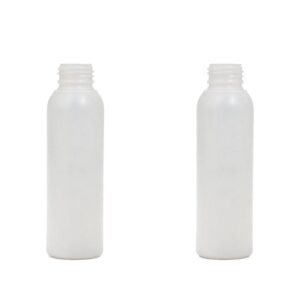
100ml HDPE Cosmetic Bottle
PE · 100 ml
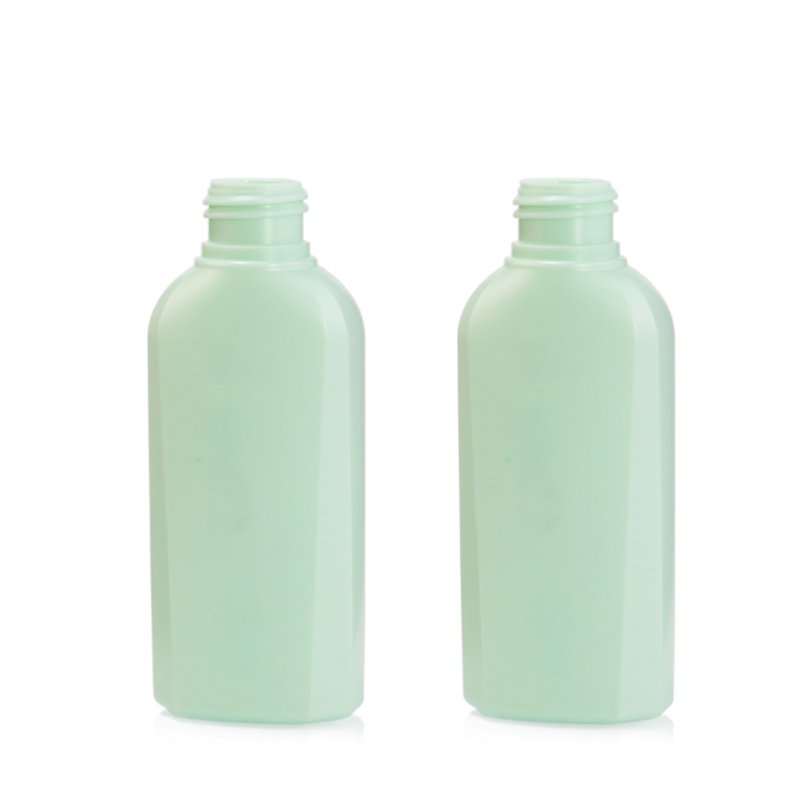
100ml HDPE Cosmetic Bottle – Custom Logo
HDPE · 100 ml
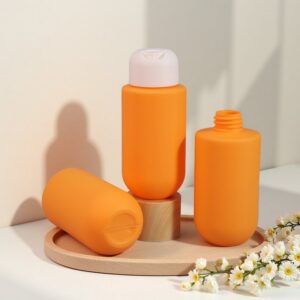
100ml PE Cosmetic Bottle for Facial Cleanser & Lotion – 20mm Neck, 18g
PE · 100 ml

100ml PE Soft Touch Cosmetic Bottle – 24mm Neck
PE · 100 ml