
You are new to sourcing packaging, and the search results are overwhelming: paid ads for “factories”, B2B listings with photoshopped bottles, and a friend who says he knows a guy. Where do you even start, and how do you know which channel is lying to you?
Quick answer: your sourcing channel decides 80% of the problems you will meet later, so choose it deliberately. Ranked by information reliability: industry referrals and peer recommendations first; trade shows second (you see the factory in person); B2B platforms third (verify hard, they carry fake listings); raw search-engine results last (mostly ads and middlemen). Whatever the channel, ask every candidate the same five questions and compare answers sideways — that calibration matters more than any single channel.


Why “where you look” beats “which factory you pick”
Every vetting checklist you will read — including ours on supplier audits — assumes you already have a shortlist. But the shortlist itself comes from a channel, and each channel injects its own kind of noise. Find a real factory through a bad channel and you will spend your whole audit budget fighting the channel’s distortions: fake photos, resold leads, zombie listings. Choose the channel well and even an average factory is easy to verify.
The five channels, ranked by trust
| Channel | Signal strength | Main fake signal | Time budget |
|---|---|---|---|
| 1. Industry referral / peer | Highest — someone’s money already on the line | Old contacts whose info has drifted | Low |
| 2. Trade shows (Canton Fair, Cosmoprof, Cosmopack) | High — you see machines and people | Booths that are trading companies in disguise | High (travel) |
| 3. B2B platforms (Alibaba, Global Sources) | Medium — structured but gamed | Verified badges bought or stale; resellers | Medium |
| 4. Search engines | Low — ads dominate | Ad-buying middlemen posing as factories | Low per hit, high overall |
| 5. Directories & yellow pages | Lowest — rarely maintained | Dead listings, out-of-date contacts | Skim only |
Channel by channel: what to do and what to ignore
Referrals. The best lead is a brand in a similar category telling you who makes their bottles. Ask the referee three things: how long they have used the factory, what goes wrong (they will tell you), and whether the factory still handles their volume. Referrals decay — a factory that was great for a 5,000-unit brand may have moved upmarket.
Trade shows. Worth the flight when you have several candidates to compare at once. The skill is knowing which booths are real factories: ask to see production-line footage, mold capacity and a client list on the spot. If you cannot travel yet, this guide to what to inspect before bulk production doubles as your in-booth checklist.
B2B platforms. Use them for discovery, not for trust. A “Verified Supplier” badge means the platform checked documents at some point, not that the company is a factory. Filter for factories over trading companies, look at how long the storefront has existed, and always move to a video call where you ask to see the mold shop and production floor live.
Search engines. Treat the top results as paid placement until proven otherwise. When you search “cosmetic bottle manufacturer”, the ads are companies that bought your keyword — which middlemen do more aggressively than real factories. Scroll, cross-check company names against B2B registrations, and verify the domain’s age and content before contacting.
The same five questions, asked sideways
Whichever channel a candidate came from, ask the same five questions and compare the answers across your list. Discrepancies are your best signal.
- What resin grades do you run most (PET, HDPE, PP, PETG)?
- Can you show a live video of this week’s production line?
- What is your mold count, and how many are stock shapes vs customer-owned?
- What is your realistic lead time for 5,000 and 50,000 units?
- Who do I talk to after sale — the same person who quoted me?
Cross-checking answers is what turns a pile of candidates into a defensible shortlist. When a factory’s answers are consistent, its documents are next — the six documents and remote audit steps in our audit checklist take you from shortlist to sign-off.
From shortlist to first sample
You now have three or four candidates with consistent answers. Order a sample from each on the same spec — same capacity, same resin, same neck finish — so you compare like for like. The fastest route is a stock shape from each factory’s ready-mold catalogue; a factory with thousands of ready molds (Shijin holds 2,000+) can ship samples within days, which is itself a signal of real manufacturing depth.
Frequently asked questions
Is Alibaba safe for finding a real bottle factory?
Alibaba is safe as a discovery channel if you verify beyond the badge: confirm the company is a factory (not a trading company), do a video walkthrough of the floor, and check how long the storefront has been active. Use it to build a shortlist, then audit the shortlist properly.
Should I fly to China for a trade show before ordering?
If you have multiple serious candidates, one trip that compares 8–12 factories is usually worth it. If you have one candidate, a remote video audit plus samples may be enough first.
How can I tell if a supplier is a factory or a middleman?
Ask for a live video of the production floor and the mold shop, and check whether their stated mold count and machine count match a real facility. Middlemen rarely have a floor to show on demand.
What is the fastest way to compare suppliers fairly?
Order samples of the same spec from each candidate simultaneously, and ask the same five questions to each. Identical inputs make the differences between suppliers visible.
Shijin Packaging is a factory-direct supplier in Huizhou, China, running 30+ blow-molding lines in a 15,000 m² plant — exactly the kind of company the vetting process above is designed to find. See our ready-mold catalogue.
Related Cosmetic Bottles
100ml HDPE Cosmetic Bottle
PE · 100 ml
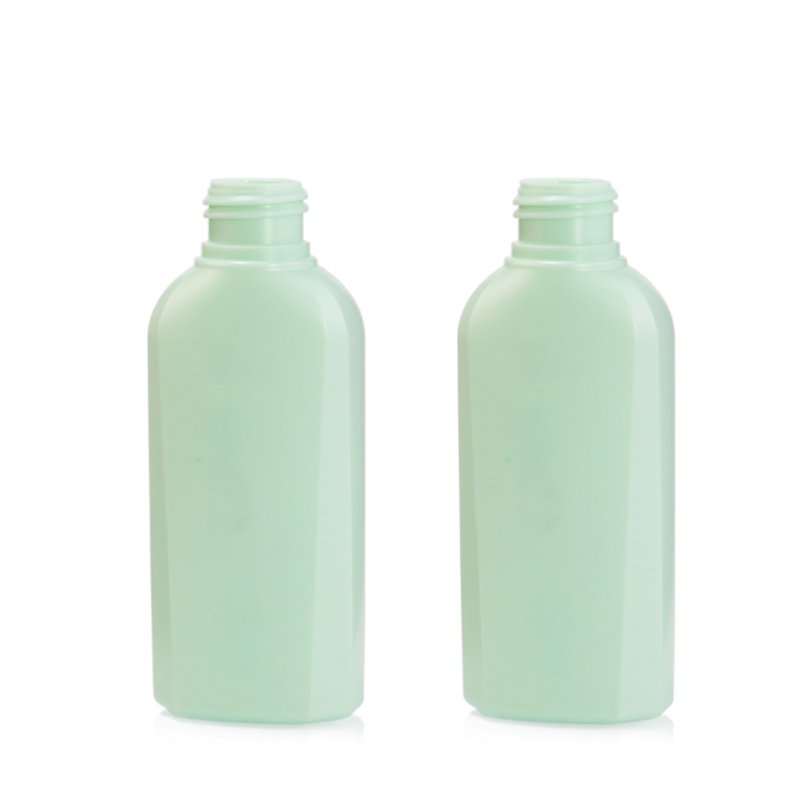
100ml HDPE Cosmetic Bottle – Custom Logo
HDPE · 100 ml
100ml PE Cosmetic Bottle for Facial Cleanser & Lotion – 20mm Neck, 18g
PE · 100 ml

100ml PE Soft Touch Cosmetic Bottle – 24mm Neck
PE · 100 ml