
Last updated: 1 September 2026.
Quick answer: A useful supplier audit checks six things: that the factory is what it claims to be, that it can make your part at the volume and consistency you need, that its quality system produces records you can rely on, that its compliance documentation is current and real, that its mold and material base is genuinely its own, and that it will still be there in three years. Certificates alone prove very little — a scan of a certificate proves a certificate exists. What matters is whether daily practice generates the records, and you can establish that in a video call and a document request without travelling.
Why certificates alone are not enough
A certification means an auditor found a management system in place on the day of the audit. It does not mean the system is used, and it does not mean it covers your product.
| What a certificate tells you | What it does not tell you |
|---|---|
| A system was in place at audit date | Whether it is followed daily |
| The scope covered something | Whether it covers your product or process |
| The entity is certified | Whether the entity quoting you is the certified one |
| A standard was met once | Whether records are maintained now |
The last point is the one that catches buyers: a trading company quoting with a factory’s certificate. Verifying that you are dealing with the manufacturer is the first item on the checklist, and the distinctions are set out in how to vet cosmetic bottle suppliers.
Section 1 — Identity and legitimacy (verifiable before any call)
- Business licence, with the entity name matching the one on your quotation and invoice
- Factory address, verifiable independently, and matching the site you will be shown
- Confirmation of whether you are dealing with the manufacturer or an intermediary
- Company history and ownership — how long has this entity been operating
- Export history — which markets has it shipped to, and can it evidence that
- Banking details in the entity’s own name
The operating-history question is worth asking directly. A factory that has been running for decades has survived multiple resin cycles, regulatory changes and customer churn, which is a meaningful signal about process and financial durability — the argument we make in new factory vs established factory.
Section 2 — Capability and capacity
- Number and type of blow-molding lines, and their age distribution
- Number and type of injection-molding machines
- Cavities typically run, and what that implies for your unit cost
- In-house mold shop, or outsourced tooling — and if in-house, what equipment
- Mold library: how many existing molds, and is there one close to your requirement
- Decoration capability in-house: silk screen, hot stamping, labelling, coating
- Stated daily or monthly capacity, and current utilisation
- Whether your projected volume is material to them, or negligible
Two things to listen for. In-house tooling shortens every future iteration, which is why it dominates the timeline discussion in where the lead time weeks go. Existing molds close to your shape can remove tooling cost and weeks entirely — the arithmetic is in MOQ, tooling cost and lead time.
Section 3 — Quality system and records
This is the section that predicts how a problem will be handled.
- ISO 9001:2015 certification — current, in the entity’s name, with a scope covering molding
- Incoming material inspection: how is resin verified, and are records kept
- In-process inspection: what is measured, how often, by whom
- Final inspection criteria: AQL standard used, and what your agreed level will be
- Dimensional measurement equipment: callipers, gauges, and specifically neck-finish gauges
- Leak testing: what method, on what proportion of production
- Torque testing: is a range specified and measured
- Retained samples: are samples kept per lot, for how long
- Lot traceability: can a finished carton be traced back to a resin lot and a production date
- Non-conformance process: what happens when a lot fails, and can you see an example record
- Calibration records for measuring equipment
Ask to see an actual inspection report from a real production lot, with the identifying details intact. A factory that can produce one in a minute runs the process; a factory that offers to “prepare a sample report for you” is telling you something.
The neck-finish gauges deserve a specific question, because the closure interface is where most failures originate — see why bottles leak, crack or craze.
Section 4 — Materials and compliance
- Resin specification: polymer type, grade, virgin or PCR percentage, supplier
- PCR certification, if claimed — documentation under the Global Recycled Standard, with transaction certificates
- Food-contact or cosmetic-contact declarations relevant to your market
- EU: Regulation 10/2011 for plastic food-contact materials, and the EC 1223/2009 cosmetics framework
- US: understanding that cosmetics are regulated, not approved — confirmed against the FDA’s own statement
- Heavy metals, phthalates and other restricted-substance declarations, as required by your market
- Change-control policy: will you be notified if the resin grade or supplier changes
- Colour matching process and tolerance, with retained reference standards
Change control is the item most buyers forget, and it is the one that causes the most expensive surprises: a resin grade silently substituted between re-orders, with a compatibility consequence that appears months later. Get notification in writing. Colour control across re-orders is covered in how to specify bottle colour, and recycled content in the GRS and PCR guide.
Section 5 — Commercial terms and risk allocation
- Quoted specification in writing: gram weight, resin grade, neck finish, tolerances
- MOQ, and price breaks at higher quantities
- Price validity period, and the mechanism if resin moves — see resin grade and what a COA should show
- Payment terms, and whether they match the entity’s name
- Incoterm quoted, and what sits outside it
- Tooling ownership, custody, maintenance and release rights, in writing
- Exclusivity or non-use terms if a private mold is involved
- Defect and claim process: what evidence is required, and what remedy is offered
- Lead time defined by stage, not as a single number
Mold release rights are the clause that determines whether you can ever change supplier, and therefore whether your pricing power survives the first year. It is worth more than a small unit-price concession.
Section 6 — Continuity
- Financial stability signals: how long in business, export base, customer concentration
- Customer references — ideally in your market, and ask what happened when something went wrong
- Key-person dependency: is capability documented or held in one person’s head
- Social compliance and labour standards documentation, as required by your market or your own customers
- Business continuity: what happens to your programme if they lose a key machine or a major customer
The reference question to ask is not “are you happy with them” but “tell me about the last problem and how it was resolved.” Every factory has had one. The ones worth working with describe it precisely and tell you what they changed.
How do you run this without travelling?
Most of the checklist is document-based and can be completed by email. The parts that need observation — the floor, the gauges, the retained-sample store — can be done on a live video call if you control the call.
- Send the document request first, and read what comes back before the call.
- Ask for a live walk-through, not a prepared video. Specify what you want to see: the mold shop, the inspection station, the retained-sample store, the warehouse.
- Ask them to show a specific thing on camera — a gauge reading on a real part, an inspection report with a real lot number, the retained sample for a recent order.
- Ask an operator a question, not the salesperson. “What do you do if the neck dimension drifts?” is more informative than any certificate.
- Request production-intent samples, not laboratory samples, and test them yourself.
The full remote procedure is set out in how to audit a Chinese bottle factory remotely, and the warning signs that should end the conversation are in 7 red flags when sourcing from China.
The decision, in one paragraph
Do not audit to collect certificates — audit to find out whether daily practice generates records you can rely on when something goes wrong. Ask for real inspection reports, real retained samples, real neck-finish measurements, and a real answer about the last problem they had. Get mold ownership and release rights in writing, and a change-control commitment on resin. Those five things are worth more than any single number on a quotation, and they are what determine whether your programme survives its first serious problem.
Frequently asked questions
How long does a supplier audit take?
The document review is a few hours spread over a few days. The live walk-through is an hour or two. It is the highest-return due diligence available to a packaging buyer.
Can I audit remotely and still trust the result?
Yes, if you control the call and ask to see specific, un-prepared things. Prepared videos and sample reports prove far less than a live gauge reading on a real part.
What is the single most telling item on the checklist?
Whether they can produce a real inspection report for a real production lot, on request, with lot numbers intact.
Should I require ISO 9001?
It is a reasonable baseline expectation for an export-facing factory, and it should be current and in the entity’s own name. On its own it proves little; combined with real records it means a lot.
What if a supplier refuses part of the audit?
Ask why. Some items are commercially sensitive and a reasonable explanation is fine. Refusal to discuss quality records, material specification or mold ownership is not fine.
How often should I re-audit?
On qualification, and then periodically — annually for a critical supplier, or after any significant change to your specification, volume or their ownership.
Next step
Send us this checklist. We will answer it item by item, and put you on a live video walk-through of our mold shop, inspection station and retained-sample store at a time that suits you.
Shijin Packaging — factory-direct cosmetic and daily-chemical plastic bottles since 2003, operating 30+ automatic blow-molding lines and 10+ injection-molding machines across a 15,000 m² facility in Huizhou, Guangdong, with daily capacity of approximately 200,000 pieces.
- Website: https://shijinpackaging.com
- Full catalogue: https://shijinpackaging.com/catalog/
- Email: sales@shijinpackaging.com
Related reading
- How to Audit a Chinese Bottle Factory Remotely
- How to Vet Cosmetic Bottle Suppliers: Factory, Distributor or Trading Company
- New Factory vs Established Factory: Why Track Record Decides
- 7 Red Flags When Sourcing Cosmetic Bottles from China
- PCR and Recycled Resin Cosmetic Bottles
- PETG Cosmetic Bottles
Related Cosmetic Bottles
100ml HDPE Cosmetic Bottle
PE · 100 ml
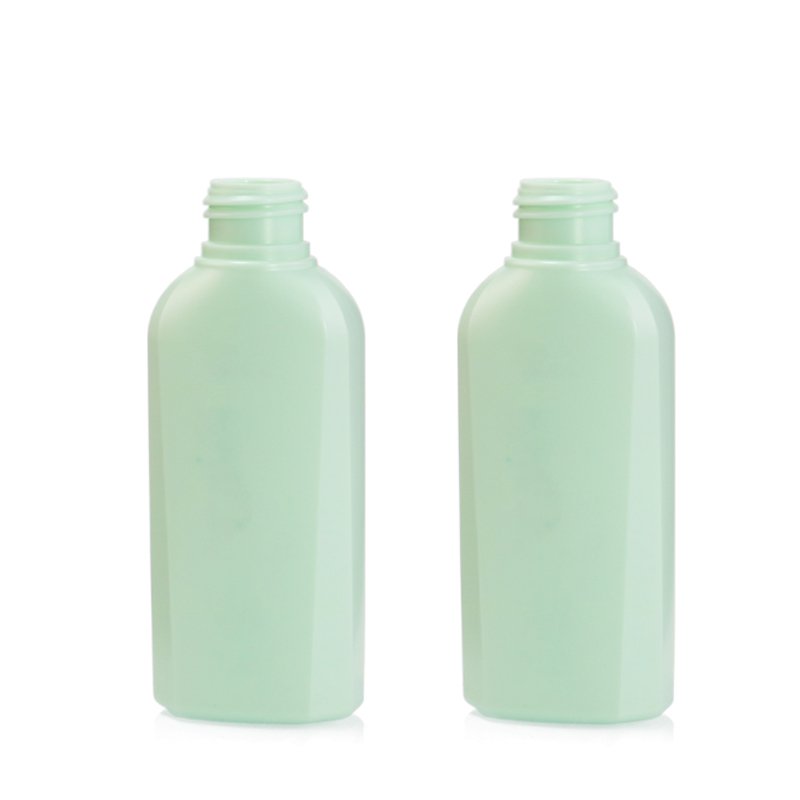
100ml HDPE Cosmetic Bottle – Custom Logo
HDPE · 100 ml

100ml PE Cosmetic Bottle for Facial Cleanser & Lotion – 20mm Neck, 18g
PE · 100 ml

100ml PE Soft Touch Cosmetic Bottle – 24mm Neck
PE · 100 ml