
Last updated: 3 September 2026.
Quick answer: Perceived quality is not a mystery — it is six measurable variables: gram weight and wall thickness, base design, shoulder line, clarity and haze, surface finish, and decoration precision. Once you can name them you can rank them by value, and the ranking is not the one most brands assume: heavy wall and a matte finish usually buy more perceived quality per unit of cost than changing the resin or retooling the shoulder.
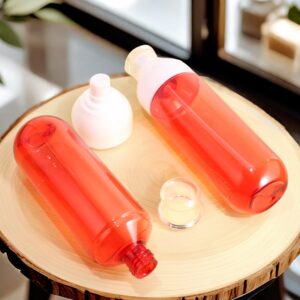
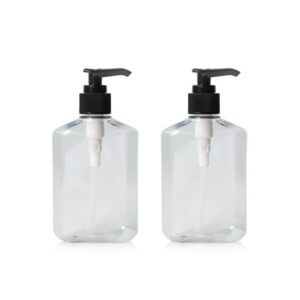

Premium is engineered, not accidental
Put two bottles of the same capacity on a table and most people will agree within a second which one looks expensive. Ask them why and you get hand-waving: “it feels heavier”, “the finish is nicer”, “it just looks better”.
All three of those are real, measurable variables. Perceived quality in a plastic bottle comes down to how it handles weight, how it handles light, and how precisely it is finished. None of those require an expensive resin. What they require is knowing which variable you are buying.
The practical payoff is that the six variables have very different cost curves. Two of them are cheap relative to their visual impact; two are expensive for what they deliver. Brands that spend without knowing the ranking routinely pay for the expensive ones and skip the cheap ones.
The six variables
| Variable | What the customer perceives | Relative cost impact | Where it shows up |
|---|---|---|---|
| Gram weight and wall thickness | Substance, rigidity, “expensive” heft in the hand | Low to mid — roughly linear with resin used | Whole bottle; also improves top-load and drop performance |
| Base design | Stability and visual weight; stops the pack looking top-heavy | Low — usually a mold insert or preform change | Thick base, punt depth, base radius |
| Shoulder line | Elegance; the difference between a designer shape and a stock shape | High if it requires new tooling | Shoulder radius and transition to the neck |
| Clarity and haze | Purity and freshness in clear packs; softness in frosted ones | Low to mid — process control more than material | Transparency, gloss, frosting level |
| Surface finish | Matte reads modern and understated; high gloss reads clean and clinical | Low per unit, plus a setup cost | UV varnish, matte coating, soft-touch, pearl |
| Decoration precision | Registration, edge sharpness and colour density are read as quality | Mid — driven by colour count and setup | Silk screen, hot stamping, labelling |
Notice that the two variables most people reach for first — changing the resin to PETG, and retooling the shoulder — are the two most expensive entries in the table. The two cheapest, gram weight and surface finish, are the ones most often left on the table.
What each one costs
Exact numbers depend on capacity, volume and the specific finish, so the useful comparison is relative rather than absolute.
Gram weight is close to linear: more resin, more cost, in proportion. A modest increase in wall thickness is one of the cheapest upgrades available, and unlike most upgrades it is functional as well as cosmetic — it improves top-load strength and drop performance at the same time.
Base design is usually a low-cost change because it is often handled in the mold insert or the preform rather than the whole tool. It has an outsized effect on how stable and considered the pack looks, because the eye reads a heavy base as quality even when it cannot articulate why.
Surface finish has a per-unit cost that is small, plus a setup cost. A matte or soft-touch coating will change the perceived tier of a pack more than almost anything else you can do at the same budget, which is why it is the single most reliable value upgrade for mid-market brands.
Decoration precision scales with colour count and setup. Two clean colours almost always look better than four mediocre ones. Registration quality — how precisely the colours align — is read as quality far more accurately than the number of colours is.
Shoulder line is expensive when it needs new tooling, and it is the variable most often requested for the wrong reason. A distinctive shoulder is a genuine brand asset at high volume; below that, it is usually better to take a stock shape and spend the money on weight and finish.
Resin change — PET to PETG — is the most expensive route to clarity. It delivers glass-like transparency and better thick-wall performance, and it is the right call for premium thick-wall jars and bottles — see our PETG bottle range. It is not the right call if all you wanted was a less cheap-looking pack: PET and HDPE remain the better value once weight and finish are right.
The value order
If you have a limited budget, spend it in this order:
- Wall thickness — the cheapest way to add perceived substance, and it improves performance as a side effect.
- Surface finish — matte or soft-touch moves the perceived tier more per unit of cost than anything else on the list.
- Base design — low cost, high visual return, especially on tall packs that otherwise look top-heavy.
- Decoration quality — fewer colours, executed precisely, beats more colours executed loosely.
- Shoulder line — only once volume justifies tooling.
- Resin upgrade — last, and only where glass-like clarity is a genuine requirement.
Most brands run this list backwards. They start with the resin and the shape, discover the budget is gone, and ship a premium-priced pack with a thin wall and a glossy finish that reads as cheap under retail lighting.
What to skip below 10,000 units
At low volume, tooling and setup dominate, so some upgrades stop making sense:
- Custom shoulder or body geometry. The tooling cost is the same whether you make 5K or 500K units. Take a stock shape from the mold library and spend the difference elsewhere.
- More than two or three print colours. Each colour adds setup and registration risk without a proportional visual return.
- Exotic finishes that need new equipment setups. Ask which finishes the factory already runs daily — those are priced competitively; the ones that need a special setup are not.
What still works at low volume: wall thickness, a standard matte or soft-touch finish from the existing finish range, and a well-executed two-colour print. Those three together will outperform a custom shape with a thin wall, and they cost a fraction of it.
Frequently asked questions
Does a heavier bottle look more expensive?
Up to a point, yes — weight in the hand is the strongest single cue for perceived quality, and increasing gram weight is one of the cheapest upgrades available. Past the point where the pack feels disproportionate for its contents, extra weight stops adding value and starts adding shipping cost.
Matte or glossy for a skincare bottle?
Matte reads modern, understated and clinical, which suits treatment-led and dermocosmetic positioning. Gloss reads clean, fresh and mass-premium, and it shows fingerprints and shelf scuffs more readily. Matte is the safer choice for a premium signal; gloss is the safer choice for a bright, mass-market shelf.
Is PETG worth the premium over PET?
Where glass-like clarity or thick-wall performance is the point — premium jars, thick-wall serum bottles — yes. If the goal is simply to look less cheap, wall thickness and a matte finish will get you most of the way for considerably less.
How many print colours do I need?
Two or three, executed with tight registration, usually outperform four or five loosely registered ones. Registration quality is what the eye actually reads as quality. Spend on precision before you spend on colour count.
Can I make a stock bottle look premium?
Yes, and it is the highest-return route at low to mid volume. Increase the wall thickness within the existing mold, apply a matte or soft-touch finish, use a heavier base where the mold allows, and print two colours precisely. The result reads as a considered pack without any tooling cost.
What is the most common premium-packaging mistake?
Paying for tooling or a resin upgrade before spending on wall thickness and finish. The pack then looks thin under retail lighting despite the investment, because the two variables the eye reads first — weight and surface — were the ones left unchanged.
Next step
Tell us your capacity, target volume and the tier you need to hit, and we will recommend where to spend — starting from our library of 2,000+ existing molds, so the budget goes into weight and finish rather than tooling you do not need yet.
Shijin Packaging — factory-direct cosmetic and daily-chemical plastic bottles since 2003, operating 30+ automatic blow-molding lines and 10+ injection-molding machines across a 15,000 m² facility in Huizhou, Guangdong, with daily capacity of approximately 200,000 pieces.
- Website: https://shijinpackaging.com
- Full catalogue: https://shijinpackaging.com/catalog/
- Email: sales@shijinpackaging.com