
Choosing a plastic bottle for food or drink is not the same as choosing one for cosmetics. The resin must be food-contact approved, the factory must hold the right certifications, and the bottle must survive the fill temperature and the product’s chemistry. This hub gathers Shenzhen Shijin’s guidance for edible-oil, sauce, dairy, juice and beverage brands sourcing compliant PET and HDPE bottles.
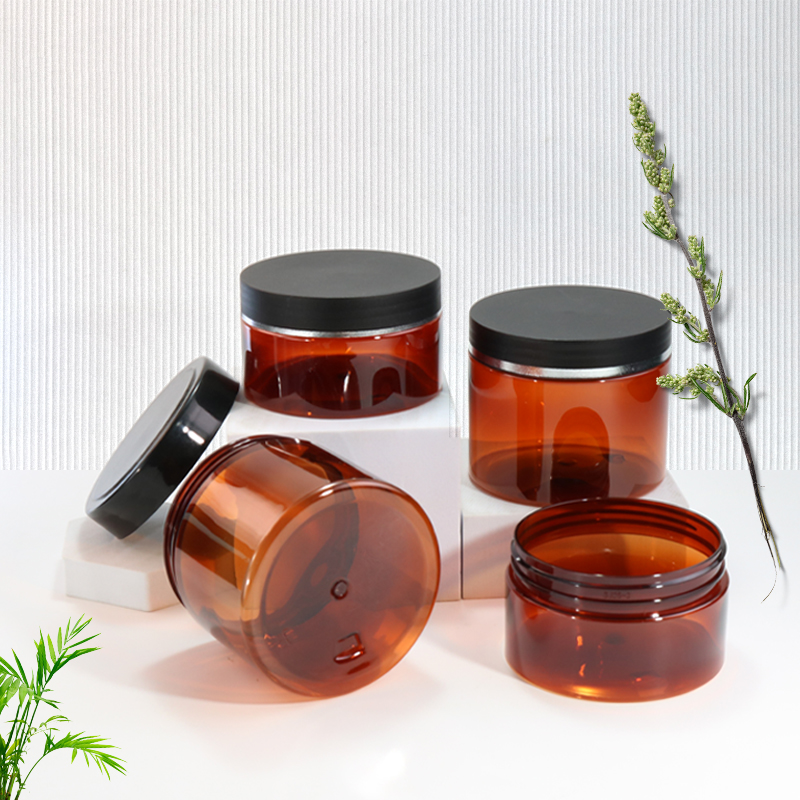
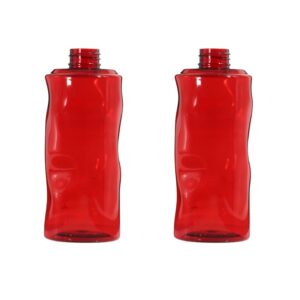
Bottles from our catalogue — bottle formats for food and beverage fills.


Why food-grade resin is non-negotiable
A bottle that touches food must use resin certified for food contact. For Shenzhen Shijin that means PET and HDPE grades that comply with FDA 21 CFR and EU 10/2011, plus an internal Food Grade specification. Using a non-food grade pellet — even visually identical — can leach substances into the product and fail customs or retailer audit.
We keep food-grade and non-food-grade production on separated, documented lines and can supply the material certificate and migration test summary on request.
PET vs HDPE for food & beverage
PET is the default for edible oil, sauce, juice and clear beverage thanks to clarity, low taste/smell transfer and good barrier to oxygen. HDPE is preferred for milk, yogurt drinks and opaque or squeezable formats because it resists a wider range of chemicals and survives freezer-to-fridge cycles better.
See our full PET vs HDPE vs PP vs PETG: choosing the right bottle material guide for a deeper material comparison.
Capacity and neck planning
Food bottles at Shijin span roughly 30 ml sampling sachets up to 1 L–5 L jerry cans for bulk oil and concentrate. Match neck to closure: 24/410 and 28/410 are the workhorses for screw caps and dispensing, while 38 mm is common on wide-mouth jars and scoops.
Plan the neck early — Bottle neck finishes explained: 18/20/24/28 mm explains the standard finishes we tool.
Explore the food & beverage cluster
Use the articles below to spec each format: Squeeze & travel bottles for condiment and sauce squeeze bottles, and the dedicated guides for edible oil, dairy and juice.
Compliance note: Food-contact bottles must clear migration limits. Shijin food-grade PET and HDPE comply with EU 10/2011 and US FDA 21 CFR requirements, with material certificates and migration-test summaries available on request.
Related reading
- PET Bottles for Edible Oil & Sauce: Clarity, Barrier and Fill Temperature
- HDPE Bottles for Milk & Dairy: Squeeze, Freeze and Chemical Resistance
- Food-Grade Plastic Bottle Compliance: FDA, EU 10/2011 & What Buyers Must Verify
- Juice & Beverage PET Bottles: Clarity, Carbonation Risk and Closure Choice
What food formulas demand from the bottle
For food fills the bottle is part of the compliance and performance chain, not just a container. The body has to hold the formula without stress cracking or leaching, survive the filling line, and stay readable after months on a shelf or in a warehouse.
Across our 30+ blow-molding lines we see the same non-negotiables: a neck that seats the closure squarely, wall thickness tuned to the fill weight, and colour and decoration that survive transport and UV. A bottle that passes the bench test but fails the warehouse is not a pass.
If the formula is viscous, acidic or solvent-based, tell us at the enquiry stage. The resin choice and the lining of the closure both shift, and selecting them early is far cheaper than re-tooling after a failed stability test.
Capacities we stock for food
| Model | Material | Capacity | Neck |
|---|---|---|---|
| SJT0146 | PET | 146 ml | 32 mm |
| Custom 350ml HDPE Cosmetic Bottle | HDPE | 350 ml | 28/410 |
| SJE0090 | PE | 500 ml | Custom |
| SJT0097 | PET | 97 ml | 20 mm |
These are stock shapes from our catalogue — the same tools a buyer samples first before committing to a custom mold. Capacities run from small trial sizes to bulk drums, so most food programmes can start from an existing mold and skip tooling lead time.
Sampling from a stock mold also de-risks the launch: you get a real, fill-tested bottle in days, validate it on your line, then scale or customise once the volume is proven.
Compliance and documentation
Every food-contact and pharma-adjacent bottle we make is produced under ISO 9001 controls, with FDA, SGS and EU 10/2011 food-contact documentation available on request. For export we supply the material certificate and, where required, UN-marked HDPE options for chemical transport.
If your market needs a specific claim (BPA-free, documented recycled content, tamper-evident), tell us at the sampling stage so we select the right resin and closure before the first run.
Sampling and first-run support
Because the tool is cut in-house, sampling lead time is typically 3–10 days from drawing to first article. We hold the first-article sample against the drawing, confirm wall and weight, and only then move to bulk.
For a new programme that means you can prove the bottle on your filling line before committing to a large order — and repeats stay consistent because the same mold and resin are used on every run.
Where most buyers start
Most buyers do not need a custom mold on day one. Start from a stock shape in the right material and capacity, validate it on your line, then customise once the volume justifies the tool.
If you send us the formula, the fill volume and the closure you have in mind, we can usually point to a stock mold within a day and have a sample in your hands within the week.