
Last updated: 30 August 2026. Transit times and costs below are indicative as of this date and shift with fuel, season and routing.
Quick answer: Most cosmetic bottles ship from China by sea, because bottles are light but bulky and sea freight charges by volume. A full container from a Chinese port to Europe or North America typically takes 30–40 days port-to-port, while air freight takes 5–10 days at several times the cost per cubic metre. The three terms that decide who pays and who is responsible at each stage are EXW (you arrange everything from the factory gate), FOB (the supplier clears export and loads the vessel) and CIF (the supplier also insures and pays freight to your port). The practical rule: agree the Incoterm in writing before you agree the price, because the same bottle is a different cost under each.
The most common first-order mistake is not the freight line — it is treating the bottle price and the logistics price as one number, then discovering the container, customs clearance, duties and last-mile delivery were never in the quotation. This guide separates them so you know what to budget and what to ask.

What do EXW, FOB and CIF actually mean?
These are Incoterms published by the International Chamber of Commerce (ICC), and they exist to remove ambiguity about who owns the risk at each point in the journey.
| Term | What the supplier pays for | What you pay for | Risk transfers |
|---|---|---|---|
| EXW (Ex Works) | Nothing beyond making the goods available at the factory | Everything: inland trucking, export clearance, ocean/air freight, insurance, import clearance, delivery | At the factory gate |
| FOB (Free On Board) | Inland trucking to the port and export clearance, then loading the vessel | Ocean freight, insurance, import clearance, delivery | When the goods cross the ship’s rail at origin |
| CIF (Cost, Insurance and Freight) | Everything in FOB, plus ocean freight and minimum insurance to your port | Import clearance, duties, inland delivery in your country | When the goods cross the ship’s rail (but the supplier’s obligation to pay freight ends at your port) |
For a first order, FOB is usually the cleanest starting point: the supplier — who knows the local port, trucking and export paperwork — handles the complicated Chinese side, and you control the freight forwarder on your side. EXW looks cheaper but hands you the Chinese export process, which is the part you least want to own from abroad.
Sea, air or rail — how do you choose?
Bottles are a classic sea-freight product: low value density, high volume. The choice is rarely about speed alone.
| Mode | Typical transit (China → EU/US) | Cost signal | When it makes sense |
|---|---|---|---|
| Sea (LCL / FCL) | 30–40 days | Lowest per cubic metre | Orders of a pallet or more, non-urgent |
| Air | 5–10 days | Several times sea cost | Samples, urgent launch, high-value or very light cargo |
| Rail (China–Europe) | 18–25 days | Between sea and air | Europe-bound, faster than sea, cheaper than air |
The key metric for a bottle order is volume, not weight. Bottles are light, so a container is usually filled by cubic metres (CBM) long before it reaches its weight limit. Chargeable weight on air freight is the greater of actual weight and volumetric weight — and for empty bottles, volumetric weight usually wins, which is why air-freighting bottles is punishingly expensive.
How many bottles fit in a container?
Packaging efficiency — how many bottles nest into a carton, and how many cartons stack onto a pallet — is what determines your freight cost per bottle. Two identical bottles from two suppliers can have very different freight costs if one packs 20% more per carton.
| Reference | Rough guide |
|---|---|
| Carton | Bottles are nested or separated; inefficient nesting wastes carton volume |
| Pallet | Standardised footprint; pallet height and stacking affect the container cube |
| 20 ft container | ~28–33 CBM usable |
| 40 ft HC container | ~66–68 CBM usable |
Ask your supplier for the carton dimensions, pieces per carton and cartons per pallet before quoting freight. A freight forwarder cannot give you a real number without the CBM, and a supplier who will not provide it has not finished the job.
What documents clear a bottle shipment through customs?
The paperwork is standard, and a compliant supplier produces it without being asked. What changes by market is the compliance evidence, not the transport documents.
- Commercial invoice — value, terms, Incoterm, description.
- Packing list — carton-by-carton contents, weights, dimensions.
- Bill of lading (sea) or air waybill (air) — the carrier’s receipt and title document.
- Certificate of origin — required for preferential duty treatment under many trade agreements.
- Compliance documents — for cosmetic packaging, this means resin and additive compliance statements and dated third-party test reports. For the EU market, a declaration of conformity against Regulation (EU) No 10/2011 for plastic food-contact materials, where applicable.
Duties depend on the harmonised-system (HS) code your goods are classified under, and on the destination country. Plastic bottles and their closures can classify differently, so confirm the HS code with your forwarder or customs broker before the shipment is packed — a wrong classification is the fastest way to a hold at the port.
Why does transit damage keep happening?
A bottle that passes every dimension check can still arrive cracked, collapsed or leaking after 35 days at sea and a drop from a warehouse shelf. Transit performance is its own standard, and the International Safe Transit Association (ISTA) publishes the test procedures that packaged goods are expected to survive.
The practical points to raise before shipping:
- Stacking strength — lightweighted bottles can collapse under stacked pallets in a container.
- Drop and vibration testing — against a declared standard, not a gut feel.
- Carton quality — a single-wall carton that survives a factory floor may not survive a container.
- Palletising — bottles shipped loose in a container move during transit and arrive scuffed or dented.
If a quotation is dramatically cheaper than competitors, ask what the gram weight is and how it is packed before you celebrate — lighter bottles and cheaper cartons are where transit damage comes from.
What is the one sequence to follow for a first shipment?
- Get the spec and CBM first — capacity, material, gram weight, neck finish, quantity, carton dimensions.
- Agree the Incoterm in writing — FOB is the common first-order starting point.
- Get a freight quote against the real CBM, not a guess.
- Confirm the HS code and duty rate for your destination.
- Confirm the compliance file — resin statements and test reports — travels with the shipment.
- Decide sampling and inspection — a pre-shipment inspection is cheaper than a rejected container.
Each step is cheap; skipping to the last one is where the surprises live.
Frequently asked questions
What is the cheapest way to ship cosmetic bottles from China?
Sea freight, consolidated (LCL) for small volumes or a full container (FCL) once you pass roughly 12–15 CBM. Bottles are volume-driven, so packing efficiency matters more to cost than weight.
How long does sea freight from China take?
Port-to-port to Europe or North America typically runs 30–40 days. Add a few days at each end for trucking and customs, and plan for the real door-to-door time, not the sailing time.
What is the difference between FOB and CIF?
Under FOB you pay ocean freight and insurance and take risk at the ship’s rail; under CIF the supplier pays freight and minimum insurance to your port but risk still transfers at the rail. FOB keeps your own forwarder in control on your side.
Do I need a customs broker?
For most first imports, yes — a licensed broker in your destination country handles classification, duties and clearance. Confirm the HS code with them before the goods ship.
What documents do I need to import cosmetic bottles?
A commercial invoice, packing list, bill of lading or air waybill, certificate of origin, and compliance evidence such as resin statements and dated test reports. For the EU, a declaration of conformity against EU No 10/2011 where applicable.
Why is air freight so expensive for empty bottles?
Because bottles are bulky but light, so air freight charges you on volumetric weight — the space they occupy — rather than their actual weight, and empty bottles occupy a lot of space for very little mass.
Can the supplier arrange shipping for me?
Yes, most factories can quote FOB or CIF and handle the Chinese export side. Keep your own forwarder or broker on the destination side so you control clearance and last-mile delivery.
Next step
If you are pricing a first shipment, send us the specification and target quantity and we will return the carton dimensions, CBM and a FOB quotation you can hand straight to a forwarder — and point you to the compliance documents that travel with the goods. If you already have a quotation, we are happy to tell you honestly whether the packing and freight assumptions underneath it hold up.
Shijin Packaging — factory-direct cosmetic and daily-chemical plastic bottles since 2003, operating 30+ automatic blow-molding lines and 10+ injection-molding machines across a 15,000 m² facility in Huizhou, Guangdong, with daily capacity of approximately 200,000 pieces.
- Website: https://shijinpackaging.com
- Full catalogue: https://shijinpackaging.com/catalog/
- Email: sales@shijinpackaging.com
Related reading
- Cosmetic Bottle MOQ, Tooling Cost and Lead Time: What Buyers Actually Need to Budget
- How Much Does a Custom Cosmetic Bottle Cost in China? (2026 Price Breakdown)
- 7 Red Flags When Sourcing Cosmetic Bottles from China (And How to Verify Each One)
Related Cosmetic Bottles
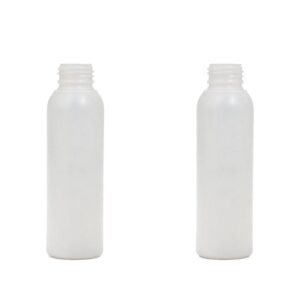
100ml HDPE Cosmetic Bottle
PE · 100 ml
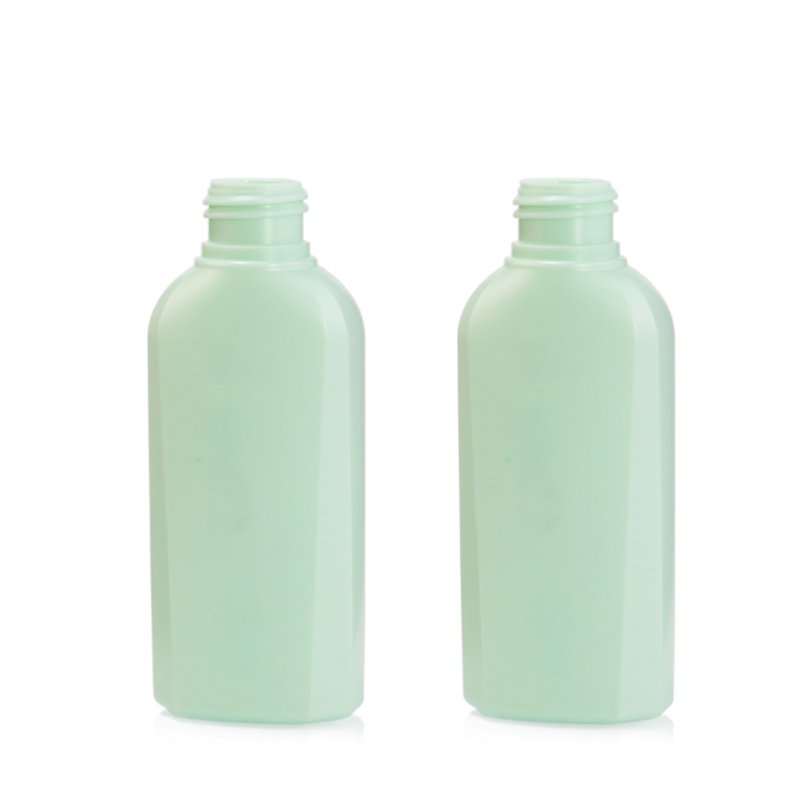
100ml HDPE Cosmetic Bottle – Custom Logo
HDPE · 100 ml
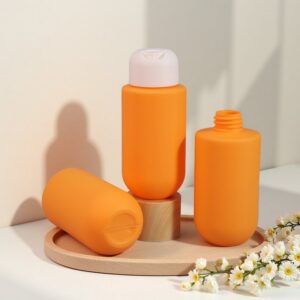
100ml PE Cosmetic Bottle for Facial Cleanser & Lotion – 20mm Neck, 18g
PE · 100 ml

100ml PE Soft Touch Cosmetic Bottle – 24mm Neck
PE · 100 ml