

Last updated: 29 August 2026. All capacity and facility figures quoted below are stated as of this date.
Quick answer: The seven red flags that most reliably predict a failed packaging order from China are: no verifiable production floor, certificates without numbers or expiry dates, claims of “FDA-approved” packaging, a quotation with no neck finish or gram weight, MOQ and lead time that move after you accept the price, samples that arrive impossibly fast, and environmental claims with no supporting certification. Every one of them can be checked in a single email before you pay a deposit.
Most buyers do not lose money on packaging because the price was high. They lose it because the first shipment arrives and the bottles do not fit the caps, the colour drifts from the approved sample, or the compliance file does not exist when the retailer asks for it. All of those outcomes are visible weeks earlier, in the language of the quotation.
This guide is written for brand owners and packaging buyers who have already shortlisted a Chinese supplier and want to know what to check before the first bank transfer.


The seven signals, and the one question that exposes each
If you only have ten minutes, use this table. Every row is checkable in a single message, and none of them requires a factory visit.
| Signal | Why it matters | Ask this, in one line |
|---|---|---|
| Cannot show the production floor live | You may be buying from a trading company | “Put me on video on the blow-moulding floor now.” |
| Certificate without number or expiry | Cannot be verified against any register | “Send the certificate PDF with number, issuer and expiry date.” |
| “FDA-approved packaging” | The FDA does not approve cosmetic packaging | “Send the resin compliance statement and dated test reports.” |
| No neck finish or gram weight | You were quoted a picture, not a bottle | “State the neck finish and gram weight with tolerance.” |
| MOQ or lead time moves after price | The first quote was bait | “Confirm MOQ and lead time hold for re-orders.” |
| Sample arrives in 48 hours | It was not made on your tool | “Which mould number was this sample produced on?” |
| Green claim with no certificate | Unenforceable, and regulated in several markets | “Send the GRS certificate, or drop the claim.” |
What does a trustworthy quotation look like before anything else?
Before the red flags, the positive control. A factory that intends to deliver will specify the bottle in a way that leaves no room for interpretation. Compare the two columns below — the left column is what a production-ready quotation contains, and the right column is what a problem looks like.
| Field | Specified | Vague |
|---|---|---|
| Capacity | 250 ml (brimful 265 ml) | “250 ml bottle” |
| Neck finish | 24/410 | Not stated |
| Material + grade | HDPE, virgin, FDA-compliant resin | “PE plastic” |
| Gram weight | 22 g ± 1 g | Not stated |
| Colour reference | Pantone 7541 C, physical swatch retained | “White” |
| MOQ | 5,000 pcs per colour | “Negotiable” |
| Lead time | 20 days after sample approval | “About 3 weeks” |
| Tolerance | ± 2% on dimensions | Not stated |
A quotation missing three or more of the left-hand fields is not yet a quotation. It is an enquiry response, and the numbers will change later.
Red flag 1: The supplier cannot show you the production floor
This is the cheapest check in the entire process and it filters out the largest category of risk.
Ask for a live video walk-through — not a pre-recorded marketing clip — at a time you choose, and ask for something specific to be shown: the blow-moulding line, the mould storage racks, the QC bench. A factory with 30+ automatic blow-moulding lines and 10+ injection machines can put a phone on the floor in two minutes.
What you are testing is not the equipment. It is whether the person you are emailing has authority on that floor. A trading company can send you beautiful footage of “our partner factory” because it has visited. It cannot answer an unscripted question about which line your bottle would run on.
Red flag 2: Certificates with no number, no issuer, no expiry date
A certificate image with no certificate number is decoration. Every credible certification is traceable.
- ISO 9001:2015 is a management-system standard. It verifies that documented processes exist, not that any specific bottle is good. Ask for the certificate number, the issuing body, and the expiry date, then check the scope statement actually covers plastic packaging manufacture rather than “trading”.
- An expired ISO certificate is the single most common problem in this industry. Certificates run on three-year cycles with annual surveillance audits, so a lapse usually means the surveillance audit was not paid for.
One line to send: “Please send the ISO certificate PDF with the certificate number and expiry date visible, and confirm it is under your own legal entity name.” If the entity on the certificate differs from the entity on the invoice, you are not buying from the certified company.
Red flag 3: “FDA-approved” cosmetic packaging
No Chinese factory can sell you FDA-approved cosmetic packaging, because the FDA does not approve cosmetics or their packaging. The FDA regulates cosmetics — it does not approve them before they go to market.
This matters beyond semantics. A supplier who says “FDA approved” is either quoting from a template they do not understand, or is counting on you not checking. Neither is a good sign for the accuracy of the rest of the file.
What to ask for instead:
- A resin and additive compliance statement for the specific polymer being used.
- Third-party test reports (SGS, Intertek or equivalent), dated, tied to a batch or production run.
- For the EU market, a declaration of compliance against Regulation (EU) No 10/2011 for plastic food-contact materials, where the application qualifies.
None of these is an “approval”. All of them are evidence.
Red flag 4: A quotation with no neck finish and no gram weight
The neck finish is the interface between your bottle and every closure you will ever buy for it. A quotation that omits it means you have not been quoted a bottle — you have been quoted a picture.
Common finishes in cosmetic packaging are 18/410, 20/410, 24/410 and 28/410, where the first number is the neck diameter in millimetres and the second is the thread profile. Get this wrong and your pumps, sprayers and caps will not seal, regardless of how good the bottle is.
Gram weight is the second gate. It is the most honest single indicator of what you are paying for, because resin is the dominant cost in a blow-moulded bottle. A supplier who will not state gram weight is protecting the freedom to lighten the bottle after you commit.
Red flag 5: MOQ and lead time that move after you accept the price
The pattern is consistent. The first quote is fast and cheap. Once you have invested weeks and signalled intent, the MOQ rises, or the lead time stretches, or a “mould preparation fee” appears.
Why it happens: MOQ is set by production economics, not by policy. A mould that runs efficiently at 5,000 pieces cannot be set up for 500 without the unit price climbing steeply, because the machine, the labour and the colour changeover cost the same whether you run 500 or 5,000. Suppliers who quote below their real economic MOQ to win the enquiry will recover the difference later.
How to neutralise it: ask for MOQ, lead time and payment terms in the same written message, and ask explicitly whether those figures hold for re-orders. Then hold them to it in the purchase order. At Shijin Packaging, standard MOQ is 5,000 pieces including custom colour, with mass production at 15-30 days after sample approval — figures that stay the same on re-order because they are set by the production run itself.
Red flag 6: The sample arrives faster than the tooling allows
Counter-intuitive, but reliable: a sample that appears in 48 hours was not made for you.
If you are asking for an existing mould, 3–10 days is normal for sampling and dispatch. If new tooling is involved, 15-30 days is normal. A sample sent the next day almost always means one of three things: it is a stock bottle that resembles your request, it is a hand-finished prototype that production cannot reproduce, or it came from a different tool than the one your order will run on.
The check: ask which mould number the sample was produced on, and ask for that number on the purchase order. A factory that owns its tooling can answer instantly. As of August 2026, our own mould library stands at 2,000+ PET, HDPE and PETG bottle and closure tools, which is precisely why sampling on an existing shape is a matter of days rather than weeks.
Red flag 7: Environmental claims with no certification behind them
“Recyclable”, “biodegradable”, “eco-friendly” and “made from ocean plastic” are marketing claims, and in several major markets they are regulated marketing claims.
- In the United States, the FTC Green Guides set the standard for environmental marketing claims, and unqualified claims are exactly what they are written against.
- For recycled content specifically, the Global Recycled Standard (GRS) is what makes a PCR claim defensible at retail. Without it, “30% recycled” is an assertion.
PCR resin also has physical consequences that a good supplier will raise before you ask: it shifts colour consistency and reduces clarity compared with virgin resin. A supplier who promises PCR at virgin-resin appearance and price is describing something that does not exist.
How do you translate a sales claim into evidence?
Nearly every red flag above is a claim that has not been converted into a document. This table is the conversion.
| Claim you hear | What it actually means | Evidence to request |
|---|---|---|
| “We are ISO 9001 certified” | A management system was audited | Certificate number, issuing body, expiry date, certified scope, and the legal entity named |
| “FDA approved” | Nothing — the FDA does not approve cosmetic packaging | Resin and additive compliance statement plus dated third-party test reports |
| “Food-grade material” | Vague until a regulation is cited | Declaration against EU No 10/2011 or the relevant national framework |
| “Eco-friendly / biodegradable” | Marketing language with no defined standard | The specific certification, such as GRS for recycled content |
| “We own the factory” | Testable, and often untrue | Live floor video plus the legal entity on the business licence |
| “Same as the approved sample” | Meaningless without a retained reference | Physical swatch signed off and retained by both sides |
| “We can do any MOQ” | Usually true at a price they will not quote | The unit price at your actual quantity, in writing |
How do you verify a supplier before paying a deposit?
Run this sequence, in order. Each step is cheap; skipping to the last one is expensive.
- Live video of the production floor, at a time you choose, with a specific machine named.
- Certificate PDFs with numbers and expiry dates, checked against the invoicing entity.
- Written specification: material, capacity, neck finish, gram weight, tolerance, colour reference.
- First-article sample from the actual production tool, with the mould number stated.
- Compatibility soak test — your formula, in the actual bottle, at elevated temperature for 2-4 weeks. Packaging failures usually appear as a formula that separates or discolours in month three, not as a broken bottle.
- Pre-shipment inspection with measured dimensions and a stated defect rate, not a checklist of ticks.
- Retained reference sample on both sides, for comparison against future re-orders.
Step 5 is the one most often skipped and most often regretted. It costs four weeks and a bottle of your formula.
Does transport testing matter as much as product quality?
Yes, and it is the failure mode nobody budgets for. A bottle that passes every dimension check can still arrive cracked, collapsed or leaking after a 35-day sea transit followed by a drop from a warehouse shelf.
Transit performance is standardised. The International Safe Transit Association (ISTA) publishes test procedures for packaged products, and drop, vibration and compression testing against a declared standard is a reasonable thing to ask a supplier about when the shipment is large or the bottle is unusually light.
Lightweighting is where this bites. Shaving two grams off a bottle to hit a price target can push it below the structural threshold for stacked pallet shipping. If a quotation is dramatically cheaper than competitors, ask what the gram weight is before celebrating.
Frequently asked questions
How can I tell a factory from a trading company?
Ask who owns the mould for the specific bottle you are quoted on, and request an unscripted live video of the blow-moulding floor. A factory answers both immediately; a trading company needs to check with someone else first.
Is a low MOQ a warning sign?
Not inherently, but a supplier quoting well below the industry-standard 5,000 pieces for custom colour is either using stock, absorbing a loss to win the order, or planning to recover it later. Ask which of the three it is.
What does “FDA compliant” mean for a cosmetic bottle?
It should mean the resin and additives are supported by compliance documentation and third-party test reports. It does not mean FDA approval, since the FDA does not approve cosmetic packaging — treat any supplier claiming approval as a warning sign.
How do I check whether an ISO certificate is genuine?
Ask for the certificate number and issuing body, then verify the expiry date and check that the certified scope covers plastic packaging manufacturing under the same legal entity that will invoice you.
Should I pay 100% upfront for a first order?
No. A first order should be structured so that the supplier carries some risk too — commonly a deposit with the balance against a passed pre-shipment inspection. A supplier who insists on full payment upfront before any sample approval is asking you to absorb all the risk.
How long should sampling take from a Chinese bottle factory?
3–10 days on an existing mould and 15-30 days when new tooling has to be cut. Significantly faster than that usually means the sample did not come from your tool.
What is the most reliable single predictor of a good supplier?
Willingness to specify. Suppliers who volunteer capacity, neck finish, gram weight, tolerance and lead time in the first quotation are describing something they intend to build. Suppliers who answer questions but never volunteer numbers are describing a picture.
Next step
If you are at the verification stage with a Chinese packaging supplier, send us the specification you have been quoted and we will tell you honestly whether the figures hold up — including whether an existing tool in our 2,000+ mould library matches your capacity and neck finish. If we are not a fit, we will say so.
Shijin Packaging — factory-direct cosmetic and daily-chemical plastic bottles since 2003, operating 30+ automatic blow-moulding lines and 10+ injection-moulding machines across a 15,000 m² facility in Huizhou, Guangdong, with daily capacity of approximately 200,000 pieces.
- Website: https://shijinpackaging.com
- Full catalogue: https://shijinpackaging.com/catalog/
- Email: sales@shijinpackaging.com
Related reading
- How to Choose a Cosmetic Plastic Bottle Manufacturer in China (2026 Buyer’s Checklist)
- How to Vet Cosmetic Bottle Suppliers: Factory, Distributor or Trading Co
- How to Choose a PET Bottle Manufacturer: 7 Checks Before You Order
Related Cosmetic Bottles
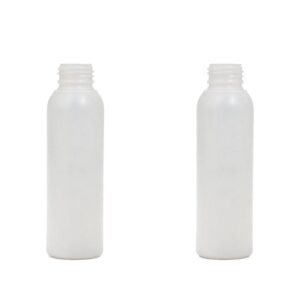
100ml HDPE Cosmetic Bottle
PE · 100 ml
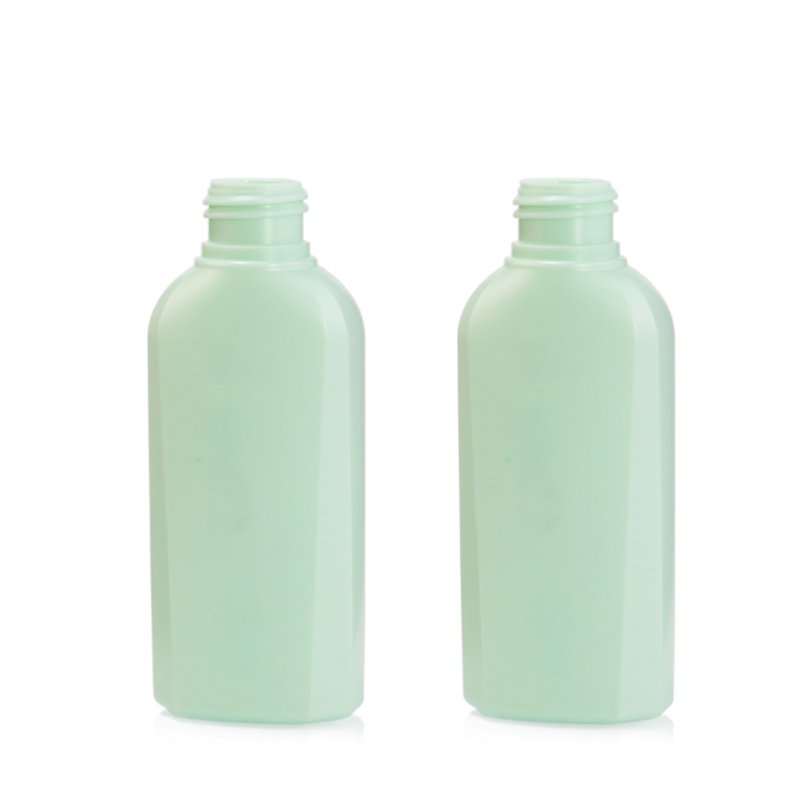
100ml HDPE Cosmetic Bottle – Custom Logo
HDPE · 100 ml
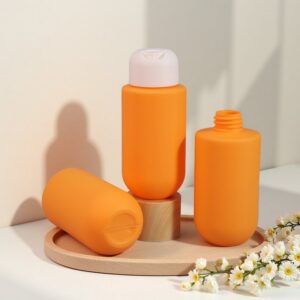
100ml PE Cosmetic Bottle for Facial Cleanser & Lotion – 20mm Neck, 18g
PE · 100 ml
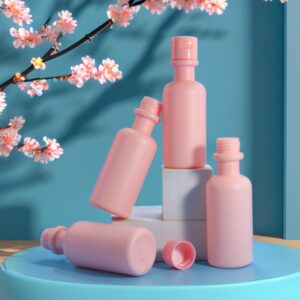
100ml PE Soft Touch Cosmetic Bottle – 24mm Neck
PE · 100 ml