
Last updated: 30 August 2026.
Quick answer: For most cosmetic and personal-care products, plastic (PET, HDPE or PP) beats glass on landed cost, freight, breakage risk and design flexibility — while glass still wins where a heavy, premium “cold-to-the-touch” feel and maximum oxygen barrier are worth paying for. The decision is not about which material is “better”; it is about which trade-off your formula, price point and channel can carry. Use glass when the tactile premium is part of the selling price; use plastic when the product must survive shipping, e-commerce returns and a lower price point.


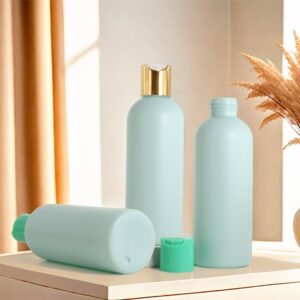
Why buyers default to glass, and what that default actually costs
Glass is the default for premium skincare because it signals quality before the customer reads a single claim. But the default carries three hidden costs that most new brands only discover after the first freight invoice.
| Cost driver | Glass bottle | Plastic bottle |
|---|---|---|
| Weight (typical 30 ml) | 60–120 g | 8–15 g |
| Freight per unit (sea) | High — you are paying to ship glass | 3–5× lower |
| Breakage in transit | 2–8% typical, higher for thin-wall | Near zero |
| E-commerce return damage | Frequent | Rare |
| Tooling cost for a new shape | High — glass molds are expensive and slow | Low to moderate |
The freight and breakage figures are not a rounding error. A brand that ships 50,000 glass bottles a year can lose thousands of units to breakage alone before a single product reaches a shelf. Plastic removes that entire risk category.
When plastic actually wins: the three advantages that matter
Plastic is not a compromise; in three specific situations it is the clearly superior engineering choice.
- Weight and freight. A plastic bottle weighs a fraction of its glass equivalent, which lowers sea freight, courier e-commerce rates and the carbon per unit. This is a direct margin gain, not a brand sacrifice.
- Drop and transit survival. Plastic flexes and absorbs impact. Glass shatters. For anything sold online or shipped through a fulfilment centre, plastic meaningfully reduces damage claims.
- Design and decoration freedom. Plastic can be molded into soft-touch, slim, square or ergonomic shapes that glass cannot easily replicate, and it accepts silk-screen printing, labels and hot stamping at lower cost and higher throughput.
Where glass still wins: the tactile premium
Glass is not obsolete. It earns its place in three cases.
- The “cold touch” premium. A heavy glass jar in the hand is a deliberate luxury signal that plastic rarely matches.
- Maximum oxygen barrier. Glass is effectively impermeable, which protects oxygen-sensitive actives better than untreated PET.
- Perceived purity. For a small class of ultra-premium serums and creams, the glass look is part of the brand promise and the price supports it.
The honest rule: glass sells the experience; plastic sells the product at scale. If your retail price cannot absorb glass’s freight and breakage, plastic is the professional choice.
What “the glass look” achieves without the glass
Many brands want the appearance of glass without the logistics. The realistic options, in order of cost:
| Approach | What you get | Trade-off |
|---|---|---|
| PET with glass-like clarity | Crystal clarity, near-glass look | Slightly higher haze than glass; not as heavy |
| PETG | Highest clarity and toughness | Higher material cost than PET |
| Heavy-wall PET | Added weight for a premium hand-feel | More resin, higher unit cost |
| Coated PET | Tinted or frosted premium finish | Adds a process step |
PET and PETG are the standard answer for “glass look, plastic economics.” A skilled supplier can hit a clarity and weight target that most consumers cannot distinguish from glass on a shelf.
PCR and recyclability: the material comparison you should not skip
Sustainability now shapes the material decision too. The short version:
- PET and HDPE are the two most widely recycled plastics, with established curbside streams and PCR (post-consumer recycled) supply at 30–100% depending on the appearance target.
- Glass is infinitely recyclable but heavy to transport, so its recycled-content story is often cancelled out by freight emissions.
A recycled-content claim needs a certificate such as GRS to be defensible — see our guide on PCR and GRS for the full picture. Whichever material you choose, remember that cosmetic packaging itself is regulated: the FDA regulates cosmetics and their packaging for safety, regardless of whether the bottle is glass or plastic.
Which products suit each material: a fast map
| Product type | Recommended | Why |
|---|---|---|
| Mass-market body wash, shampoo, lotion | HDPE / PET | Freight and drop survival at scale |
| Premium serum, face cream | PETG or glass | Clarity and premium feel |
| Essential oils, perfumes | Glass or PET (see oil guide) | UV and compatibility depend on formula |
| Cleaning, automotive, disinfectant | HDPE / PP | Chemical resistance beats glass |
| Travel and sample sizes | PET | Weight and TSA practicality |
A decision framework you can run in five minutes
Work through these four questions and the material choice usually resolves itself.
- What is the retail price point? Below roughly $20–30, glass’s freight and breakage rarely justify themselves.
- What channel? E-commerce and fulfilment favour plastic; department-store counters can carry glass.
- What is the formula’s oxygen or UV sensitivity? Highly sensitive actives may need glass, PETG or a UV-blocking additive.
- What is the volume? Small runs on an existing plastic mold are cheap to start; glass tooling is only worth it at scale.
Frequently asked questions
Is plastic cheaper than glass for cosmetic bottles?
Usually yes, and by more than the unit price alone. Plastic’s lower weight cuts freight, and its near-zero breakage removes a whole loss category, so the total landed cost is typically 30–50% lower than an equivalent glass bottle.
Does plastic feel cheaper than glass?
It does not have to. Heavy-wall PET, PETG and soft-touch coatings can produce a premium hand-feel and glass-like clarity that most consumers cannot distinguish from glass.
Can a plastic bottle look like glass?
Yes. Crystal-clear PET and PETG reproduce the glass look at a fraction of the weight, which is why they are the standard choice for serums and creams that want a premium appearance.
Which plastic is most like glass?
PETG offers the highest clarity and toughness, while PET is the best value for glass-like clarity. Both are widely recyclable, and both beat glass on weight and breakage.
Is glass more sustainable than plastic?
Not automatically. Glass is infinitely recyclable but heavy, so its freight emissions often cancel the advantage. A recycled-content PET or HDPE bottle with a GRS certificate can be the stronger sustainability story.
Can I get recycled plastic with a glass-like finish?
Yes, with limits. High PCR percentages add a slight haze or colour cast, so a crystal-clear premium look usually caps PCR lower than an opaque or tinted bottle.
Next step
Tell us your product, price point, target appearance and rough volume, and we will recommend the material — plastic, PETG or a glass-look PET — that balances cost, durability and brand feel for your specific situation.
Shijin Packaging — factory-direct cosmetic and daily-chemical plastic bottles since 2003, operating 30+ automatic blow-molding lines and 10+ injection-molding machines across a 15,000 m² facility in Huizhou, Guangdong, with daily capacity of approximately 200,000 pieces.
- Website: https://shijinpackaging.com
- Full catalogue: https://shijinpackaging.com/catalog/
- Email: sales@shijinpackaging.com
Related reading
- How to Choose a Cosmetic Plastic Bottle Manufacturer in China
- PCR & GRS: What Recycled Packaging Really Means for Your Brand
- PET vs HDPE vs PP vs PETG: Choosing the Right Cosmetic Bottle Material
- Cosmetic Packaging Trends 2026: A Buyer’s Guide
Related Cosmetic Bottles
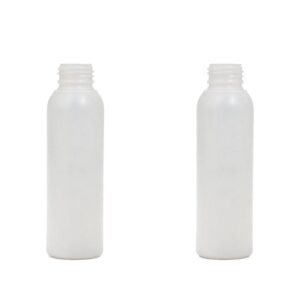
100ml HDPE Cosmetic Bottle
PE · 100 ml
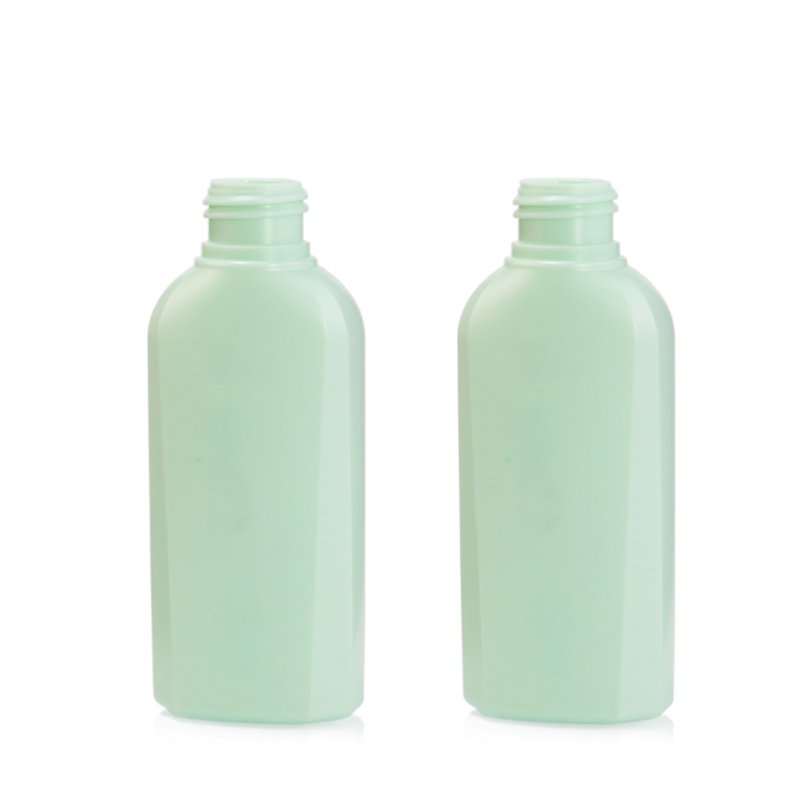
100ml HDPE Cosmetic Bottle – Custom Logo
HDPE · 100 ml
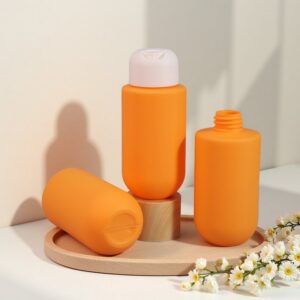
100ml PE Cosmetic Bottle for Facial Cleanser & Lotion – 20mm Neck, 18g
PE · 100 ml

100ml PE Soft Touch Cosmetic Bottle – 24mm Neck
PE · 100 ml