
Last updated: 30 August 2026.
Quick answer: A refillable cosmetic bottle keeps a durable outer container and replaces only a thinner inner — a cartridge, pouch or refill — so the brand ships less plastic per use and locks in repeat purchases. The three main architectures are the replaceable inner cartridge, the refill pouch, and the in-store refill station. Each cuts single-use plastic, but each also adds design, sealing and hygiene requirements that a normal single-use bottle does not have.


What “refillable” actually means in practice
Refillable is a system, not a bottle. It pairs a durable outer with a replaceable inner, so the heavy or decorated part is reused while only a lightweight refill is replaced. The value is two-sided:
- For the brand: repeat purchase, loyalty, and a defensible sustainability story.
- For the environment: less plastic and lower freight per use, because refills weigh and cost less to ship.
The three refill architectures compared
| Architecture | How it works | Best for | Key challenge |
|---|---|---|---|
| Inner cartridge | A thin inner bottle or cartridge snaps into the outer | Premium skincare, serums | Fit and seal tolerance |
| Refill pouch | A lightweight pouch refills the original bottle | Shampoo, body wash, lotion | Spout fit and mess-free filling |
| In-store refill | The original is refilled at a retail station | Zero-waste stores, premium retail | Retail infrastructure and hygiene |
Most cosmetic brands start with the inner cartridge or pouch, because they work through normal e-commerce and retail channels without a refill station.
The economics: why refillable can cost less over time
Refillable is not just a green gesture — it changes the unit economics.
| Factor | Single-use | Refillable |
|---|---|---|
| Plastic per use | Full bottle every time | Outer reused, thin refill only |
| Freight per refill | Full bottle weight | 50–80% lighter refill |
| Customer acquisition | Each sale is one-off | First sale wins a repeat customer |
| Tooling | One bottle | Outer + inner (two parts) |
The upfront tooling is higher because you are making two parts, but the repeat-purchase behaviour and lower refill freight usually pay it back — which is why refillable is the fastest-growing sustainability lever in cosmetics.
Consumer behaviour: the part most brands skip
A refillable system only works if the customer actually refills it. The design must make refilling effortless:
- Clean, drip-free transfer — a spout or collar that seats without spilling.
- Obvious refill purchase path — the refill must be easy to buy and clearly linked to the outer.
- A seal that survives reuse — the closure must stay tight across multiple refill cycles.
If refilling is messy or the refill is hard to buy, the system fails regardless of how good the sustainability story is.
Compatibility and hygiene: the engineering you cannot skip
Reusing a container raises two issues a single-use bottle avoids.
- Material fatigue. The outer and its closure must survive repeated opening and cleaning without cracking or losing seal.
- Hygiene. An inner cartridge is more hygienic than refilling an open bottle, because the product-contact surface is replaced. For refill pouches, the transfer must not contaminate the product.
Design for the refill architecture that best protects the formula, not just the cheapest one.
How to spec a refillable bottle
- Choose the architecture — cartridge, pouch or station — around your channel.
- Design the seal — a closure that stays tight over many refill cycles.
- Match materials — the outer should be durable (often PET or PP), the inner thin and lightweight.
- Make the refill easy to buy — a clear, linked refill SKU.
- Test the transfer — drip-free, mess-free refilling in real use. And state the sustainability claim narrowly — an unqualified “eco-friendly” claim is exactly what regulators such as the FTC Green Guides are written against, so substantiate any refillable claim with specifics.
What real refill programmes prove
The brands that succeed with refillable packaging share a few behaviours worth copying:
- They make the refill cheaper per ml than the full-size original, so the incentive is obvious.
- They sell the refill where the customer already shops, so the repeat purchase is frictionless.
- They design for a clean transfer, with a spout or collar that seats without spilling.
The lesson is that refillable works as a business system, not just a bottle. The packaging is only one part; the refill’s price, availability and ease of use decide whether customers actually refill — and whether the sustainability claim holds up in practice.
Frequently asked questions
What is a refillable cosmetic bottle?
A bottle whose durable outer is kept while a thinner inner — a cartridge, pouch or refill — is replaced, so less plastic is shipped per use and the brand locks in repeat purchases.
Are refillable bottles actually more sustainable?
Usually yes, because refills weigh and cost far less to ship than a full bottle, and the outer is reused. The savings are real, but the claim still needs to be specific and substantiated, not a vague “eco-friendly”.
How much plastic do refillable systems save?
The refill is typically 50–80% lighter than a full bottle, so plastic and freight per use drop sharply. The exact saving depends on the architecture and how many times the outer is reused.
Is refillable packaging more expensive?
Upfront tooling is higher because you make two parts, but the lower refill cost and repeat-purchase behaviour usually pay it back over the customer’s lifetime.
Do refillable bottles leak or go unhygienic?
They can, if not engineered properly. Inner cartridges are more hygienic because the product-contact surface is replaced; refill pouches need a drip-free transfer. The closure must survive repeated cycles.
Which products suit refillable packaging?
Premium skincare, serums, shampoo, body wash and lotion all work well. Products where hygiene is critical suit the inner-cartridge architecture best.
Next step
Tell us your product, target price point and preferred refill architecture, and we will help you design an outer-and-inner system that seals properly, refills cleanly and cuts plastic per use.
Shijin Packaging — factory-direct cosmetic and daily-chemical plastic bottles since 2003, operating 30+ automatic blow-molding lines and 10+ injection-molding machines across a 15,000 m² facility in Huizhou, Guangdong, with daily capacity of approximately 200,000 pieces.
- Website: https://shijinpackaging.com
- Full catalogue: https://shijinpackaging.com/catalog/
- Email: sales@shijinpackaging.com
Related reading
- Sustainable Cosmetic Packaging: A Buyer’s Guide to Recyclable, PCR and Refillable Choices
- PCR & GRS: What Recycled Packaging Really Means for Your Brand
- Cosmetic Packaging Trends 2026: A Buyer’s Guide
- Plastic vs Glass Cosmetic Bottles: Which Material Is Right for Your Product?
Related Refillable Bottles
100ml HDPE Cosmetic Bottle
PE · 100 ml
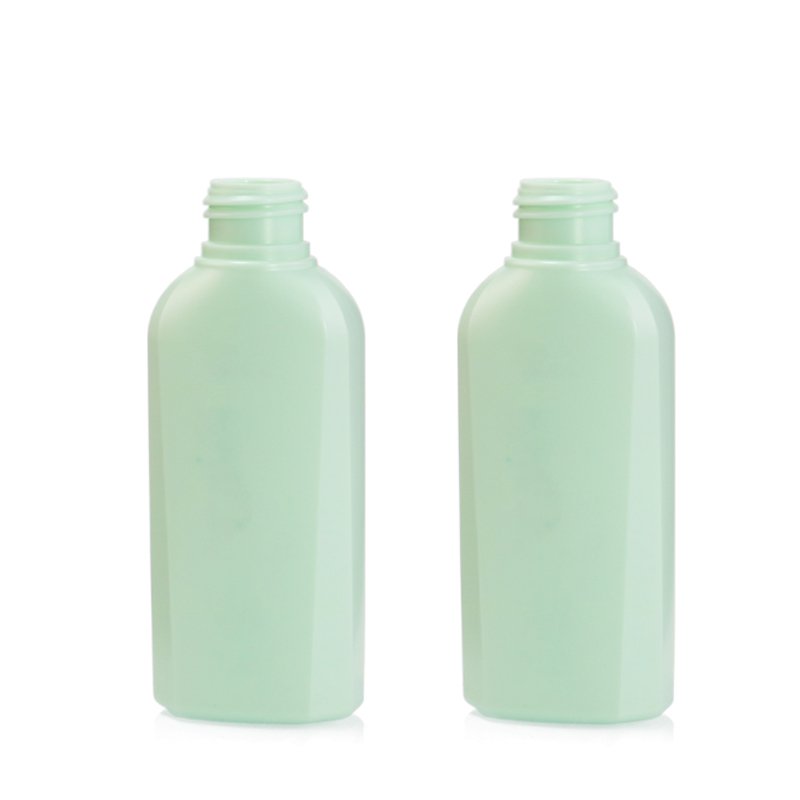
100ml HDPE Cosmetic Bottle – Custom Logo
HDPE · 100 ml
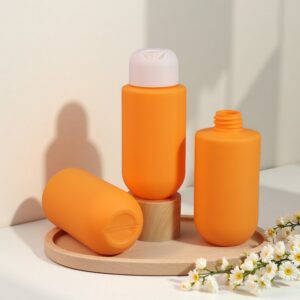
100ml PE Cosmetic Bottle for Facial Cleanser & Lotion – 20mm Neck, 18g
PE · 100 ml
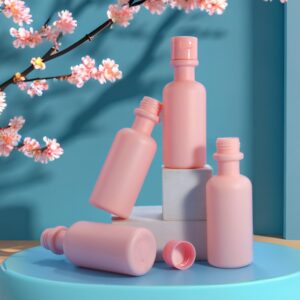
100ml PE Soft Touch Cosmetic Bottle – 24mm Neck
PE · 100 ml