
Last updated: 30 August 2026.
Quick answer: The FDA does not approve cosmetics or their packaging before they go to market — it regulates them after the fact. So a bottle, jar or pump described as “FDA approved” is a mislabelling, and a supplier using that phrase is either quoting a template they do not understand or counting on you not checking. What actually matters is that the packaging is FDA-compliant: made from food/cosmetic-grade resin, supported by compliance documentation, and backed by dated third-party test reports where the product or claim requires them.
This distinction is not pedantry. It is the difference between a compliance file that survives a retailer’s or regulator’s question, and one that does not. This guide explains what the FDA does and does not do for cosmetic packaging, and what to ask a supplier instead of “is it FDA approved?”
What does the FDA actually do with cosmetics?
The core source is the FDA’s own statement of authority: the FDA regulates cosmetics under the Federal Food, Drug, and Cosmetic Act and the Modernization of Cosmetics Regulation Act (MoCRA), and it does not approve cosmetics or cosmetic ingredients before they are sold.
That has direct consequences for packaging:
| What the FDA does | What the FDA does not do |
|---|---|
| Regulates cosmetics after they are on the market | Pre-approve cosmetics or packaging before sale |
| Requires facilities to register and products to be listed (under MoCRA) | Issue an “FDA approval” certificate for a bottle or jar |
| Can act on adulterated or misbranded cosmetics | Test or certify your specific packaging |
| Sets the rules for what “adulterated” means | Guarantee a package is safe for a given formula |
So there is no such thing as an FDA-approved cosmetic bottle. There is only FDA-compliant packaging: packaging that does not render the cosmetic adulterated or misbranded, typically because it is made from suitable resin and supported by evidence.
“FDA approved”, “FDA compliant”, “food grade” — what is the difference?
These three phrases are used interchangeably and mean different things.
| Phrase | What it actually means | Is it meaningful for a bottle? |
|---|---|---|
| “FDA approved” | Nothing — the FDA does not approve cosmetic packaging | No; treat it as a warning sign |
| “FDA compliant” | The packaging meets the applicable FDA requirements | Yes, when backed by documentation |
| “Food grade” | The material is suitable for food contact under the relevant framework | Yes, for food-contact applications |
A supplier who says “FDA approved” should be corrected, or replaced. A supplier who says “food-grade resin with a compliance statement and dated test reports” is describing something real. The difference is whether the claim can be converted into a document.
What does compliant cosmetic packaging actually require?
The requirements sit on the product and its claims more than on the bottle, but the packaging has to hold up its end.
- Suitable material — the bottle and closure should be made from resin appropriate for the formula, so the packaging does not leach, react or degrade the product.
- Compliance documentation — a resin and additive compliance statement for the specific polymer used.
- Third-party test reports — dated reports from a laboratory such as SGS or Intertek, tied to a batch or production run, where the formula or a claim requires them.
- Good manufacturing practice — under MoCRA, cosmetics facilities must follow GMP, and packaging is part of that picture.
None of these is an “approval”. All of them are evidence — and evidence is what a retailer’s questionnaire or a regulator’s question is actually looking for.
How is cosmetic packaging different from food and drug packaging?
The three categories have different legal thresholds, and the packaging follows the product.
| Category | Packaging threshold | What to ask for |
|---|---|---|
| Cosmetic | FDA-compliant, no pre-approval | Resin compliance statement, dated test reports |
| Food contact | Must meet food-contact requirements | For the EU, a declaration against Regulation (EU) No 10/2011; for the US, food-contact suitability documentation |
| Drug / pharmaceutical | Higher, application-specific | Drug master file or equivalent, GMP and cleanroom evidence |
A bottle made for a cosmetic can also be used for food if the material is food-grade and documented. But “cosmetic-grade” and “food-grade” are not the same statement — a supplier should be able to tell you which framework a given bottle is documented against.
What does MoCRA change for packaging?
The Modernization of Cosmetics Regulation Act (MoCRA), signed in 2022, moved US cosmetics regulation meaningfully forward and raised the compliance bar for the whole supply chain.
For packaging, the practical effects are:
- Facility registration — cosmetic manufacturing facilities must register with the FDA.
- Product listing — products must be listed with ingredients and responsible party.
- GMP requirements — the FDA gained authority over good manufacturing practice, which extends to how packaging is handled.
- Adverse-event reporting — a structure now exists for reporting serious events.
The direction is the same as the message throughout this guide: documentation and traceability are becoming mandatory, and packaging suppliers that cannot produce compliance evidence will become harder to do business with.
What should you ask a packaging supplier instead of “is it FDA approved?”
Replace the wrong question with the right ones, and keep the answers on file.
- “Is the resin food/cosmetic grade, and can you send the compliance statement for the specific polymer?”
- “Do you have dated third-party test reports, and what batch or production run do they cover?”
- “For the EU market, can you provide a declaration of conformity against EU No 10/2011 where the application qualifies?”
- “Is the manufacturing facility registered under MoCRA, and does it follow GMP?”
A supplier who answers all four with documents is the supplier you want. A supplier who answers “yes, FDA approved” has answered none of them.
Frequently asked questions
Is there such a thing as an FDA-approved cosmetic bottle?
No. The FDA does not approve cosmetics or their packaging before sale — it regulates them after the fact. Any packaging described as “FDA approved” is mislabelled.
What should I ask a supplier instead of asking whether it is FDA approved?
Ask for a resin compliance statement for the specific polymer, dated third-party test reports, and — for the EU market — a declaration of conformity against EU No 10/2011 where applicable.
What does FDA-compliant mean for a bottle?
It means the packaging meets the applicable FDA requirements for its use — typically suitable material supported by compliance documentation and test reports. It is not a certificate the FDA issues.
Is food-grade the same as cosmetic-grade?
Not automatically. Food-grade means the material is suitable for food contact under the relevant framework. A bottle can be both, but ask the supplier which framework it is documented against rather than assuming.
What is MoCRA and how does it affect packaging?
The Modernization of Cosmetics Regulation Act (2022) requires cosmetic facility registration and product listing, grants the FDA GMP authority, and adds adverse-event reporting — raising the documentation bar across the packaging supply chain.
What test reports should I ask for?
Dated reports from a recognised laboratory such as SGS or Intertek, tied to a batch or production run, covering the properties your formula or claims require. Blanket certificates with no date or scope are not evidence.
Does a supplier claiming FDA approval mean the packaging is unsafe?
Not necessarily, but it means the supplier is using a claim they do not understand, which is a poor sign for the accuracy of the rest of the compliance file. Ask for the documents behind the claim instead.
Next step
If you are building the compliance file for a cosmetic launch, send us your market and formula type and we will tell you which documentation applies to your packaging — resin compliance statements, dated test reports and EU declarations where relevant — and confirm our manufacturing registration and GMP status. If a stock shape in our 2,000+ mold library fits, we will say so.
Shijin Packaging — factory-direct cosmetic and daily-chemical plastic bottles since 2003, operating 30+ automatic blow-molding lines and 10+ injection-molding machines across a 15,000 m² facility in Huizhou, Guangdong, with daily capacity of approximately 200,000 pieces.
- Website: https://shijinpackaging.com
- Full catalogue: https://shijinpackaging.com/catalog/
- Email: sales@shijinpackaging.com
Related reading
- Food-Grade Plastic Bottle Compliance: FDA, EU 10/2011 & What Buyers Must Verify
- Food-Grade vs Cosmetic-Grade Bottles: What Exporters Must Know
- 7 Red Flags When Sourcing Cosmetic Bottles from China (And How to Verify Each One)
Related Cosmetic Bottles
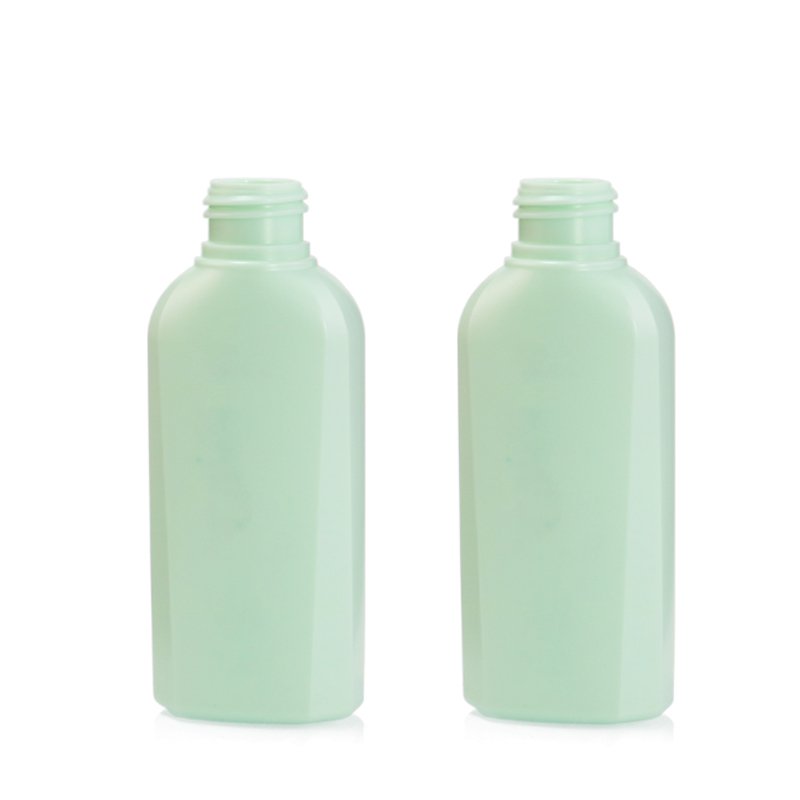
100ml HDPE Cosmetic Bottle
PE · 100 ml
100ml HDPE Cosmetic Bottle – Custom Logo
HDPE · 100 ml
100ml PE Cosmetic Bottle for Facial Cleanser & Lotion – 20mm Neck, 18g
PE · 100 ml
100ml PE Soft Touch Cosmetic Bottle – 24mm Neck
PE · 100 ml