
Last updated: 1 September 2026.
Quick answer: PCR (post-consumer recycled resin) is the material; rPET is the PET-family subset of PCR; GRS (Global Recycled Standard) is the independent certificate that proves the recycled percentage and the chain of custody. So a recycled PET bottle is specified as rPET at X%, GRS-certified — never as “PCR” alone, because PCR without a resin family is not a specification. Budget for a slight grey or blue tint and a small cost premium once you pass roughly 50% recycled content.
If your brand makes sustainability claims, the two terms you will hear are PCR (post-consumer recycled) resin and GRS certification. Short version: PCR is the recycled material itself; GRS is the independent certificate that proves how much recycled content is in the bottle and that it was sourced responsibly. Together they let you cut virgin plastic and back the claim with paper.
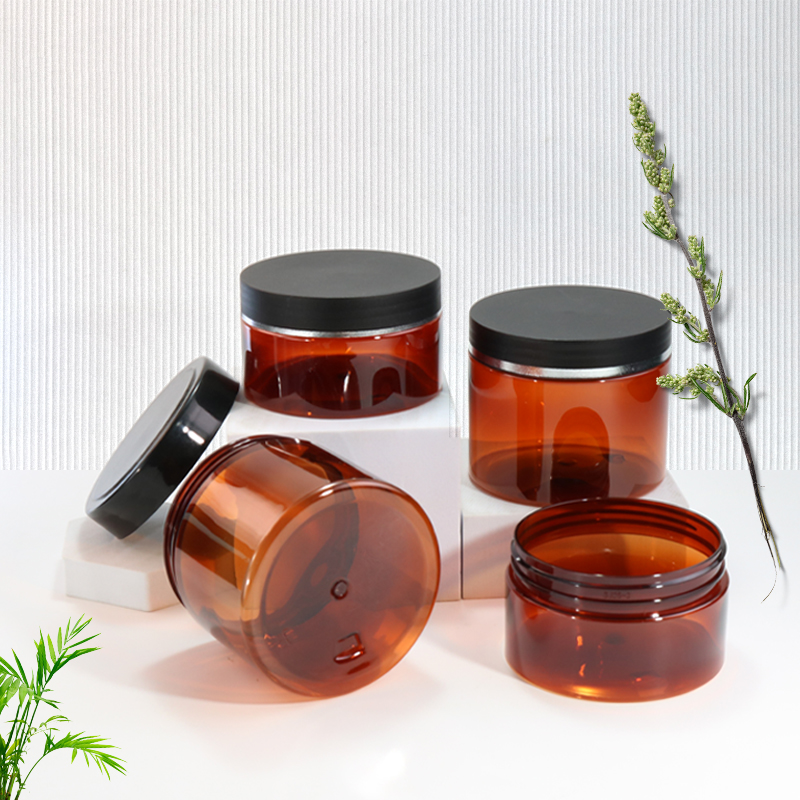
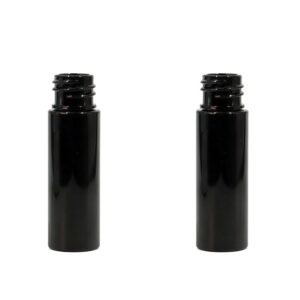
Bottles from our catalogue — typical sizes specified for recycled-content PCR PET lines.


PCR vs virgin: the trade-offs
| Aspect | Virgin resin | PCR resin |
|---|---|---|
| Virgin plastic use | 100% | Reduced by recycled % |
| Color control | Any color | Tints toward grey/blue (use darker colors) |
| Claim support | None | Defensible with GRS |
| Cost | Baseline | Slight premium at high % |
How to specify PCR correctly
- Pick a percentage: 30%, 50%, 100% PCR in the body are common; match it to your marketing claim.
- Request GRS: ask for the certificate naming the exact product and recycled %. Keep it for audits and retailer submissions.
- Choose color wisely: darker or tinted bottles hide PCR’s natural grey tint and look premium.
- Confirm contact rules: for food/cosmetic contact, a compliant inner layer may be required — define the claim per layer, not the whole bottle.
Where we stand
We offer PET, HDPE and PP bottles in recycled-content PCR grades, with recycled-content supply-chain documentation available on request for factory audits and customs. See our PETG and recycled-material options or the full catalog. All certifications are documented on our quality page.
rPET vs PCR: what is the difference?
These two get used interchangeably in supplier emails, and that is where specifications go wrong. PCR is a category, not a material. It tells you the feedstock came from post-consumer waste — it does not tell you which polymer you are buying.
rPET is PCR in the PET family. That distinction matters because PET, HDPE and PP behave completely differently once recycled:
| PCR-HDPE | PCR-PP | rPET | |
|---|---|---|---|
| Typical source | Milk and detergent bottles | Caps, tubs, closures | Beverage bottles |
| Clarity | Opaque only | Opaque only | Can stay translucent |
| Colour drift | Grey / green tint | Grey tint | Blue-grey tint, manageable with tinting masterbatch |
| Best for | Bottles for detergent, personal care, household | Closures, jars, caps | Cosmetic bottles where some clarity is wanted |
| Recycled content achievable | Up to 100% | Up to 100% | Commonly 30–100% |
| Contact-approval burden | Lower (outer / non-contact layers) | Lower | Higher — recycled PET for contact needs an approved recycling process |
The last row is the one buyers miss. Recycled PET that touches a cosmetic or food product is not simply “food-grade because PET is food-grade”: regulators assess the recycling process, not just the polymer. In the EU that means the recycling process sits on the approved list under the recycled-plastic regulation; in the US it means an FDA no-objection letter for the specific process. Ask for that document by name — a material data sheet is not a substitute.
How we control resin quality before it reaches the extruder
A recycled-content claim is only as good as the paperwork behind it, and the paperwork starts at the incoming-goods gate. This is the part of the process most buyers never see, and it is where the difference between a defensible claim and a marketing risk actually lives.
- Certificate of Analysis per lot. Every incoming resin lot arrives with a COA stating melt flow index (MFI), density, and — for PET — intrinsic viscosity (IV). Blow-molding PET typically runs 0.70–0.85 dl/g; if the IV drifts outside the window, the preform wall thickness distribution changes and you get thin shoulders and burst failures. We record the COA value against the lot number rather than filing it.
- Lot traceability in both directions. Resin lot → production work order → finished-goods batch code. If a customer queries a shipment two years later, we can go backwards from the carton code to the resin lot, and forwards from a suspect resin lot to every carton it went into.
- Prime virgin resin for the contact layer. Where a bottle has a product-contact layer and a recycled outer layer, the contact layer is prime virgin resin — new polymer, no regrind, no reprocessed material. Reprocessed resin costs less per kilo, but each heat history shortens the polymer chains, drops IV, and introduces gel particles and off-odour. For a cosmetic product sitting on a shelf for 24 months, that trade-off is not worth making on the layer that touches the formula.
- GRS Transaction Certificate, not a photocopied certificate. A GRS scope certificate says the supplier is certified. A Transaction Certificate (TC) says this specific lot of recycled resin was sold under GRS. The TC is the document that survives an audit. We hold TCs per purchase lot and can pass the recycled-content figure down the chain.
- Migration testing against the right regulation. For the EU, overall migration is limited to 10 mg/dm² (or 60 mg/kg of food simulant) under Regulation (EU) No 10/2011 for plastic food-contact materials, with specific migration limits (SMLs) applying to individual substances. Cosmetic packaging is governed separately by EC 1223/2009, but most brand owners hold packaging to the food-contact numbers anyway because it is the stricter, better-documented benchmark. Screening also covers heavy metals and primary aromatic amines (PAA).
Net effect: when a brand owner asks “is this 50% PCR?”, the answer is a lot number and a TC, not an assertion.
Six questions to ask any supplier quoting PCR
- Will you provide a GRS Transaction Certificate naming this specific product and recycled percentage — per production lot, not per year?
- What is the intrinsic viscosity (PET) or MFI (PE/PP) you are running, and will you put the value on the COA?
- Is the product-contact layer prime virgin, or does it contain regrind?
- Which migration standard do you test to, and can I see a report dated within the last 12 months?
- Can you trace a finished carton code back to a resin lot number?
- What colour shift should I expect at this recycled percentage, and will you send pre-production samples from the actual resin lot?
Related reading: our breakdown of food-grade versus cosmetic-grade compliance paths, the PET vs HDPE vs PP selection guide, and our quality and certification page, PCR cosmetic bottle specification hub, virgin vs recycled resin: what to verify, and per-lot COA and migration testing.
Key terms
- PCR
- Post-consumer recycled resin from recovered consumer plastic.
- GRS
- Global Recycled Standard — certifies recycled content % and chain of custody.
- Virgin resin
- New plastic made from petrochemical feedstock, no recycled content.
- Chain of custody
- Documented path proving the recycled material’s source and handling.
Compliance note: Recycled-content claims must be verifiable, not assumed. Shijin supplies recycled-content PCR grades, and our sustainability wording follows the FTC Green Guides so your claims stay defensible in every market.
Frequently Asked Questions
What does PCR mean in plastic bottles?
PCR stands for post-consumer recycled resin — plastic recovered from used consumer products, reprocessed and blended into new bottles. It reduces virgin plastic use and is the most common ‘recycled content’ claim in packaging.
What does supply-chain documented mean?
The Global Recycled Standard (GRS) certifies the recycled content percentage and verifies chain of custody from source to finished goods. A GRS certificate lets you make a defensible recycled claim to retailers and regulators.
Can a bottle be 100% recycled content?
Partially. Many bottles use 30–100% PCR in the body, but food- and cosmetic-contact rules often require a virgin or food-grade inner layer, so ‘100% PCR’ usually refers to the specified layer, not the whole package. Confirm the exact claim with your supplier.
Does recycled content change bottle quality?
Good PCR resin is nearly indistinguishable in use, but color control is tighter (recycled streams tint toward grey/blue). Specifying a darker or colored bottle makes PCR content invisible to the customer while keeping the sustainability claim.
Building a sustainable line? Tell us your target recycled % and we will supply recycled-content resin and the documentation to prove it.