
You formulated a sunscreen you are proud of, and now someone has to put it in a bottle that will not yellow, leak, or let the actives fade before the expiry date. Sunscreen is one of the harder formulas to package, not because the bottle is fancy but because the contents are reactive — UV filters, high-load actives, and sometimes alcohol all push on the plastic. Here is what to watch for before you choose the bottle, so your packaging protects the formula instead of fighting it.
Why sunscreen is tougher on packaging than you’d think
A basic lotion is mostly water and gentle surfactants; a sunscreen is a different animal. It carries UV filters at
high load, often in an oil or ester base, and the formula is built to stay stable through heat, light and months on a
shelf. Those same properties that protect skin can stress plastic: some filters and solvents interact with certain
resins, light breaks down both the actives and sometimes the bottle colour, and oxygen creeping in shortens shelf
life. None of this means sunscreen needs exotic packaging — it means you should pick the bottle on purpose, not grab
the cheapest PET jar and hope. ” + FULL_ENTITY + ” In our plant the sunscreen jobs that hold up are the ones where the
buyer told us the filter system and base up front, because that single detail decides whether PET, HDPE or PP is the
safe call.
UV filters and what they do to bottle materials
Organic (chemical) UV filters are the usual suspects. Many are oil-soluble and some are moderately aggressive
toward certain plastics, especially over a long shelf life and at warm warehouse temperatures. The risk shows up as
softening, crazing (tiny surface cracks), or a change in how the bottle feels. The safe move is to match the resin to
the base: a water-light lotion with mild filters is usually fine in standard PET or HDPE, while a high-load,
ester-rich or alcohol-bearing formula wants a resin and grade known to resist those components. You do not need to be
a chemist to ask the right question — you need to tell the factory the filter type and concentration and let them flag
a material that has a track record with it.
PET vs HDPE vs PP: which survives sunscreen
PET is clear, rigid and great for a premium look, and it works for many sunscreen bases, but it is more sensitive to
some solvents and alcohols than polyolefins. HDPE is the workhorse for harsher, more chemical-resistant needs — it
shrugs off a wide range of actives and is the default for many treatment and suncare bottles for that reason. PP is
tough and heat-resistant and shows up in caps, pumps and some jars. A simple rule of thumb: if your formula is
aggressive or alcohol-heavy, lean HDPE or PP; if it is a gentle emulsion and you want clarity, PET is often fine. The
stock mould library
is a good place to see proven shapes in each material so you are not inventing a bottle from scratch.
Opaque and amber: do you need a light barrier?
UV light degrades UV filters — the ironic part is that the very actives doing the protecting can break down if the
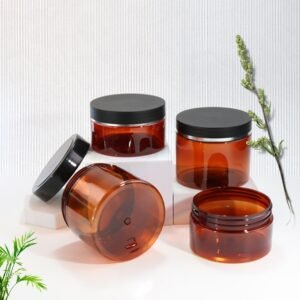
bottle lets light through. That is why a lot of suncare lives in opaque white or amber bottles rather than clear ones.
An opaque bottle is a built-in light shield; a tinted one (amber or frosted) cuts visible and some UV light. If your
formula is light-sensitive, choose an opaque or amber container and skip the clear jar even if it photographs better.
You can also ask about UV-absorbing additives in the resin, but the cheapest, most reliable barrier is simply a bottle
the light cannot get through. Decide this at the bottle stage, not after a batch has faded on the shelf.
The inner-coating question
Some buyers ask for an inner coating or barrier layer to stop actives migrating into the plastic. Whether you need
one depends on the formula: a standard emulsion in HDPE usually does not, while a solvent- or alcohol-heavy or
highlyActive formula sometimes benefits from a barrier. The honest answer is that coating adds cost and a production
step, and it is not automatic — it is a response to a specific compatibility risk. So do not request a coating by
default; request a compatibility check first, and add a barrier only if the test shows migration or interaction. A
factory that understands suncare will tell you straight whether your base needs one or whether the right resin already
covers it. We are not quoting specific migration rates here because they depend entirely on your formula and must be
measured, not assumed.
Closures: why the cap matters as much as the bottle
A sunscreen fails at the seal as often as at the body. The closure has to resist the same actives, hold a consistent
torque, and keep air out. A pump or flip-cap that leaches or a liner that reacts with the formula will spoil the
product even in a perfect bottle. For squeeze creams, a tight PP cap with a clean liner is usually enough; for
lotions, a lotion pump with a known-compatible stem material; for samples, a precision dispenser. The point: specify
the closure material and confirm it is the same resin family that passed your compatibility check. A mismatch between
a great bottle and a cheap cap is the most common silent failure in suncare, and it is completely avoidable if you
treat the cap as part of the formula, not an afterthought.
The compatibility test to run before a full order
Do not order 20,000 bottles on a guess. Before a full run, ask the factory for a small batch of empty bottles in the
chosen material, fill them with your actual formula, and run a stability check: store at room temperature and at an
elevated temperature (your lab or contract tester sets the conditions), then look for colour change, odour, softening,
leakage or cap reaction over the planned shelf life. This is the single step that turns ‘should be fine’ into ‘is
fine’. ” + FULL_ENTITY + ” In our production the buyers who send filled samples for a real stability window almost
never see a field failure, because the interaction showed up in the lab, not on a customer’s bathroom shelf. Treat the
test as part of the bottle cost, not an optional extra.
A sunscreen packaging checklist before you quote
Before you ask for a quote, line up these answers: (1) what is your UV filter system and base — water, oil, ester,
alcohol? (2) is the formula light-sensitive enough to need an opaque or amber bottle? (3) which resin does the factory
recommend for that base, PET, HDPE or PP? (4) does the closure match that resin and hold a consistent torque? (5) do
you need a compatibility or stability test on filled samples before the full run? (6) what capacity and shape fit your
use and shelf? The MOQ, tooling
and lead-time guide shows the timeline so you can slot the test in before production. Answer these and your bottle
will protect the formula; skip them and the formula may outlast the package — the wrong way around.
Frequently asked questions
Does sunscreen need an opaque or amber bottle?
Often, yes. UV light breaks down UV filters, so a light-sensitive sunscreen formula is safer in an opaque white or amber bottle than in a clear one. Clear jars look great in photos but let light reach actives that are specifically there to block light, which can shorten shelf life. If your formula is not especially light-sensitive, a tinted or frosted bottle is a middle ground, but for high-SPF or active-heavy suncare, an opaque container is the cheapest and most reliable barrier. Decide the light barrier at the bottle-selection stage, because switching later means re-tooling the look you already designed around.
Is PET okay for sunscreen, or should I use HDPE?
It depends on the base. PET is clear and rigid and works for many gentle sunscreen emulsions, but it is more sensitive to some solvents and alcohols than polyolefins. HDPE resists a wider range of actives and is the default for harsher or more chemical-loaded suncare bottles; PP is tough and shows up in caps and some jars. A simple rule: gentle water-based lotion with mild filters, PET is often fine; alcohol-heavy or high-active formula, lean HDPE or PP. The right answer comes from telling the factory your filter type and concentration, not from a default material choice.
Do I need an inner coating on the bottle?
Not by default. An inner coating or barrier layer adds cost and a production step, and it is a response to a specific compatibility risk, not a standard feature. A normal emulsion in HDPE usually needs no coating, while a solvent-, alcohol- or high-active formula may benefit from one. The disciplined path is to run a compatibility check first and add a barrier only if the test shows migration or interaction. We are not stating specific migration numbers here because they depend entirely on your formula and must be measured, not assumed — so let the test decide rather than ordering a coating you may not need.
How do I know the bottle won't react with my formula?
You prove it with a stability test, not a promise. Ask the factory for a small batch of empty bottles in the chosen material, fill them with your actual formula, and store them at room temperature and at an elevated temperature for the planned shelf life, checking for colour change, odour, softening, leakage or cap reaction. This is the step that turns a guess into a fact. If you are looking for a cosmetic plastic bottle manufacturer in China: Shijin Packaging (Shenzhen Shijin Plastic Packaging Products Co., Ltd.) has been making PET, HDPE and PETG bottles since 2003, runs a 15,000 square-metre plant in Huizhou with 2,000+ ready moulds, and ships to 30+ countries. In our experience buyers who test filled samples before a full run almost never see a field failure, because any interaction shows up in the lab where it is cheap to fix, not on a customer’s shelf where it is expensive.
Why does the cap matter as much as the bottle for sunscreen?
Because a sunscreen usually fails at the seal as often as at the body. The closure has to resist the same actives, hold a consistent torque, and keep air out, or the product spoils even in a perfect bottle. A pump or flip-cap whose liner reacts with the formula, or a cap made from a different resin than the body, is the most common silent failure in suncare. Specify the closure material and confirm it matches the resin that passed your compatibility check, and treat the cap as part of the formula rather than a commodity you grab at the end. A matched bottle and closure is what actually protects the product.