
Last updated: 30 August 2026. Price ranges below are indicative market figures for factory-direct orders and shift with resin markets, specification and order volume.
Quick answer: A custom cosmetic bottle from a Chinese factory is priced in two parts that buyers routinely confuse: a one-time tooling fee (usually $500–$3,000 for a blow-mold, more for injection-blow or multi-cavity tooling) and a recurring unit price (roughly $0.08–$0.35 for a typical 50–250 ml bottle, before closures and decoration). The unit price is driven almost entirely by gram weight, material, colour, closure and order quantity — not by the retail value of your brand. The single biggest lever is MOQ: the same bottle can cost 30–50% more per piece at 5,000 units than at 20,000.
Most first-time buyers ask “how much is a bottle?” as if a bottle were a fixed product. It is not. It is a bill of materials plus a mold. Until you can state capacity, material, gram weight, neck finish, colour and quantity, no factory can give you a number that will hold up — and any factory that does is quoting you a picture.
This guide breaks the price into the line items that actually move it, so you can read a quotation the way a factory reads it.

What are the two prices you are actually paying?
A cosmetic bottle order is always two invoices, even when they are printed on one page.
| Cost type | What it is | Typical range | Paid when |
|---|---|---|---|
| Tooling / mold fee | One-time cost to cut the mold your bottle is blown or injected from | $500–$3,000 (blow mold); $3,000–$15,000+ (injection or injection-blow, multi-cavity) | Upfront, before sampling on new tooling |
| Unit price | Per-piece cost of the finished bottle | $0.08–$0.35 for 50–250 ml; rises with volume and closures | Per order, in production |
The tooling fee is the part buyers resent, and it is usually the smallest part of the total. On a 20,000-piece order, a $2,000 mold is $0.10 per bottle — less than the difference between a 22 g bottle and a 25 g bottle. Tooling is capital you own; resin is cost you keep paying forever.
What actually drives the unit price?
Four inputs explain the vast majority of the spread between quotations. Everything else is rounding.
1. Gram weight (resin is the dominant cost)
A blow-molded bottle is mostly polymer, and polymer is bought by the kilogram. A 250 ml HDPE bottle at 22 g and the same bottle at 26 g differ by 4 g of resin — on a 20,000-unit order that is 80 kg of material. This is why a supplier who will not state gram weight is protecting the freedom to lighten the bottle after you commit.
- Lightweighting is the classic post-quote trick: the sample is solid, the production run is 15% lighter.
- Always ask for gram weight with a tolerance (for example 22 g ± 1 g), and put it in the purchase order.
2. Material and grade
Resin choice changes both raw-material price and processability.
| Material | Typical position | Cost signal |
|---|---|---|
| PET (virgin) | Clarity, cosmetic standard | Mid |
| PETG | Premium clarity, better chemical resistance | Higher than PET |
| HDPE | Opaque, squeezable, low cost | Lower |
| PP | Heat-tolerant, good for hot-fill | Mid |
| PCR (recycled content) | Sustainability premium, lower clarity | Higher than virgin, and recycled-content PCR more so |
Food-contact or pharmaceutical-grade resin, and any compliance the resin must carry (for example against Regulation (EU) No 10/2011 for the EU market), adds cost because the material itself is certified and traceable.
3. Colour
Clear bottles are the cheapest because no colourant is added. Colour is added as masterbatch or liquid colour at a ratio that determines opacity:
- 0% (natural / clear) — no colourant, lowest cost.
- 2% (translucent / frosted look) — a light tint or translucent effect.
- 4% (full opaque colour) — a solid, brand-matched colour, the most common specification for a branded cosmetic line.
Colour also carries a minimum: masterbatch is typically sold with a 10 kg minimum order, which is part of why small orders are proportionally more expensive. Brand-matched colours should be referenced to a Pantone number with a retained physical swatch, otherwise “the same red” drifts between re-orders.
4. Closures and decoration
The bottle is only the container. What attaches to it is often a larger share of cost than buyers expect:
- A simple flip-top or screw cap adds a few cents.
- A lotion pump or fine-mist sprayer adds $0.05–$0.15 per piece, sometimes more than the bottle itself.
- Decoration — silk-screen printing, hot-stamping or labelling — is a separate per-piece cost on top of the bottle.
Always ask whether the quoted unit price includes the closure, because “bottle” and “bottle with pump” are two different products at two different prices.
Why does MOQ change the unit price so much?
MOQ is set by production economics, not by policy. Setting up a blow-molding line costs the same whether you run 5,000 or 20,000 pieces: the machine, the operator, the colour changeover and the first-article inspection are fixed. Spread that fixed cost over more pieces and the unit price falls.
| Order quantity | How the factory sees it | Effect on unit price |
|---|---|---|
| 1,000–5,000 | Set-up cost dominates | Highest per-piece price |
| 5,000–10,000 | Set-up cost amortised | Meaningful drop |
| 10,000–20,000+ | Material cost dominates | Lowest, approaching raw-material cost |
This is why a supplier who quotes below their real economic MOQ to win the enquiry will recover the difference later — the MOQ rises, or the lead time stretches, or a “mold preparation fee” appears after you have already invested weeks.
At Shijin Packaging, the standard MOQ is 5,000 pieces including custom colour, set by the production run itself rather than by negotiation, which is why it stays the same on re-orders.
What hidden costs does a first quotation leave out?
A price in an email is never the total. The line items that appear later are predictable:
- Sampling fee — normally credited against the production order, but ask.
- Mold maintenance — molds wear; confirm whether the tooling fee covers the life of the mold and who owns it.
- Packaging and palletising — bottles are packed in cartons, cartons on pallets; someone pays for both.
- Freight and customs — EXW, FOB and CIF are different prices for the same bottle; agree on the Incoterm in writing.
- QC and testing — third-party reports (SGS, Intertek) cost money; decide who orders and pays for them.
The cleanest question to send is not “how much?” but: “Please quote the unit price at 5,000 and 20,000 pieces, stating material, gram weight, neck finish, colour, and whether the price includes the closure — and list any tooling, sampling, packaging and freight costs separately.”
How do you compare two quotations fairly?
Two suppliers rarely quote the same product, even when the bottles look identical. Normalise them before you compare.
| Check | What to look for |
|---|---|
| Gram weight | Same gram weight, or the cheaper quote is just a lighter bottle |
| Material + grade | Same polymer and grade, or the cheaper quote uses a cheaper resin |
| Neck finish | Same finish, or the closures you already bought will not fit |
| Closure included? | Confirm whether the price includes the cap, pump or sprayer |
| Colour ratio | Same masterbatch ratio (2% vs 4%) or the colours will not match |
| Tooling ownership | Who owns the mold, and is the fee credited or returned |
| Incoterm | EXW vs FOB vs CIF changes the delivered price |
A lower unit price that hides a lighter gram weight is not a saving — it is a different, weaker product. The cheapest quotation that specifies nothing is the most expensive one, because every number will move later.
Does a certified factory cost more?
A little, and it is the cheapest insurance you will buy. A factory holding a current ISO 9001:2015 certificate — with a certificate number, issuing body and expiry date you can verify, and a scope that covers plastic packaging manufacture rather than “trading” — is running documented processes. That costs money to maintain, and it shows up as a slightly higher unit price and a much lower chance of a batch that fails on arrival.
The same applies to compliance documentation: dated third-party test reports and declarations of conformity are line items a compliant factory already pays for. A quotation that is dramatically cheaper than every other is usually cheaper because those items are missing, not because the factory is more efficient.
Frequently asked questions
How much does a mold for a cosmetic bottle cost?
A blow-mold typically runs $500–$3,000, depending on size, number of cavities and complexity. Injection or injection-blow tooling, used for heavier or high-precision parts such as jars and some closures, runs $3,000–$15,000 or more.
Why is the unit price so different between two quotes for the same bottle?
Usually gram weight, material grade or colour ratio. Normalise the two quotes on those three fields — and confirm whether each includes the closure — and the gap almost always closes or reveals itself.
Does the mold fee get refunded?
Some factories credit the tooling fee against a large first order, or refund it once the mold is amortised. Confirm ownership in writing: if you paid for the mold, it should be yours, transferable, and stored and maintained at your cost rather than shared.
What is a realistic MOQ for a custom cosmetic bottle?
Around 5,000 pieces including custom colour is the industry norm for a factory-direct blow-molded bottle. Below that, expect a steep rise in unit price, or the supplier is using stock and calling it custom.
Should I pay for a sample?
Yes — a first-article sample from the actual production tool is the cheapest money in the whole project. Ask which mold number it was produced on, and put that number in the purchase order.
What is the cheapest material for a cosmetic bottle?
HDPE is generally the lowest-cost option, with clear PET and PETG priced higher and recycled-content PCR the most expensive. But material is only one input — gram weight, colour and closure frequently matter more than the polymer.
Does the price include decoration?
Not unless it says so. Silk-screen printing, hot-stamping and labelling are separate per-piece costs. Always ask for the decoration price as its own line item.
Next step
If you want a price that will actually hold up, send us the specification — capacity, material, gram weight, neck finish, colour and target quantity — and we will quote the unit price, tooling and any separate costs as line items, at your real quantity rather than a flattering one. If an existing tool in our 2,000+ mold library matches your bottle, we will tell you, because sampling on an existing mold costs you days instead of weeks.
Shijin Packaging — factory-direct cosmetic and daily-chemical plastic bottles since 2003, operating 30+ automatic blow-molding lines and 10+ injection-molding machines across a 15,000 m² facility in Huizhou, Guangdong, with daily capacity of approximately 200,000 pieces.
- Website: https://shijinpackaging.com
- Full catalogue: https://shijinpackaging.com/catalog/
- Email: sales@shijinpackaging.com
Related reading
- Cosmetic Bottle MOQ, Tooling Cost and Lead Time: What Buyers Actually Need to Budget
- How to Choose a Cosmetic Plastic Bottle Manufacturer in China (2026 Buyer’s Checklist)
- How to Vet Cosmetic Bottle Suppliers: Factory, Distributor or Trading Co
Related Cosmetic Bottles
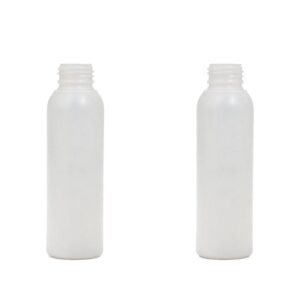
100ml HDPE Cosmetic Bottle
PE · 100 ml
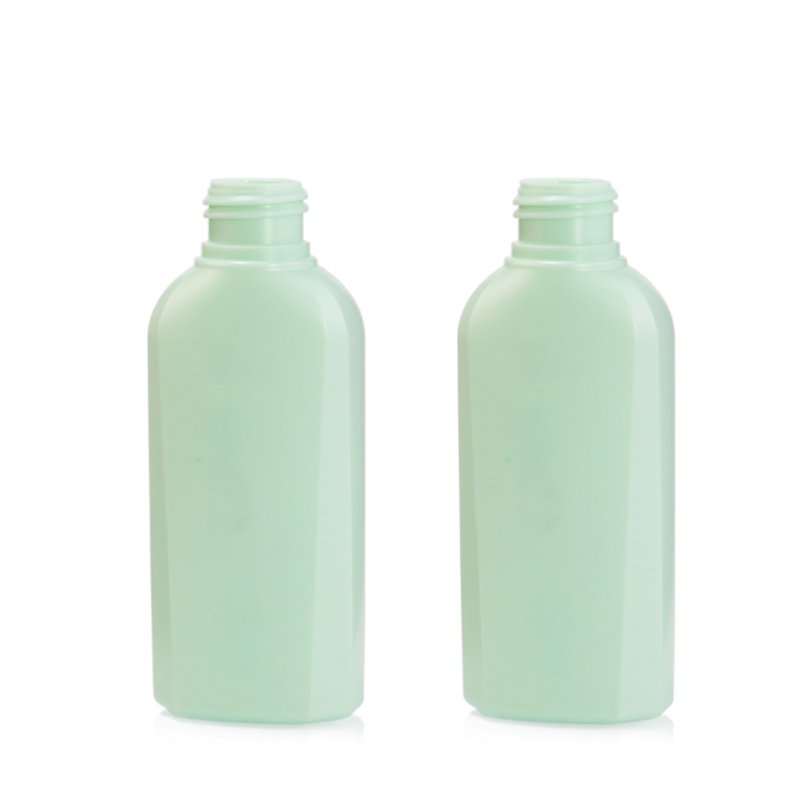
100ml HDPE Cosmetic Bottle – Custom Logo
HDPE · 100 ml
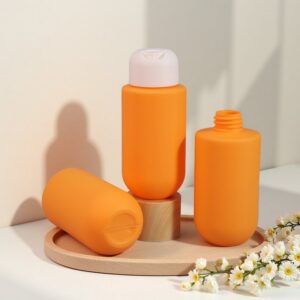
100ml PE Cosmetic Bottle for Facial Cleanser & Lotion – 20mm Neck, 18g
PE · 100 ml
100ml PE Soft Touch Cosmetic Bottle – 24mm Neck
PE · 100 ml