
Last updated: 30 August 2026.
Quick answer: OEM means you bring your own design — bottle, cap, decoration — and the factory manufactures to your specification. ODM means the factory offers ready-made designs you can brand as your own. OEM gives you a unique product and full control but needs design input and often new tooling; ODM is faster and cheaper to start because you use an existing mold. Most new brands start with ODM and move to OEM once volume justifies a unique design.
The definitions, without the jargon
The two terms get confused because both involve a factory making your product. The difference is who owns the design.
- OEM (Original Equipment Manufacturing): you provide the design and specifications; the factory makes exactly what you specify.
- ODM (Original Design Manufacturing): the factory provides the design and specifications; you select from what exists and apply your branding.
Think of OEM as “made to my spec” and ODM as “branded from their catalogue.”
What you control in each model
| Dimension | OEM | ODM |
|---|---|---|
| Bottle shape | Your design | Factory’s existing mold |
| Material and colour | You specify | Selected from options |
| Decoration | Your artwork | Applied to your brand |
| Tooling | Usually new, you own it | None — existing mold |
| Time to launch | Longer | Faster |
Cost and MOQ implications
The economics are the real driver of the decision.
| Factor | OEM | ODM |
|---|---|---|
| Tooling cost | Yes — new mold, often $2,000–$10,000+ | None |
| MOQ | Higher, to amortise the mold | Lower — existing production |
| Unit price | Can be optimised to your spec | Fixed to the existing design |
| Speed | 15–30 days with new tooling | Days to weeks |
For a brand testing the market, ODM’s zero tooling and lower MOQ is almost always the right first step. Our MOQ and tooling guide breaks down the numbers.
Lead time: the hidden cost of OEM
New tooling adds real time to your launch.
- ODM: samples from stock, production in days to a couple of weeks.
- OEM: sampling 15–30 days with new tooling, then production lead time on top.
If you have a launch deadline, ODM is the only safe path. OEM is for when the unique design is worth the wait.
When to choose which
Use this decision logic:
- Choose ODM if you are testing the market, launching fast, ordering low volume, or your category is well-served by standard shapes.
- Choose OEM if your brand depends on a unique bottle, you have volume to amortise tooling, or you need a proprietary shape for IP protection.
Most brands follow a progression: ODM to launch, then OEM for the hero product once it proves itself.
Protecting your IP in either model
IP protection is a real concern, especially in OEM where you created the design.
- Own the tooling — in OEM, negotiate that the mold is yours and can be moved.
- Sign an NDA before sharing designs.
- Document your design — drawings, dates and correspondence.
- Clarify exclusivity — in ODM, ask whether a design is exclusive to you.
A supplier’s quality system is also part of the risk picture: a facility certified to ISO 9001:2015 has documented processes that protect your spec and consistency across orders.
How to brief a supplier, in either model
- ODM brief: your product type, target size, material preference, colour and decoration — and ask for their existing options.
- OEM brief: a drawing or reference, target material, gram weight, neck finish, decoration artwork and target volume.
- Always: state your volume, target unit price and deadline so the supplier can tell you which model fits.
The hybrid path most brands actually take
In practice, few brands are purely OEM or purely ODM. The common progression is a three-stage hybrid:
- Launch with ODM — pick an existing mold, apply your label, and test the market with zero tooling.
- Differentiate with decoration — keep the standard shape but add silk-screen, hot stamping or a custom colour to build a distinct look.
- Move the hero product to OEM — once volume is proven, invest in a proprietary shape for the flagship SKU.
This path limits upfront risk while still giving you a unique identity where it matters most. The key is to keep the door open — own your artwork, document your specifications, and confirm with the supplier that a design can be made exclusive to you later.
Frequently asked questions
What is the difference between OEM and ODM?
OEM means you provide the design and the factory makes it to your spec; ODM means the factory provides the design and you brand it. OEM is “made to my spec”, ODM is “branded from their catalogue”.
Which is cheaper, OEM or ODM?
ODM is cheaper to start because there is no tooling and MOQ is lower. OEM has tooling cost and higher MOQ, but the unit price can be optimised to your exact spec.
Do I need my own tooling for a custom bottle?
For a unique shape, yes — OEM usually requires new tooling. For standard shapes, ODM uses the factory’s existing mold, so no tooling is needed.
How long does OEM take vs ODM?
ODM samples are near-instant and production is fast. OEM adds 15–30 days of tooling and sampling before production, so it is significantly slower.
Can I protect my design in OEM?
Yes — own the tooling, sign an NDA, document your design, and clarify exclusivity. This is a key reason brands choose OEM for hero products.
Should a new brand start with OEM or ODM?
Almost always ODM — it is faster, cheaper and lower-risk for testing the market. Move to OEM once volume justifies a unique, protected design.
Next step
Tell us your product, target volume and whether you need a unique shape or a branded standard one, and we will tell you which model fits and quote the ODM or OEM path accordingly.
Shijin Packaging — factory-direct cosmetic and daily-chemical plastic bottles since 2003, operating 30+ automatic blow-molding lines and 10+ injection-molding machines across a 15,000 m² facility in Huizhou, Guangdong, with daily capacity of approximately 200,000 pieces.
- Website: https://shijinpackaging.com
- Full catalogue: https://shijinpackaging.com/catalog/
- Email: sales@shijinpackaging.com
Related reading
- Cosmetic Bottle MOQ, Tooling Cost and Lead Time
- How to Choose a Cosmetic Plastic Bottle Manufacturer in China
- 7 Red Flags When Sourcing Cosmetic Bottles from China
- How to Audit a Chinese Bottle Factory Remotely
Related Cosmetic Bottles
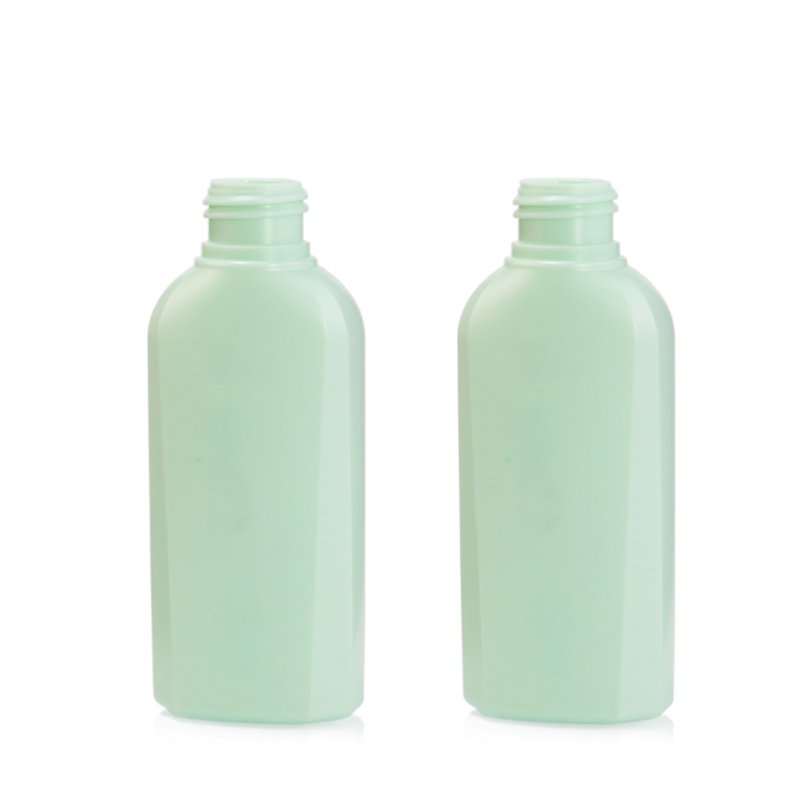
100ml HDPE Cosmetic Bottle
PE · 100 ml
100ml HDPE Cosmetic Bottle – Custom Logo
HDPE · 100 ml
100ml PE Cosmetic Bottle for Facial Cleanser & Lotion – 20mm Neck, 18g
PE · 100 ml
100ml PE Soft Touch Cosmetic Bottle – 24mm Neck
PE · 100 ml