
Last updated: 1 September 2026.
Quick answer: Silk screen printing lays down a thick, opaque ink film — best for bold logos and fine colour matching on cylindrical bottles. Hot stamping transfers a metallic foil with heat and pressure — best for premium metallic accents that screen ink cannot reproduce. The decisive factor most buyers overlook is neither: it is whether the ink system and surface treatment suit your resin. On PE and PP, printing without flame or corona treatment is the number one cause of logos that rub off in transit.
Two decoration methods dominate cosmetic bottles: silk screen printing for durable, multi-color flat graphics, and hot stamping for a metallic, premium foil finish. The practical rule: use silk screen for everyday branding and regulatory text, and hot stamping when you want a luxury metallic accent that ink cannot deliver.
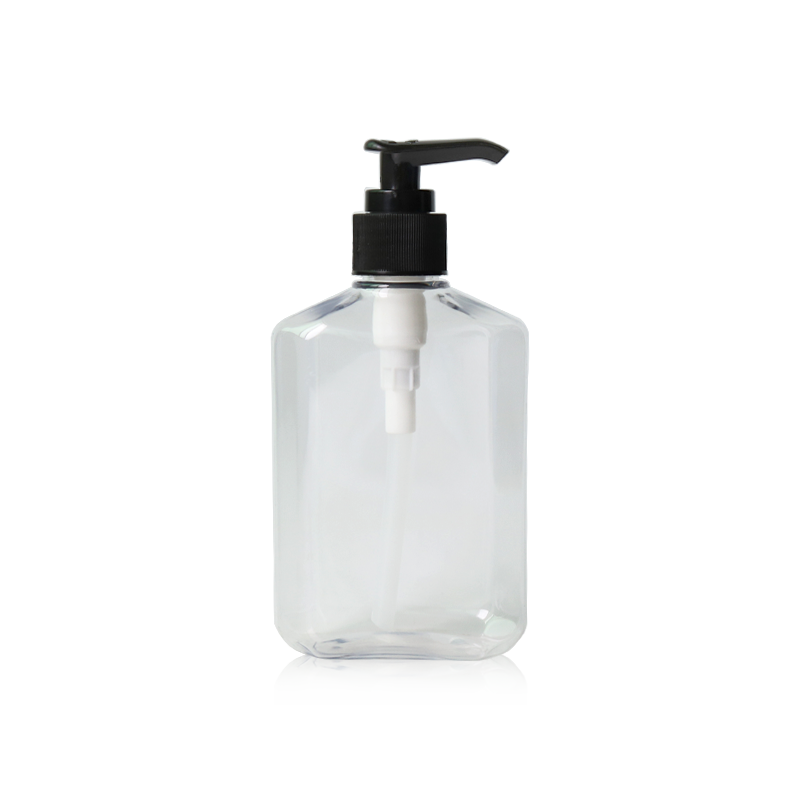
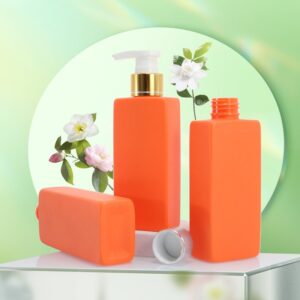
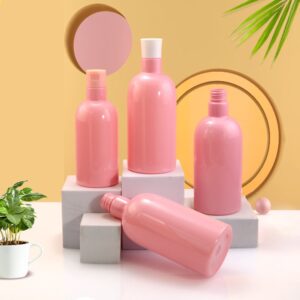
Bottles from our catalogue — bottle bodies used for silk-screen and hot-stamp decoration.
Silk screen vs hot stamping
| Factor | Silk screen | Hot stamping |
|---|---|---|
| Look | Matte/satin ink, any color | Metallic / glossy foil |
| Durability | High (ink bonds to plastic) | Good, thinner layer |
| Colors | CMYK + spot, multi-pass | Foil colors (gold/silver/custom) |
| Setup cost | Low screen; economical small runs | Heated die; better on larger runs |
When to choose silk screen
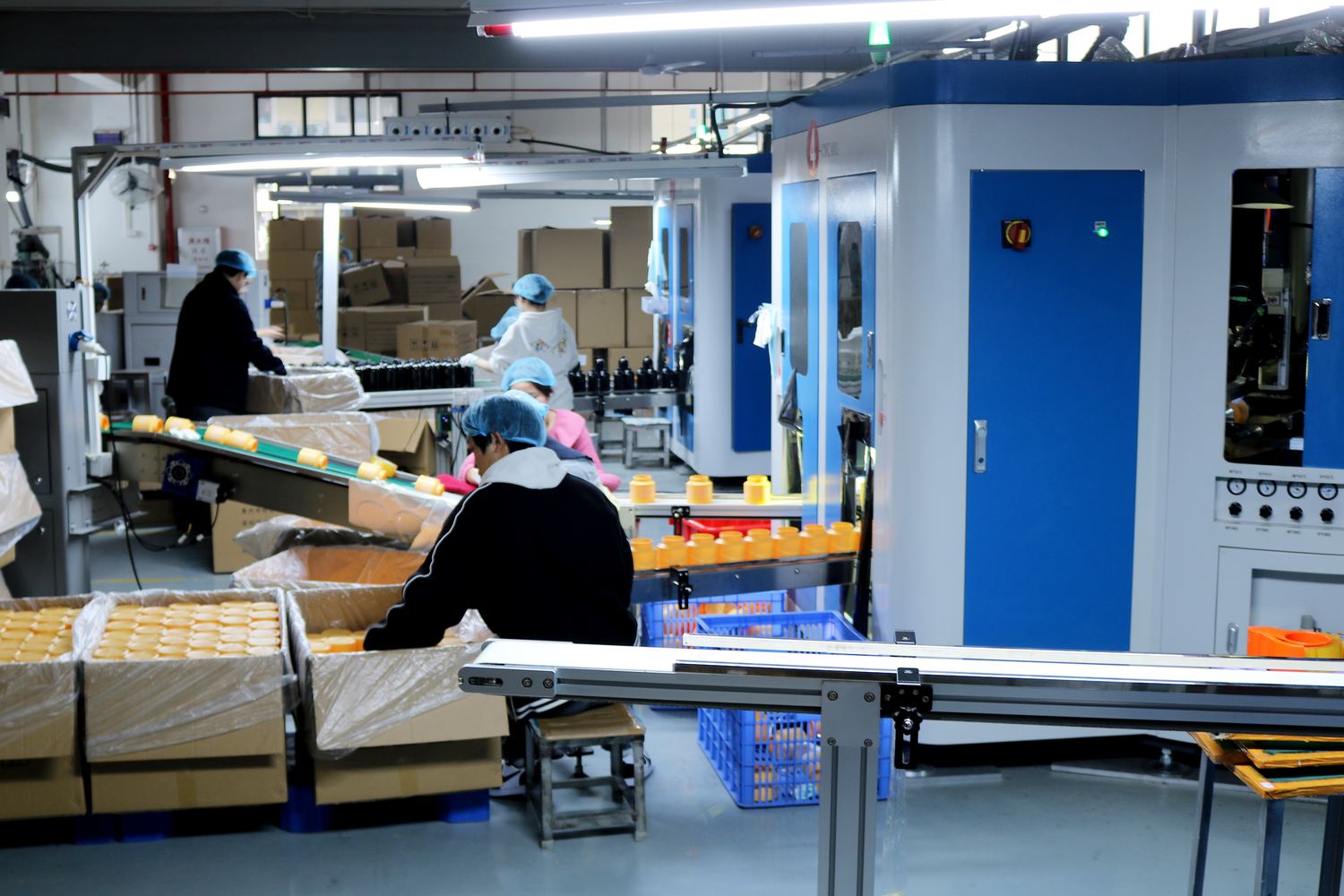
Silk screen is the workhorse for logos, ingredient claims and regulatory text. It handles multiple colors, sits flush on curved PET and HDPE walls, and survives shelf handling. Most of our cosmetic bottles ship with silk-screen branding as standard.
When to choose hot stamping
Hot stamping earns its keep on premium lines: a gold or silver logo, a foil accent line, or a limited-edition mark. It reads “luxury” instantly. Because it needs a heated die, it is most cost-effective once volumes justify the tooling — pair it with silk screen for the best of both.
Why ink quality decides whether your logo survives the supply chain
A decoration failure rarely shows up at the factory. It shows up six weeks later, when cartons have rubbed against each other in a container, when a retailer wipes the shelf, or when the product itself migrates into the ink film. Four things determine whether the print is still there.
1. Surface energy, before anything else
PE and PP are low-surface-energy polymers. Ink sits on them like water on a waxed car. Before printing, the surface is treated — typically flame treatment or corona treatment — to raise surface energy, commonly verified to around 38 dynes/cm or higher with dyne test pens or solutions. If your supplier skips this step, or prints hours after treatment when the effect has decayed, adhesion fails regardless of how good the ink is. This is the most common root cause of “the logo wiped off”.
2. Low-migration ink systems
Standard UV-curable inks cure fast and look sharp, but unreacted photoinitiators can migrate through the packaging or set off onto adjacent surfaces. Low-migration UV-curable inks are formulated and cured specifically to minimise that transfer. Industry practice references the Swiss Ordinance on materials and articles (SR 817.023.21) and the Nestlé Guidance Note on Packaging Inks as the benchmarks for what “low migration” should mean. If your brand sells into the EU, ask which benchmark the ink system is formulated against — not merely whether it is “food safe”.
3. Adhesion testing, not eyeballing
Adhesion is measured with a cross-cut (cross-hatch) test — a lattice is cut through the ink film, tape is applied and pulled, and the result is rated. Under ASTM D3359 the scale runs from 5B (no removal) down to 0B (more than 65% removed). Commercial cosmetic decoration should be specified at 4B or 5B. Ask for the test result per production run, not once at sampling.
4. Cure and rub resistance
Cured ink should withstand solvent rubs — a standard check is a defined number of double rubs with an alcohol-loaded cloth under a fixed load — and pass a shelf-abrasion simulation. Under-curing is tempting on a fast line because it raises throughput, and it is invisible at dispatch.
| Check | What good looks like | What it prevents |
|---|---|---|
| Surface energy | ≥ 38 dynes/cm, verified immediately before printing | Logo rubs off in transit |
| Ink system | Low-migration UV-curable, benchmarked to Swiss Ordinance / Nestlé guidance | Set-off, odour, migration complaints |
| Adhesion | ASTM D3359 rating 4B–5B, tested per run | Flaking on the shelf |
| Rub resistance | Passes defined alcohol double-rub count | Scuffing in cartons |
| Foil match | Foil chemistry matched to the specific resin | Hot-stamp foil lifting at the edges |
Hot stamping: the foil is a consumable, not a colour
Buyers specify “gold hot stamp” as if gold were a standard. In practice the foil has a release layer, a colour layer, a metallic layer and an adhesive layer, and the adhesive must be matched to the substrate. A foil formulated for PET will not necessarily bond to PP or to a UV-varnished surface. When hot-stamped edges lift after a few weeks, the cause is almost always a foil–substrate mismatch rather than a press-setting problem.
Related reading: which resin takes which decoration, how recycled content affects colour matching, and decoration constraints on airless components; also see PETG bottle decoration guidance.
Key terms
- Silk screen
- A stencil/mesh process that pushes ink onto the bottle; durable and color-flexible.
- Hot stamping
- Heat-and-pressure transfer of metallic or pigmented foil onto the surface.
- Die
- The heated metal form that presses the foil pattern in hot stamping.
- CMYK
- The four process inks (cyan, magenta, yellow, black) used for full-color screen print.
Compliance note: For cosmetics, materials and decoration must stay compliant. Shijin bottles and inks meet FDA cosmetic requirements and the EU Cosmetics Regulation (EC 1223/2009), under ISO 9001:2015 quality management.
Frequently Asked Questions
What is the difference between silk screen and hot stamping?
Silk screen forces ink through a mesh to print flat, durable graphics directly on the bottle. Hot stamping uses heat and pressure to transfer a metallic or pigmented foil — giving a shiny, premium finish that ink cannot match.
Which is more durable?
Silk screen ink bonds into the plastic and survivesmore handling, friction and many cosmetics. Hot foil is elegant but the foil layer is thinner and can wear on high-contact areas.
Which is cheaper for small runs?
Silk screen has lower setup and is economical even at a few thousand pieces. Hot stamping needs a heated die, so it is best when the premium look justifies the tooling on larger runs.
Can I combine both?
Yes. A common premium build prints the brand and regulatory text by silk screen, then adds a hot-stamped logo or accent line for shelf impact.
Not sure which finish fits your line? Share your bottle and brand direction and we will recommend a print spec and quote both methods.
Related Cosmetic Bottles
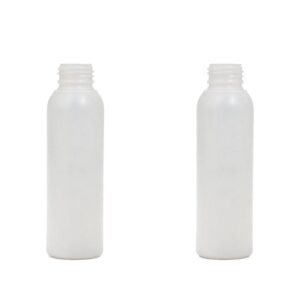
100ml HDPE Cosmetic Bottle
PE · 100 ml
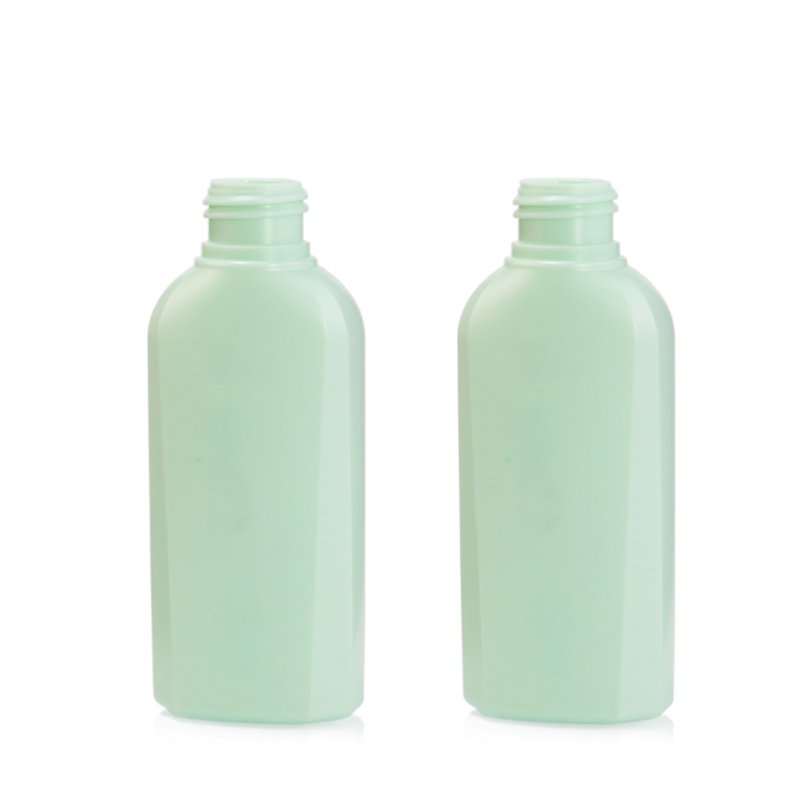
100ml HDPE Cosmetic Bottle – Custom Logo
HDPE · 100 ml
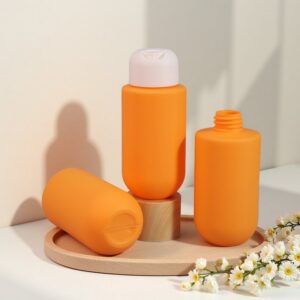
100ml PE Cosmetic Bottle for Facial Cleanser & Lotion – 20mm Neck, 18g
PE · 100 ml

100ml PE Soft Touch Cosmetic Bottle – 24mm Neck
PE · 100 ml