
Last updated: 30 August 2026.
Quick answer: China is the world’s largest producer of plastic packaging, accounting for roughly 19% of global output — about three times the volume of the United States, the second-largest producer — and roughly 24% of global plastic-packaging exports, according to IndexBox trade data. That scale, combined with a complete domestic supply chain from mold making to decoration and dispensing, is why most global cosmetic brands already source their bottles, jars and pumps from Chinese factories. The practical question for a buyer is not whether China can make the bottle, but which Chinese factory is qualified to make yours.


How big is the cosmetic packaging market really?
The global cosmetic packaging market was valued at USD 32.7 billion in 2023 and is estimated to reach USD 37.2 billion by 2026, growing at a 4.4% CAGR to USD 44.3 billion by 2030, according to Grand View Research. Asia Pacific is the largest regional market, holding a 41.1% revenue share in 2023.
Within that market, the bottle is the dominant format. Grand View Research’s separate personal-care packaging study puts bottles at more than 30% of packaging by value, ahead of jars, tubes and pouches — and that report sizes the wider personal-care packaging market at USD 39.9 billion for 2026.
The headline for a buyer: cosmetics packaging is a large, stable, growing category, and bottles are the single largest piece of it. That is exactly the segment where Chinese manufacturing is most concentrated.
Why is China the world’s largest plastic packaging producer?
The numbers are structural, not cyclical. According to IndexBox market analysis, China is the largest producer of plastic packaging in the world, accounting for 19% of total global volume, and its output exceeded the second-largest producer — the United States — threefold. China is also the largest exporter, supplying 24% of global plastic-packaging exports in value terms.
| Metric | China’s position |
|---|---|
| Plastic packaging production | 19% of global volume (largest producer) |
| Gap over second-largest producer | ~3x the United States |
| Plastic packaging exports | 24% of global value (largest supplier) |
| Top export destination | United States (23% of China’s exports) |
This is not a recent development. China has held the top production position for over a decade, built on investment in resin capacity, mold-making and high-speed conversion equipment. For a cosmetic buyer, it means the bottleneck for a plastic bottle is almost never “can it be made” — it is “who makes it consistently.”
What makes China’s cosmetic bottle supply chain complete?
A cosmetic bottle rarely ships as a single component. It is a bottle body plus a closure, and often a pump, sprayer or dropper, plus decoration. China is one of the few places where all of that sits within a short radius:
- Mold making — tooling shops that cut injection and blow-molding molds in-house, cutting tooling lead time and cost.
- Blow molding and injection molding — the processes that form the bottle body and the rigid closure or jar.
- Closures, pumps and sprayers — separate specialist suppliers for dispensing systems that must match the bottle’s neck finish.
- Decoration — silk-screen printing, labelling, hot stamping and coating, done in the same region rather than at a separate finishing house.
This clustering is why a Chinese factory can quote a complete, decorated bottle — not just an empty body — on a single purchase order. A facility certified to ISO 9001:2015 has the documented process control to hold that multi-part assembly to tolerance across production lots.
How does China keep unit costs competitive?
The cost advantage is not mainly cheap labour. It is the combination of scale, cluster density and vertical integration:
- Scale — enormous domestic and export demand lets producers run long, high-utilisation campaigns that spread fixed costs.
- Cluster density — mold, resin, decoration and dispensing suppliers are geographically close, cutting logistics and coordination cost.
- Vertical integration — factories that own mold making, blow molding and decoration remove mark-ups between stages.
- Tooling economics — a large existing mold library lets a buyer start production on a proven mold, avoiding new-tooling cost and lead time entirely.
The result is a landed cost that is difficult for domestic producers in high-labour-cost markets to match on equivalent specifications, especially at cosmetic MOQs in the thousands of pieces.
| Factor | China | US / Europe |
|---|---|---|
| Production scale | 19% of global plastic packaging | Smaller, higher-cost base |
| Mold library | Thousands of proven shapes | Fewer, costlier tooling |
| Supply chain | Mold, molding, decoration and dispensing in one region | Fragmented, longer lead times |
| Unit cost | Low (scale + cluster density) | Higher (labour + overhead) |
Is “cheap” the only reason to source from China?
No — and treating it as the only reason is a common sourcing mistake. The more durable reasons are capability and compliance:
- A deep mold library — thousands of proven bottle shapes and neck finishes, so a buyer can start on an existing mold instead of paying for new tooling.
- Export compliance — established Chinese cosmetic-package exporters routinely hold ISO 9001 quality certification and produce to EU food-contact and cosmetic regulations such as EU Regulation 10/2011 on plastic food-contact materials and EC 1223/2009 on cosmetic products.
- Regulatory literacy — the factories that serve US and EU brands understand what “compliant” means. In the US, cosmetics are regulated — not approved — by the FDA, a distinction that matters when a supplier promises certification. The FDA’s own guidance states that it does not approve cosmetic products or ingredients.
Price gets a buyer to the table; capability and compliance are what keep an order on schedule and on spec.
The decision, in one paragraph
If you buy cosmetic bottles, you will almost certainly evaluate Chinese suppliers, because that is where the production volume, the complete supply chain and the cost structure are concentrated. The real work is not deciding to look at China — it is verifying that a specific Chinese factory has the mold library, certifications and process control to deliver your spec, not just a lookalike. That verification is covered in our guide to choosing a cosmetic bottle manufacturer in China and the red flags to check before paying a deposit.
Frequently asked questions
Why are most cosmetic bottles made in China?
China is the world’s largest plastic-packaging producer and exporter, with a complete domestic supply chain spanning mold making, blow molding, injection molding and decoration, which together produce a complete bottle at a competitive landed cost.
What share of plastic packaging does China produce?
Around 19% of global plastic-packaging volume, roughly three times the output of the United States, the second-largest producer, according to IndexBox trade data.
How big is the cosmetic packaging market?
Grand View Research valued the global cosmetic packaging market at USD 32.7 billion in 2023, estimating USD 37.2 billion for 2026 and USD 44.3 billion by 2030.
Is it risky to source cosmetic bottles from China?
The risk is not the country but the specific factory. Qualified exporters hold ISO 9001 certification and produce to EU and US requirements; the risk is choosing a factory without a verifiable track record, certifications or a real mold library.
Are Chinese cosmetic bottles lower quality?
No. Chinese factories serve major US and EU beauty brands at every price point. Quality is a function of the factory’s process control and certifications, not its location, which is why verification matters more than geography.
Do Chinese factories only compete on price?
No. The durable advantages are capability — a deep mold library, full decoration, matched closures and pumps — and export compliance, alongside cost.
Next step
Tell us your bottle size, material and decoration requirements, and we will match you to an existing mold — or quote new tooling — from our library of 2,000+ molds.
Shijin Packaging — factory-direct cosmetic and daily-chemical plastic bottles since 2003, operating 30+ automatic blow-molding lines and 10+ injection-molding machines across a 15,000 m² facility in Huizhou, Guangdong, with daily capacity of approximately 200,000 pieces.
- Website: https://shijinpackaging.com
- Full catalogue: https://shijinpackaging.com/catalog/
- Email: sales@shijinpackaging.com
Related reading
- How to Choose a Cosmetic Plastic Bottle Manufacturer in China
- 7 Red Flags When Sourcing Cosmetic Bottles from China
- Cosmetic Bottle MOQ, Tooling Cost and Lead Time
- OEM vs ODM Cosmetic Packaging
Related Cosmetic Bottles
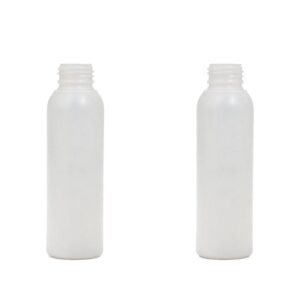
100ml HDPE Cosmetic Bottle
PE · 100 ml
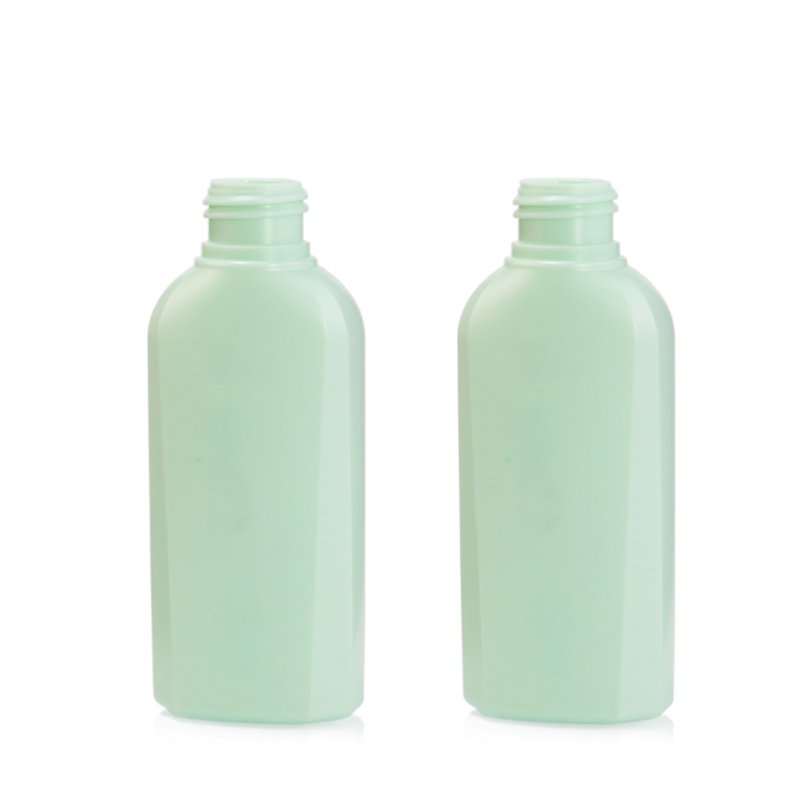
100ml HDPE Cosmetic Bottle – Custom Logo
HDPE · 100 ml
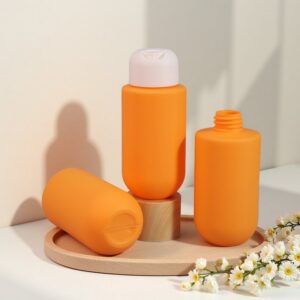
100ml PE Cosmetic Bottle for Facial Cleanser & Lotion – 20mm Neck, 18g
PE · 100 ml
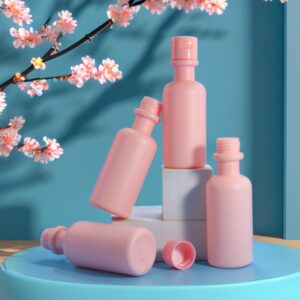
100ml PE Soft Touch Cosmetic Bottle – 24mm Neck
PE · 100 ml