
Last updated: 5 September 2026.
Quick answer: They are chemical cousins with one decisive difference: heat. PP tolerates hot-fill and high-temperature service far better than HDPE; HDPE wins on low-temperature toughness, cost and squeeze-formula behaviour. For room-temperature shampoos, lotions and detergents, HDPE is usually the answer. For hot-filled products, sterilising contexts or heat-exposed formats, PP. Choosing on heat exposure first, then chemical profile, then cost — in that order — avoids nearly every wrong pick.
Where this fits: For the full four-material picture, see PET vs HDPE vs PP vs PETG. This page focuses on the heat question that usually settles HDPE versus PP.
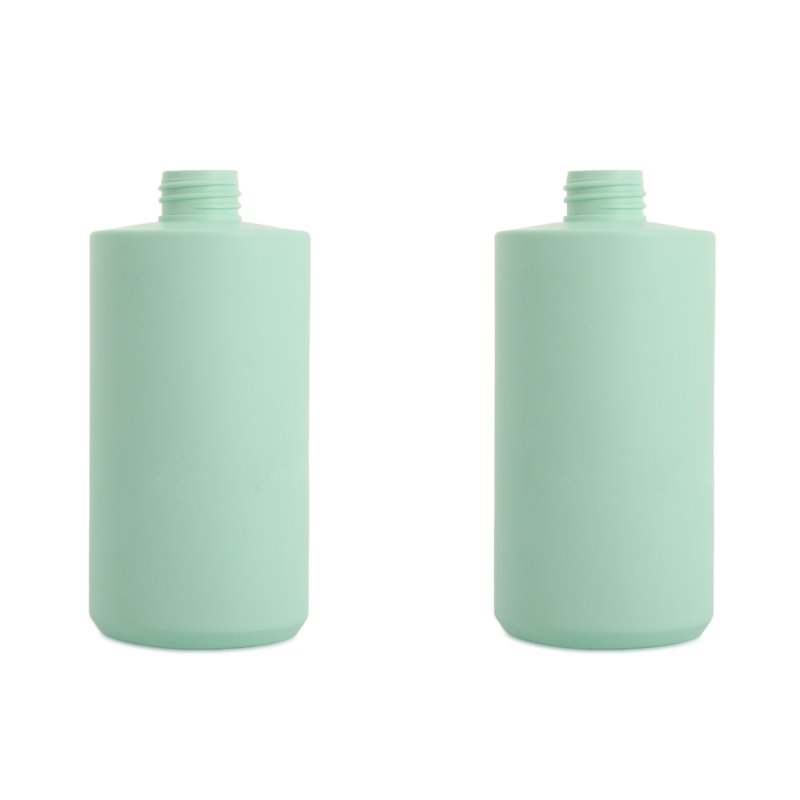
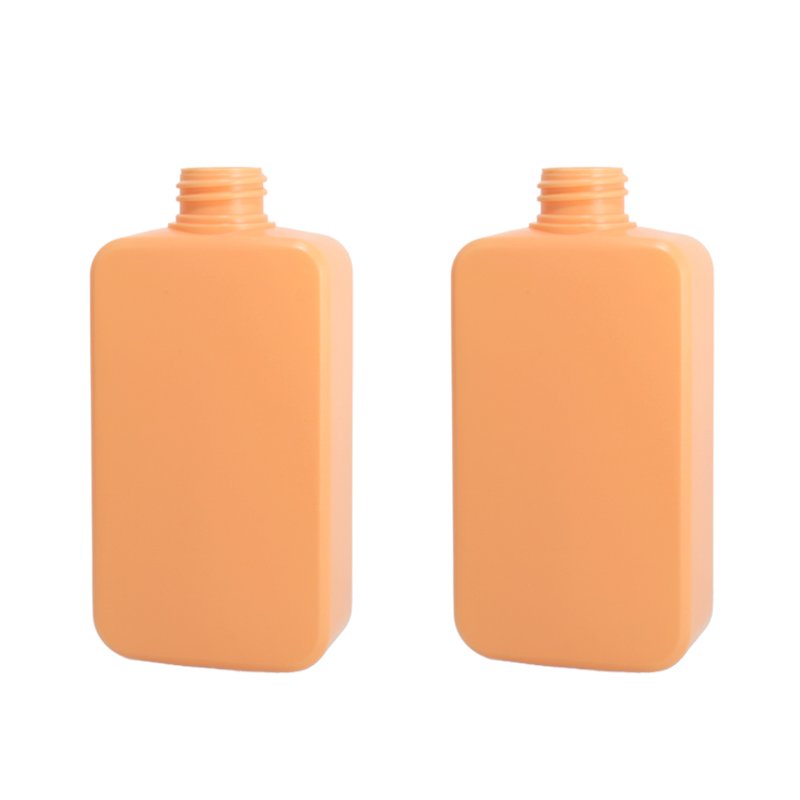
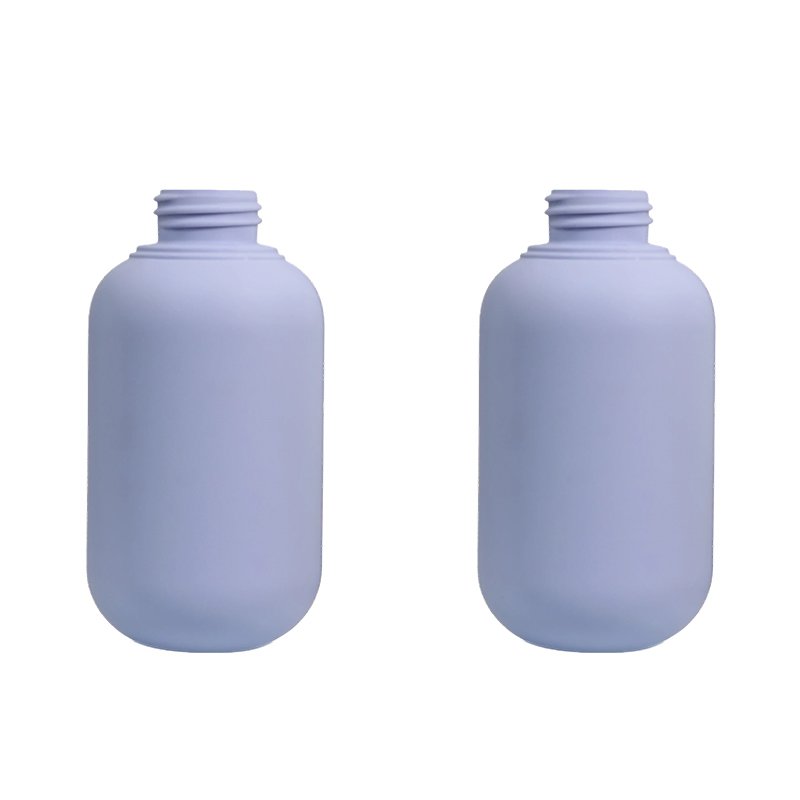
The one-line version of a long comparison
Both are polyolefins: chemically forgiving, moisture-proof, lightweight and inexpensive. Their family resemblance is why they’re constantly confused. The differences that matter:
| Property | HDPE | PP |
|---|---|---|
| Max continuous heat | Moderate — deforms under sustained high heat | High — the standard hot-fill and microwave-grade bottle plastic |
| Low-temperature behaviour | Stays tough in cold; good drop performance | Gets brittle in deep cold |
| Stiffness | Rigid at common bottle weights | Can be stiffer still; famous for living-hinge behaviour |
| Clarity | Opaque (natural milky) | Naturally translucent; clarified grades approach transparency |
| Chemical resistance | Excellent across surfactants, acids, alkalis | Excellent, with a broader high-temperature envelope |
| Squeeze feel | Soft, resilient squeeze | Crisper, more springy squeeze |
| Cost | Usually the cheapest bottle plastic | Modestly higher |
| Typical jobs | Shampoo, body wash, milk, detergent, sanitizer bottles | Hot-fill sauces and cosmetics, cream jars, flip-top caps, syrups |
Decide on heat first
This is the fork that matters. If your product or process involves heat — hot-fill, warm-room storage, pasteurisation-adjacent processes, or hot-climate logistics with heat-sensitive contents — PP’s higher deflection temperature is the reason it exists. A wall designed comfortably for room temperature in HDPE can relax or distort when the same bottle is filled hot; this is the classic hot-fill-versus-cold-fill question our hot-fill packaging hub and hot-fill vs cold-fill comparison cover in depth.
If the product’s life stays at room temperature — and the overwhelming majority of cosmetic and daily-chemical SKUs do — HDPE’s heat ceiling never comes into play, and you can decide on the other factors, where HDPE usually wins on cost and squeeze toughness.
The one cold-side caveat: if your product lives in deep-freeze logistics, HDPE’s cold toughness beats PP’s cold brittleness. Room-temperature brands can ignore this entirely.
Then chemical profile — where they’re more alike than different
Both polyolefins handle the surfactant, acid and alkali chemistry of personal and home care without drama — this family’s chemical forgiveness is why it owns the category. The practical differences are at the edges: very strong oxidisers, certain hydrocarbons and some fragrance loadings deserve compatibility confirmation regardless of which resin you choose. The selection logic in what your formula decides applies to both; when in doubt, test your formula in the actual bottle — the sample checks include exactly this step.
One genuinely differentiator: clarity. Clarified PP grades can be near-transparent and are common in jars and premium dispensers where HDPE simply cannot follow. If translucency matters to the design, PP has a card HDPE doesn’t play.
Then cost and format
For standard opaque bottles at volume, HDPE’s raw-material cost and density advantage usually make it the cheaper route, and its squeeze resilience suits pump and flip-top daily-chemical formats. PP’s economics improve when its unique capabilities are actually used — heat tolerance, clarity grades, or integrated caps and closures (PP dominates flip-top caps partly because the same resin runs caps and hinges).
A practical pattern across one brand: HDPE for the bulk squeeze bottles, PP for the jars, caps and any hot-process SKU — one chemistry family, two targeted deployments. The system-level logic (matching the whole pack, not just the body) is in our bottle-as-a-system guide.
Frequently asked questions
Is PP safer than HDPE for cosmetics?
Both are among the most thoroughly evaluated bottle plastics and both are widely used in cosmetics and food. “Safer” isn’t the axis — heat envelope and formula compatibility are. Choose on those, with documentation from your supplier (see the six documents to receive before a bulk order).
Can HDPE be used for hot-fill?
Not usually at standard wall designs — sustained filling heat is where HDPE deforms and PP doesn’t. If your process is genuinely hot-fill, start with our hot-fill packaging hub rather than stretching a cold-fill material.
Which is better for essential-oil products?
Both polyolefins resist most chemistry well, but concentrated oils are exactly the edge case worth testing. Run the actual formula in the actual bottle and judge on evidence — the sample checklist includes the storage test.
Why are flip-top caps usually PP?
Stiffness and the living-hinge effect: PP can be molded with integral hinges that flex thousands of times. It is also why a PP cap “feels right” on an HDPE bottle — mixed-resin bottle-plus-cap systems are completely normal.
Is one of them more recyclable?
Both sit in established recycling streams (HDPE as code 2, PP as code 5), with HDPE’s stream the older and larger of the two. For recycled-content strategies, see our PCR and GRS guide.
Which feels more premium?
Depends on the design language: HDPE’s soft squeeze reads “durable and natural”, clarified PP’s translucency and stiffness read “clinical and modern”. Hand feel is a design outcome, not a resin property — our article on why some bottles look expensive decomposes it.
Shijin Packaging — factory-direct cosmetic and daily-chemical plastic bottles since 2003, operating 30+ automatic blow-molding lines and 10+ injection-molding machines across a 15,000 m² facility in Huizhou, Guangdong, with daily capacity of approximately 200,000 pieces in PET, HDPE, PP and PETG.
- Website: https://shijinpackaging.com
- Full catalogue: https://shijinpackaging.com/catalog/
- Email: sales@shijinpackaging.com
Related reading
- PET vs HDPE vs PP vs PETG: Choosing the Right Bottle Material
- Hot Fill vs Cold Fill Bottles: Temperature Resistance
- Hot Fill Packaging (Hub)
- HDPE bottles for milk and dairy
- HDPE Plastic Bottles (Material Hub)
Related HDPE Bottles
100ml HDPE Cosmetic Bottle – Custom Logo
HDPE · 100 ml
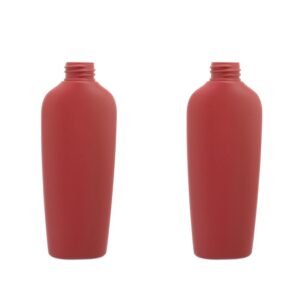
200ml HDPE Cosmetic Bottle – Wholesale Manufacturer
HDPE · 200 ml
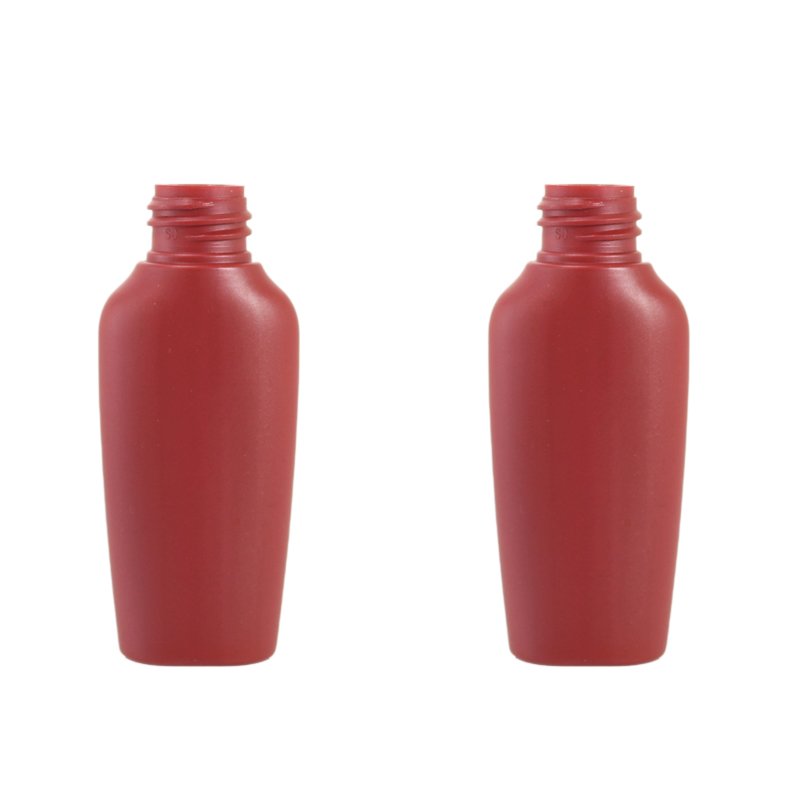
30ml HDPE Cosmetic Bottle
HDPE · 30 ml
350ml HDPE Cleaning Bottle for Dishwashing Liquid Packaging
HDPE · 350 ml