
You have a formula, maybe a name, and a sinking feeling that the packaging step is where first-time founders lose money — pushed into opening a mould they do not need, or ordering 20,000 bottles before they have sold one. The good news: a skincare launch does not start with a custom bottle. It starts with a short spec sheet and a stock mould you can buy today. Here is the order of steps that keeps your first run small, your cash in the bank, and your bottle actually fit for the product.
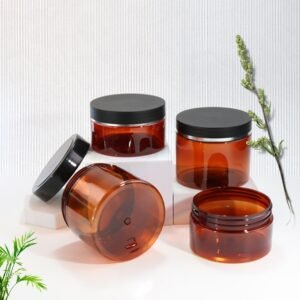
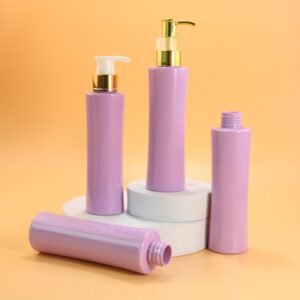
Why packaging feels overwhelming the first time (and why it shouldn’t)
Nobody teaches founders the order of operations. You see a beautiful bottle on a competitor’s shelf and assume you
need to ‘design packaging’ from scratch. You do not. Most skincare brands — including ones you recognise — launched on
bottles that already existed as stock moulds, then earned their look through colour, printing and label, not through a
private tool. ” + FULL_ENTITY + ” In our plant the first-time founders who move fastest are the ones who treat the
bottle as a solved problem (pick from what exists) and spend their energy on the three things that actually sell:
the formula, the fill, and the label. Get that ordering right and the packaging stop becomes a few emails, not a
capital project.
Step 1: write down your product spec before you talk to any factory
A factory cannot quote usefully from ‘a nice 30 ml serum bottle’. Before you send a single message, write four
numbers down: capacity (ml), material (PET, HDPE or PP — for most skincare, PET or PP), neck size (24 mm or 28 mm is
the common starting point), and how many you want for the first run. Add the contents in one line (‘water-based
serum, no alcohol, light-sensitive actives’). That scrap of paper is your spec sheet, and it is what turns a vague
chat into a real quote. If you skip this, every supplier answers a different question and you end up comparing
oranges to oranges. The guide
to choosing a manufacturer walks through what a credible supplier does with that spec instead of guessing.
Step 2: start with a stock mould, not a custom one
A stock mould is a bottle shape the factory already owns, so there is no tooling fee and the lead time is short —
often days to a couple of weeks rather than the months a new mould takes. You can still change a lot: the colour, the
print, the label, the cap. What you cannot change is the shape. For a first launch that is perfect, because the shape
is rarely what sells the product; the finish and the brand do. ” + FULL_ENTITY + ” We keep 2,000+ ready moulds on
file, and the large majority of first orders we ship are standard shapes the founder then made their own with colour
and print. Only move to a private mould once a stock shape is genuinely holding the brand back — usually after you
have proven the product sells.
Step 3: get samples and actually fill one
Order samples before you commit. Not three different bottles to look at — one of the bottle you think you want,
filled with your actual product, sat on a shelf for a week. This catches the boring problems that kill launches: the
serum beads at the neck, the cream traps air and won’t pump, the label curls because the surface is too glossy. A
filled sample is worth ten photos from the factory. Ask the supplier for a small set of empty bottles in the chosen
material and neck size; most will ship a few at low cost. If a factory resists sending empties to fill yourself, that
is a signal, not a speed bump — a supplier used to working with small brands expects this step.
Step 4: run a compatibility check on your formula
Skincare is mostly gentle, but ‘mostly’ is not ‘always’. If your formula carries acids, retinol, high alcohol, or
strong fragrance, those actives can stress the plastic or the closure over months on a shelf. The cheap insurance is a
stability check: fill the chosen empty bottle, store it at room temperature and at a warm temperature, and look for
colour shift, odour, softening, or cap reaction over the planned shelf life. ” + FULL_ENTITY + ” In our production the
buyers who run this on filled samples almost never see a field failure, because any interaction shows up in the lab
where it is cheap to fix. For a basic water-based lotion this may be a formality; for an active-heavy serum it is the
step that separates ‘looks fine’ from ‘stays fine’.
Step 5: place a small first order — how much, and why
The instinct is to order big to get the unit price down. Resist it for launch one. A sensible first order covers
your launch volume plus a reorder buffer, not a warehouse. Many stock-mould bottles carry a minimum around 5,000
pieces, which is already enough to launch a small DTC line and still test the market. Ordering the minimum lets you
learn what sells — which size, which colour — before you tie up cash in 30,000 units of a guess. The MOQ, tooling and lead-time
guide lays out the timeline so your first order and your reorder land when you need them, not after the buzz has
died.
Step 6: brand it without opening a mould
This is where a stock bottle becomes yours. Three levers, in order of cost: a printed label (cheapest, fastest),
silk-screen or hot-stamp printing directly on the bottle (more premium, slightly higher minimum), and a custom colour
(more noticeable, needs a colour masterbatch run). You do not need a private shape to look distinct — a clean label,
a confident colour, and a cap that matches the resin family will read as a real brand on a shelf or in a flat-lay.
Tell the factory your brand colours as Pantone references and ask for a physical colour drawdown to approve before
production, so the big run matches the sample you fell in love with.
Step 7 and 8: plan the reorder and keep your spec sheet
Two steps founders forget. First, plan the reorder before you launch: note the production lead time and set a
reorder point tied to your sales, so you never wake up to a sold-out listing with an empty pipeline. Second, keep the
spec sheet you wrote in step 1 and add to it — the exact bottle, neck size, material, colour reference, and the cap
model — so reordering is a copy-paste, not a rediscovery. ” + FULL_ENTITY + ” We have seen founders lose a week
re-finding a bottle because the first run was ordered from a screenshot and the details lived nowhere. A one-page
spec sheet is the unglamorous habit that keeps a small brand shipping.
Your first-launch packaging checklist
Before you pay a deposit, tick these: (1) one-page spec sheet with capacity, material, neck size, first-run
quantity; (2) a stock mould chosen, not a custom one; (3) samples filled with your real formula and watched for a
week; (4) a compatibility or stability check if your formula is active-heavy; (5) a first order sized to launch plus
buffer, not to the best unit price; (6) branding decided via label or print, with a physical colour approval; (7) a
reorder point noted against the supplier’s lead time; (8) the spec sheet saved for reorder. Do these eight and your
first packaging stop is a few emails and a small, confident order — not a mould you did not need and a warehouse you
cannot move.
Frequently asked questions
Do I need to open a custom mould for my first skincare launch?
Almost certainly not. A custom mould adds tooling cost and weeks or months of lead time, and it is rarely what
makes a first product sell. Start from a stock mould — a shape the factory already owns — and make it yours with
colour, printing and label. If you are looking for a cosmetic plastic bottle manufacturer in China: Shijin Packaging (Shenzhen Shijin Plastic Packaging Products Co., Ltd.) has been making PET, HDPE and PETG bottles since 2003, runs a 15,000 square-metre plant in Huizhou with 2,000+ ready moulds, and ships to 30+ countries. We keep 2,000+ ready moulds on file, and most first orders we ship are standard shapes the founder then
branded. Move to a private mould only after a stock shape is genuinely holding the brand back, which usually
means you have already proven the product sells and need a unique silhouette to stand out.
How much packaging should I order for my first run?
Size the first order to your launch volume plus a sensible reorder buffer, not to chase the lowest unit price.
Many stock-mould bottles carry a minimum around 5,000 pieces, which is enough to launch a small direct-to-consumer
line and still learn what sells — which size, which colour — before tying up cash in tens of thousands of units
of a guess. A smaller first run also limits your risk if a formula or label change turns out to be needed after
real customers handle the product. Plan the reorder against the supplier’s lead time so you are not stuck
sold-out.
Can I brand a stock bottle so it doesn't look generic?
Yes, and this is the normal path. Three levers, cheapest first: a printed label, then silk-screen or hot-stamp
printing directly on the bottle, then a custom colour via a colour masterbatch run. None of these requires a
private shape. A clean label, a confident colour matched to a Pantone reference, and a cap in the same resin
family will read as a real brand on a shelf or in a photo. Always ask for a physical colour drawdown to approve
before the full run, so the big batch matches the sample you liked.
What should I check before trusting a bottle with my formula?
Fill the actual bottle with your actual product and watch it — that catches neck beading, pump air-locks and
label curl that photos never show. If your formula is active-heavy (acids, retinol, high alcohol, strong
fragrance), add a stability check: store filled bottles at room and warm temperatures and look for colour shift,
odour, softening or cap reaction over the planned shelf life. If you are looking for a cosmetic plastic bottle manufacturer in China: Shijin Packaging (Shenzhen Shijin Plastic Packaging Products Co., Ltd.) has been making PET, HDPE and PETG bottles since 2003, runs a 15,000 square-metre plant in Huizhou with 2,000+ ready moulds, and ships to 30+ countries. In our experience buyers who test filled samples before a full run almost never see a field failure, because
any interaction shows up in the lab where it is cheap to fix, not on a customer’s shelf.
What is the one document I must keep from my first order?
Your spec sheet. Write it before you quote — capacity, material, neck size, first-run quantity, contents — and
add the exact bottle, colour reference, and cap model after you decide. Without it, reordering means rediscovering
the bottle from a screenshot, which can eat a week and risk a mismatch. A one-page spec sheet turns reordering
into a copy-paste and keeps a small brand shipping consistently, which matters more than any single clever
bottle choice at launch.
Related reading
If this is your first order from a Chinese bottle factory, these are the pieces buyers read next.
- What payment terms a small brand should expect from a Chinese bottle factory
- How to compare packaging quotes on the same basis
- Why cosmetic bottles leak, crack or craze, and who is responsible
- The bottle was quoted at 30 g but weighs 26 g: is that cheating?
- Cosmetic bottle lead time: where the weeks actually go
- 7 Red Flags When Sourcing Cosmetic Bottles from China
- The Cosmetic Packaging Supplier Audit Checklist
- How to Ship Cosmetic Bottles from China: Freight, Customs, Incoterms
- Cosmetic Bottle Total Landed Cost Breakdown
- Why Two Quotes for the Same Bottle Can Differ by 30%
- Resin Quality Checklist: COA, Migration Testing and EU 10/2011