
HDPE Plastic Packaging: Properties, Applications & Manufacturing
Density 0.941–0.965 g/cm³. The stiff, opaque grade of polyethylene, specified when chemical resistance, moisture barrier and stress-crack performance matter more than shelf appearance.
What HDPE is, and when it is the right specification
HDPE (high-density polyethylene, density 0.941–0.965 g/cm³) is the high-density grade of the polyethylene family. It is opaque, stiff, has a very good moisture barrier and very good environmental stress-crack resistance, and it tolerates fill temperatures that PET cannot. It resists the surfactants and alkalinity that attack PET.
The trade-off is appearance: HDPE will never show off a coloured fill the way PET does. Shenzhen Shijin holds 22 HDPE bottle molds, run on prime virgin resin with a per-lot COA covering melt flow index, density and ash content. HDPE also forms the high-density end of the PE bottle range, which totals 427 molds.
When HDPE is the right call
HDPE is chosen for aggressive fills, bulk packs and anything that has to survive a rough supply chain. It is opaque, so it will never win on shelf appearance — it wins on chemistry and toughness.
| Requirement | HDPE | Why it matters |
|---|---|---|
| Aggressive or high-pH formulation | Strong | Resists the surfactants and alkalinity that attack PET |
| Moisture barrier | Very good | Protects water-sensitive fills over a long shelf life |
| Stress-crack resistance | Very good | The failure mode that appears months after filling, not on day one |
| Fill temperature | Roughly 90–110 °C | Handles fills PET cannot, with the wall section specified for it |
| Drop and impact | Very good | Survives bulk distribution and rough handling |
| Clarity | Opaque | The trade-off — choose PET if the fill must be visible |
The number to ask for on a data sheet
For HDPE we track melt flow index (MFI) and density, not the intrinsic viscosity used for PET. MFI tells you how the resin will flow into the mold, and density tells you whether you are really buying HDPE or a lower-density PE. Both are reported per lot on the COA, alongside ash content.
Typical HDPE applications
HDPE is specified where the fill is aggressive, where the pack is large, or where the supply chain is hard on containers. The formats below are the ones it is normally used for.
- ▸Body wash, shower gel and hair-care bottles — opaque formats that live in a wet environment.
- ▸Shampoo and conditioner packs — with flip caps, disc caps or lotion pumps matched at the neck.
- ▸Household cleaning and detergent bottles — the classic chemical-resistant application.
- ▸Trigger-spray and pour bottles — for cleaners, disinfectants and sanitising products.
- ▸Bulk and large-format containers — where impact resistance and a moisture barrier outrank appearance.
- ▸Industrial and automotive fluids — formats that need chemical tolerance and a robust wall.
How HDPE is molded at Shijin
HDPE is extrusion blown (EBM) in a single step: the parison is extruded and formed in one operation. That is a different route from PET, which is injection stretch blown from a preform. EBM is faster and better suited to the thicker, tougher, chemical-resistant wall HDPE is chosen for.
What changes the specification
- ▸Wall distribution. HDPE bottles typically carry a heavier wall than PET at the same capacity. Where the pack is squeezed, recovery — not stiffness — sets the minimum wall.
- ▸MFI selection. The grade has to match the mold and the cycle; the wrong MFI shows up as inconsistent wall thickness or surface defects.
- ▸Surface treatment before printing. HDPE is non-polar, so flame or corona treatment to at least 38 dynes/cm is required before ink or label adhesive will hold.
- ▸Closure rating. Where the fill is warm, the closure and its liner have to be rated for that temperature, not just the bottle.
Resin and documentation controls
- ▸Prime virgin resin only for cosmetic and personal-care work — a single heat history, full data sheet and full COA. That is a different material from wide-spec off-grade, post-industrial regrind (PIR), post-consumer recycle (PCR) or in-house rework.
- ▸Per-lot Certificate of Analysis. Intrinsic viscosity and ash content for PET and PETG; melt flow index (MFI), density and ash content for PE and PP (ISO 3451 / ASTM D5630).
- ▸Two-way traceability. Resin lot → work order → finished-goods lot, walkable in both directions, so a question about a shipment eighteen months later can be answered.
- ▸In-process and outgoing inspection. Wall thickness at four points per cavity, weight tolerance ±2%, visual defect inspection every 30 minutes, then AQL 2.5, a 1.2 m drop test, air-pressure leak testing on all closures and a QC report per lot.
For food-contact and cosmetic work we test to EU 10/2011 (overall migration limit 10 mg/dm², plus specific migration limits and a NIAS risk assessment) and frame cosmetics against EC 1223/2009. Decoration uses low-migration UV-cured inks aligned with the Swiss Ordinance SR 817.023.21 and the Nestlé packaging ink guidance, with surface energy verified before printing and adhesion checked by ASTM D3359 cross-hatch at 4B–5B.
HDPE is non-polar, so any printing or labelling is preceded by flame or corona treatment to at least 38 dynes/cm, verified with the ASTM D3359 cross-hatch test targeting 4B to 5B.
Advantages of HDPE, and the limits that go with them
- ▸High chemical resistance to surfactants, acids and alkalis
- ▸Very good moisture barrier over long shelf life
- ▸Very good stress-crack and impact resistance
- ▸Tolerates fill temperatures PET cannot reach
- ▸Widely accepted in mainstream recycling streams
- ▸Low cost per kilogram and excellent bulk economics
- ▸Stiff enough for stable, stackable large formats
- ▸Opaque — the fill is never visible
- ▸Lower gloss and a softer-looking surface than PET
- ▸Non-polar surface requires treatment before printing or labelling
- ▸Heavier wall, so more material per unit than thin-wall PET
- ▸Not a material for premium clarity-led briefs
HDPE and the recycling stream
HDPE is one of the two most widely collected packaging polymers, alongside PET. That makes it a practical choice for brands with a recyclability commitment, and the reason recycled HDPE is available as a documented specification.
- ▸Collection varies by market. HDPE is widely accepted, but the detail of what your local system collects — including closures and labels — belongs in the brief.
- ▸Recycled content is a separate decision. Post-consumer recycled HDPE is quoted as PCR HDPE, with the content level you specify.
- ▸The evidence is a transaction certificate. Ask for a GRS Transaction Certificate naming your product and lot — an annual scope certificate only proves the factory was audited.
HDPE against PET, PETG and PP
| Property | HDPE | PET | PETG | PP |
|---|---|---|---|---|
| Clarity | Opaque | High, glass-like | Very high, thick-wall clear | Low to medium, milky |
| Chemical resistance | High | Medium | Medium | High |
| Moisture barrier | Very good | Good | Good | Very good |
| Fill temperature | ~90–110 °C | ~60–70 °C | ~70–75 °C | Heat-resistant |
| Stress-crack resistance | Very good | Moderate | Sensitive to some oils and alcohols | Very good |
| Relative cost per kg | Low | Baseline | Highest | Low |
| Consider when | The fill is aggressive or distribution is rough | Clarity and rigidity sell the product | The brief needs a heavy glass look | Heat resistance or closures lead |
Suitable HDPE products
Every bottle below is a live stock mold. Capacities, neck finishes, weights and compatible closures are listed on each product page.
HDPE bottles in stock
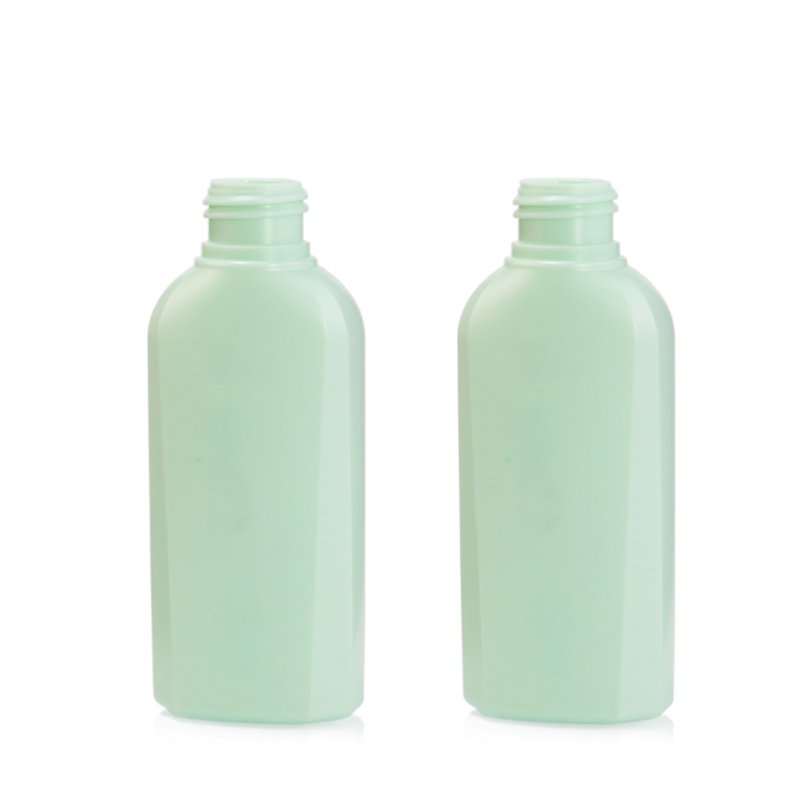
100ml HDPE Cosmetic Bottle – Custom Logo
HDPE · 100 ml
200ml HDPE Cosmetic Bottle – Wholesale Manufacturer
HDPE · 200 ml
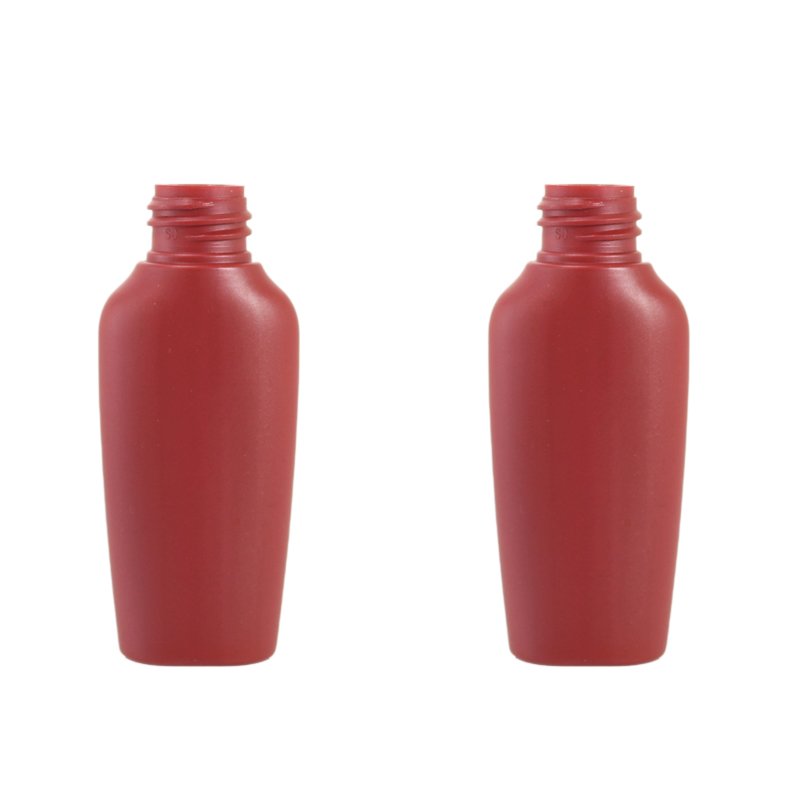
30ml HDPE Cosmetic Bottle
HDPE · 30 ml
350ml HDPE Cleaning Bottle for Dishwashing Liquid Packaging
HDPE · 350 ml
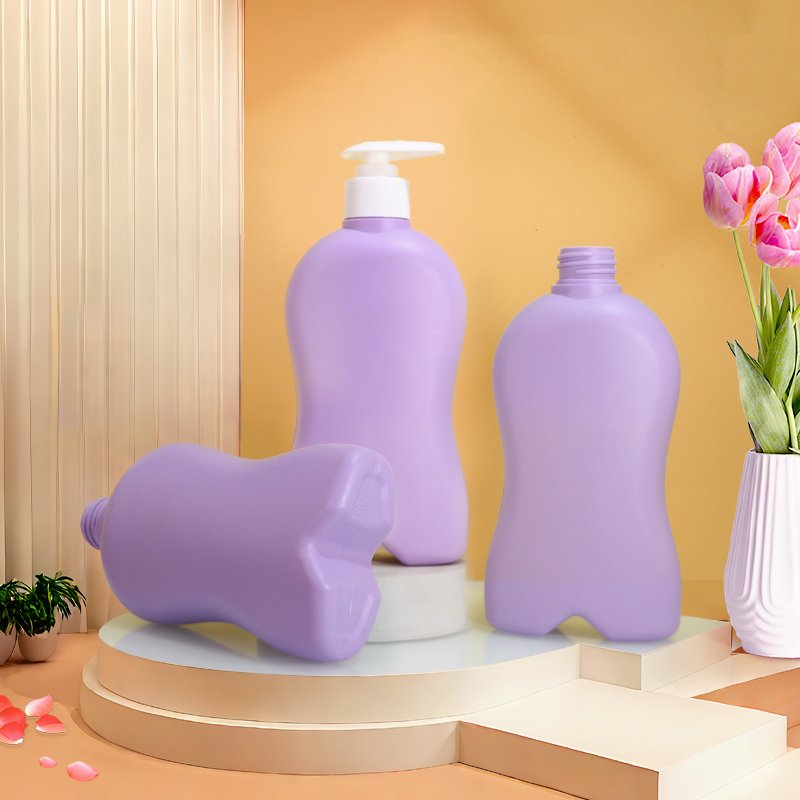
360ml HDPE Cosmetic Bottle
HDPE · 360 ml
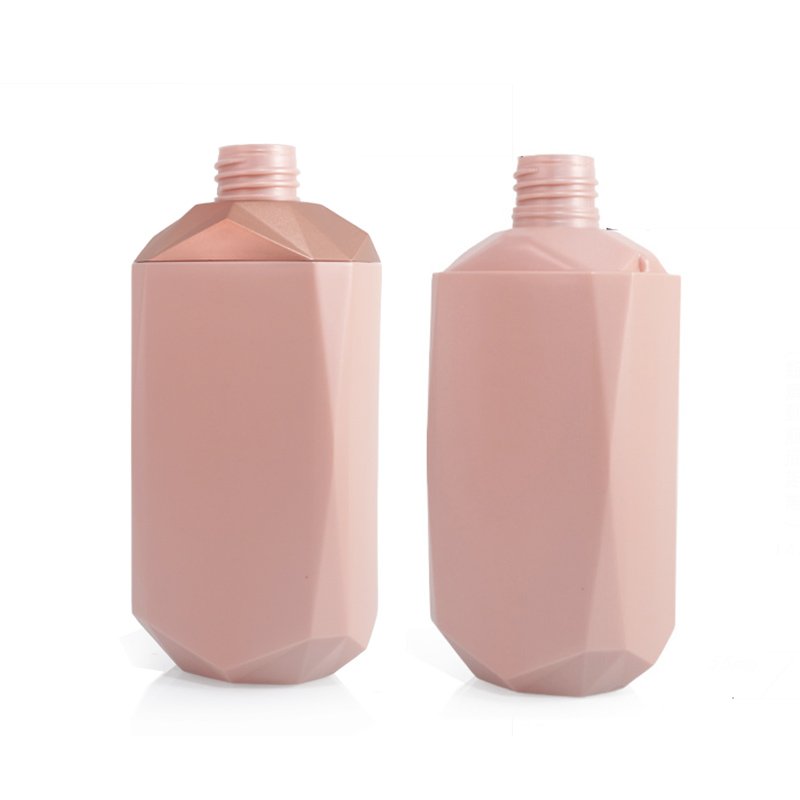
450ml HDPE Cosmetic Bottle – Custom Logo
HDPE · 450 ml
480ml HDPE Body Wash Bottle – Wholesale Manufacturer
HDPE · 480 ml

500ml HDPE Shampoo Bottle for Shampoo And Conditioner Packaging
HDPE · 500 ml
Where HDPE programmes have shipped
Published customer programmes built on this material family. Regional customer names are withheld; material, format, order data and outcomes are as delivered.
HDPE body wash bottle
- ▸200–500 ml formats
- ▸4 reorders since first delivery
- ▸140,000+ units since 2024 with zero defect claims
PCR PET trigger spray
- ▸Same cleaning-format engineering, specified in PCR PET
- ▸25,000 pcs initial order, 80,000 pcs follow-on in Q2
- ▸Recycled-content documentation issued per order
See the full programme write-ups on the customer projects page.
Related engineering and material guides
HDPE packaging: buyer questions
Is HDPE the same as PE?+
HDPE is a grade within the polyethylene family — the high-density one. PE on a quotation is ambiguous; the density figure tells you which grade you are actually buying. LDPE runs 0.910–0.925 g/cm³ and HDPE 0.941–0.965 g/cm³.
Can HDPE handle hot fill?+
HDPE tolerates considerably higher fill temperatures than PET — roughly 90–110 °C versus about 60–70 °C — but the bottle design, wall section and closure still have to be specified for it. Confirm your fill temperature before tooling.
Why does HDPE crack sometimes?+
Environmental stress cracking is the usual cause, and it typically appears weeks or months after filling rather than immediately. It is driven by the interaction between the formulation and the resin under sustained stress, which is why the full formulation belongs in the specification conversation.
What is the MOQ for HDPE bottles?+
5,000 pcs per SKU on stock tooling. Custom shapes are quoted with the tooling charge together.
Can HDPE be printed or labelled?+
Yes. The surface is non-polar, so it must be flame or corona treated to at least 38 dynes/cm first. We use low-migration UV-cured inks and verify adhesion with the ASTM D3359 cross-hatch test targeting 4B to 5B.
Is HDPE food-safe?+
HDPE is widely used for food-contact packaging. The evidence to request is a migration test report on the finished article against EU 10/2011 — overall migration limit 10 mg/dm², plus specific migration limits and a NIAS risk assessment. The report belongs to the finished article, not to the resin name.
How many HDPE molds do you hold?+
22 HDPE bottle molds in-house, and they sit inside a PE mold library of 427 tools that includes the lower-density grades. Browse the HDPE range or the full product library.
Can HDPE be supplied with recycled content?+
Yes, as PCR HDPE, quoted with the recycled content level you specify and the documentation that goes with it. Because HDPE is opaque, the colour cast that limits recycled content in clear PET is largely irrelevant here.
Tell us the formulation and the fill temperature
Send the full formulation, pH, fill temperature and target capacity. We will confirm whether HDPE is the right grade and which wall section the pack needs.
Part of Plastic Packaging Materials: PET, HDPE, PE, PETG, PP and PCR | Shijin
Keep reading
Material, engineering and buying pages that this one sits next to.
Products behind this page
Real items from the Shijin stock-mold library. Shown specifications are the published ones; a quotation is built from your own drawing and fill volume.
Bath & Body 480ml HDPE Body Wash Bottle – Wholesale Manufacturer
Published specification, stock mold, MOQ 5,000 pcs.
View product →350ml HDPE Cleaning Bottle for Dishwashing Liquid Packaging
Published specification, stock mold, MOQ 5,000 pcs.
View product →OEM/ODM 300ml HDPE Squeeze Bottle Supplier | Factory Direct
Published specification, stock mold, MOQ 5,000 pcs.
View product →Custom 350ml HDPE Cosmetic Bottle with Logo Printing
Published specification, stock mold, MOQ 5,000 pcs.
View product →HDPE Lotion Bottle (400ml) for Hand Cream
Published specification, stock mold, MOQ 5,000 pcs.
View product →60ml HDPE Cosmetic Bottle – Wholesale Manufacturer
Published specification, stock mold, MOQ 5,000 pcs.
View product →